Itinerary
Gangwongamyeong Provincial Office Visitor Guide — History & Location
Explore Gangwongamyeong, Wonju's Joseon-era provincial office. Discover preserved architecture and learn about Korea's pre-modern governance.
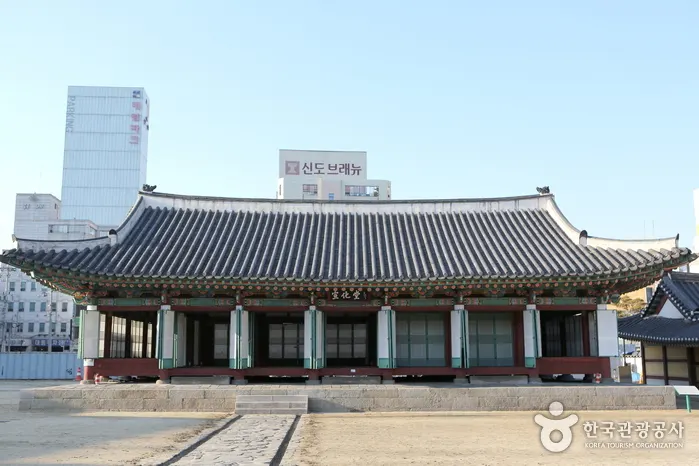
Gangwongamyeong Provincial Office, dating back to the Joseon era, is celebrated for its stunning night views. Originally serving as the office for the provincial governor of Gangwon-do during the Joseon period, it functioned in this capacity for 500 years. Presently, only a few structures, including the Seonhwadang Hall, still stand. The site underwent restoration and was opened to the public in 2018.
Why Gangwongamyeong Provincial Office, Wonju matters
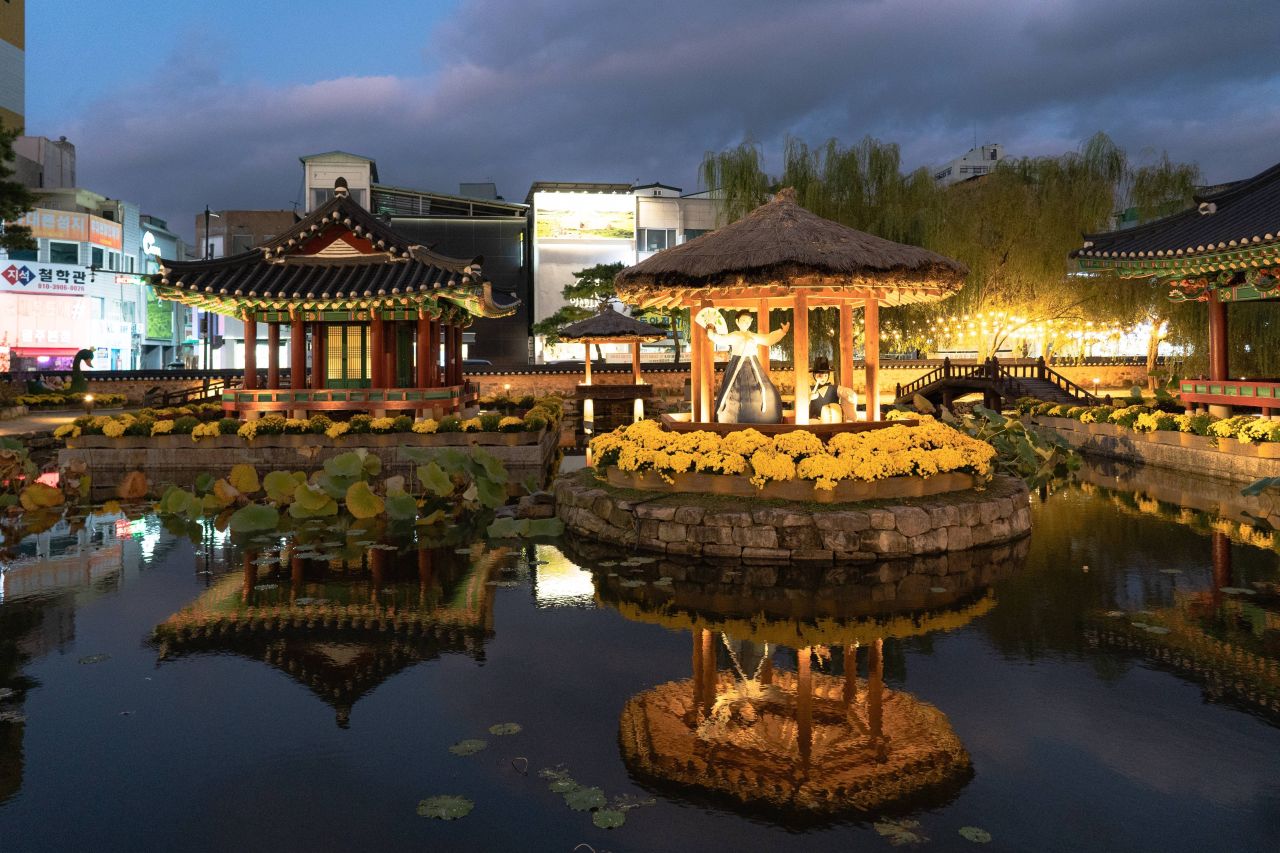
Step back in time at the Wonju Gangwon Provincial Office, known as Gangwon Gamyeong. This meticulously preserved historic site offers a tangible connection to the Joseon Dynasty's administrative heart in the Gangwon region. If you're intrigued by the structure of pre-modern Korean governance and its architectural manifestations, this site provides a unique window into a bygone era.
The site primarily showcases three key structures that were central to the provincial government's operations. Tongseongdang served as the governor's office, the very place where crucial decisions were made and policies enacted.
The relatively intact nature of the site allows for a more immersive experience, enabling visitors to visualize the functioning of a provincial government office centuries ago.
Gangwon Gamyeong is located within Wonju city, making it accessible for day trips or as part of a broader Gangwon-do itinerary. While the site is historically significant, its presentation is generally straightforward, focusing on the preservation of the existing structures.
Official visitor information
Official address: Ilsan-dong, Wonju-si, Gangwon-do.
Official visiting hours: 09:00-22:00.
Official closure information: N/A (Open all year round).
Parking: Available.
Official information contact: +82-33-737-2834.
How to use this guide
Use the official information above as the planning baseline. Opening arrangements, programs, admission conditions, and access rules can change after this review. Follow the official source links before traveling, especially when your visit depends on a particular exhibition, performance, seasonal activity, or facility.
The remaining recommendations on this page are editorial guidance for understanding the setting and organizing a visit. They are not a substitute for instructions issued by the venue, local government, cultural-property authority, or transport operator.
Responsible visit checklist
Before leaving
- Open the official venue page and confirm the latest operating notice.
- Check weather and transport conditions on the day of travel.
- Respect residential, religious, ecological, and cultural-property rules where applicable.
- Allow flexibility rather than relying on an exact minute-by-minute schedule.
- Use the official information contact when accessibility or reservation details are essential.
Where is Gangwongamyeong Provincial Office, Wonju?
Ilsan-dong, Wonju-si, Gangwon-do
Where should I confirm current hours and closures?
Use the official source links in the reviewed-for-accuracy panel on this page.
When was this information checked?
The reviewed-for-accuracy panel shows the latest human review date and source record.