Food
Where to Eat in Jeonju (2026): Beyond Bibimbap
Jeonju is a UNESCO City of Gastronomy. A 2026 food guide to bibimbap, kongnamul-gukbap, makgeolli alley, and night-market snacks for first-time visitors.
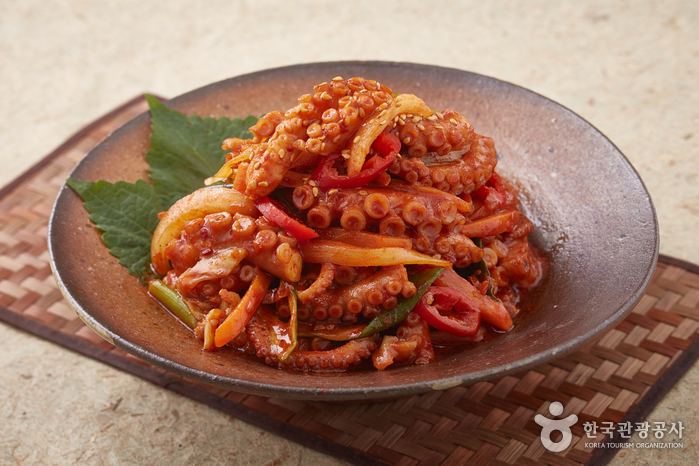
Jeonju has been a UNESCO City of Gastronomy since 2012 and remains Korea's slow-food capital. Most visitors come for bibimbap — but the deeper food story here is fermented sauces (gochujang from Jeonju is shipped nationwide), hand-pulled noodles, persimmon products, and the bean-sprout breakfast that locals quietly insist is the best hangover cure in the country. The KTX from Yongsan reaches Jeonju in 1h 50min for around ₩34,600, making this an easy overnight from Seoul.
The dish that made the city: Jeonju bibimbap
Jeonju-style bibimbap layers warm rice with raw beef (yukhoe), nine to twelve seasonal mountain vegetables, an egg yolk, and the local red-pepper paste. The version everyone photographs costs ₩12,000–18,000 at well-known restaurants in the hanok village. Seasoned travelers often skip the most-photographed restaurant and walk a few blocks outside the main tourist cluster, where locals eat for ₩9,000–12,000. Vegetarian bibimbap is available at most houses; the default includes yukhoe — say "yukhoe ppae-juseyo" to remove it.
Beyond bibimbap — what locals actually order
Kongnamul-gukbap (bean-sprout rice soup, ₩8,000–10,000) is the morning answer to last night. Two famous houses near the hanok village open from 6 a.m.; both serve a poached egg on the side and seaweed flakes — drop the rice into the soup, not the other way around. Moju, a warm spiced makgeolli served only in winter at street stalls, pairs with pajeon (green-onion pancake, ₩10,000–14,000). For dessert, look for choco pies from local bakeries — the Jeonju version is denser and less sweet than the supermarket original.
After dinner, walk the makgeolli alley behind Pungnammun Gate. A makgeolli set (₩30,000–40,000 for two) comes with a tray of 10–15 free side dishes that grows as you order more bottles. This is the most authentic Jeonju food experience and the one most travelers miss.
Jeonju food district
When to go and where to stay
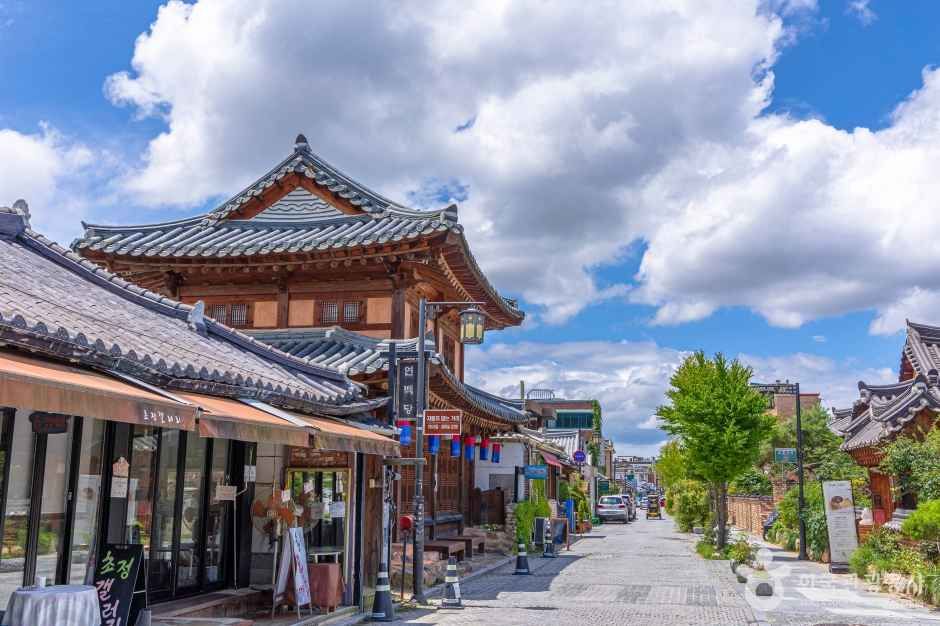
April (magnolia and cherry blossoms in early April, hanok roof-tile contrast at peak) and October (mild, clear skies) are the most comfortable months. Fall-weekend hanok guesthouses book out 4+ weeks ahead — plan weekdays if possible. Hanok stay rates run ₩80,000–180,000 per night and most include underfloor heating (ondol) and a Korean breakfast. Hanbok rental is ₩15,000–25,000 for four hours; some museums and the Confucian School discount entry for hanbok wearers.
Ordering and getting around
- Free hanok village entry — only certain individual museums charge (₩2,000–3,000).
- Most bibimbap houses include 8–12 banchan (side dishes) free; refills are complimentary at all but the most touristy spots.
- Pay by card almost everywhere; some street stalls take cash only — keep ₩30,000–50,000 in small bills.
- KTX Yongsan→Jeonju 1h 50min ₩34,600. Book via Korail Talk app or buy at the station.
- Within Jeonju, the hanok village is fully walkable. City buses use T-money. Single fare ₩1,500.
- Try Moju at the open-air Makgeolli Alley near the hanok village — December through February is the right season.
Is Jeonju a day trip from Seoul?
It is doable in a long day — KTX from Yongsan takes about 1h 50min — but the food story here unfolds over breakfast, lunch, and a late makgeolli session. One overnight at a hanok stay is the right rhythm.
Are there halal or vegetarian options?
Vegetarian-friendly bibimbap and pajeon are easy to find — Korean temple food (saachal eumsik) is fully plant-based and increasingly available. Halal restaurants are limited; the closest reliable cluster is in Itaewon, Seoul. Some hanok village shops do carry halal-certified snack items.
How much cash should I carry?
Most night-market vendors now accept card, but ₩30,000–50,000 cash is useful for very small stalls, temple donations, and makgeolli set add-ons. Most hanok guesthouses also accept card.
What is the best month to visit Jeonju in 2026?
Mid-April for cherry blossoms with hanok rooftops, mid-October for foliage and the Jeonju Bibimbap Festival. The festival typically runs the second weekend of October — book hanok stays 6+ weeks ahead.