Photo gallery
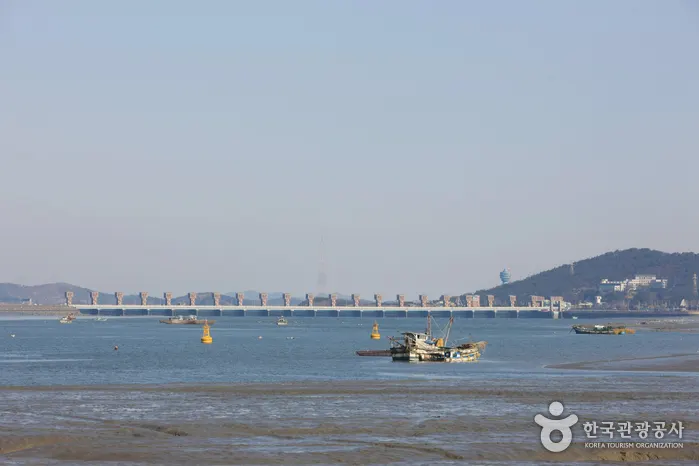
Gunsan Geumgang Estuary Bank (금강하구둑(군산)) · © KTO · KOGL Type 3
Korea
Gunsan Geumgang Estuary Bank
Gunsan Geumgang Estuary Bank is the public walking-and-cycling-path corridor along the Geumgang River estuary in Gunsan, Jeollabuk-do — one of Korea's most significant West Sea estuary environments, formed where the Geumgang River (Korea's third-l...
Why go
Gunsan Geumgang Estuary Bank is the public walking-and-cycling-path corridor along the Geumgang River estuary in Gunsan, Jeollabuk-do — one of Korea's most significant West Sea estuary environments, formed where the Geumgang River (Korea's third-longest river) meets the West Sea. The estuary is a designated Wetland Protection Area and a critical stopover for migratory waterbirds — winter counts of bean geese, mallards, tundra swans, and Baikal teal can exceed 100,000 individuals during the November-February peak. The path corridor includes an observation platform with mounted spotting scopes (free public access), the Geumgang Migratory Bird Observatory (a public education center on the estuary ecology, 5-minute walk from the platform), a 4.5-km walking-and-cycling path along the levee, and rest pavilions at scenic points. The setting combines the estuary landscape with a distant view of the Geumgang Bridge and the coastal Gunsan cityscape. Free access. Allow about 90 minutes for a focused visit. Best November through February for the peak bird populations; early morning viewing produces the largest counts. Access: about 15 minutes from Gunsan Station by taxi. Pair with the broader Gunsan Modern History Walking Course including Gunsan Modern History Museum (batch 7 verified) and House of Lee Young-choon (batch 6 verified) for a full Gunsan cultural-and-nature day.
Quick highlights
- 1.84-km dam at the Geumgang river mouth, completed 1990
- Pedestrian causeway with views to Gunsan and the sea
- Migratory bird observatory — whooper swans, geese, ducks
- Bird-watching peak November to February
- Bilingual estuary natural-history museum