Photo gallery
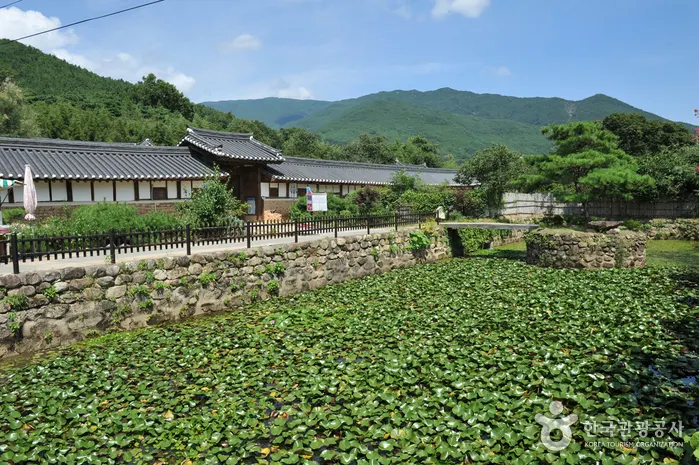
Gurye Unjoru Historic House (구례 운조루 고택) · © KTO · KOGL Type 3
Korea
Gurye Unjoru Historic House
Unjoru is a late-Joseon yangban residence built in 1776 by Ryu I-ju in Gurye, known for its 55 surviving bays, geomantic setting, and tradition of sharing rice with neighbors.
Why go
Gurye Unjoru Historic House was built in 1776 by Ryu I-ju, who served as a senior military official during the reign of King Yeongjo. Gurye County's official heritage guide describes the house as a representative late-Joseon yangban residence set among mountains and a pond in a site traditionally called Geumhwanrakji, or "a golden ring fallen to the ground." The complex originally had 78 bays; 55 remain within a floor area of about 371.9 square meters. Its surviving quarters show the separation of men's, women's, service, and storage spaces in an upper-class household. Unjoru is designated as a National Folklore Cultural Heritage property. The house is also associated with the open rice chest inscribed "Taineung-hae," meaning that anyone could open it. That object is remembered as a symbol of sharing grain with neighbors. Gurye's Unjoru Relics Exhibition Hall presents roughly 150 objects related to the Ryu family and the household's history. Visitor access, guided interpretation, and experience programs can change. Check the Gurye County heritage page or the house's official channel before visiting, and respect that the site is a protected historic residence.
Quick highlights
- Late-Joseon yangban residence built in 1776
- 55 surviving bays from an original 78-bay complex
- National Folklore Cultural Heritage property
- Taineung-hae rice chest symbolizing community sharing
- Relics exhibition hall with about 150 family and household objects
Practical tips
Parking: Not available. On-site programs: Exploring Unjoru with a guide / Becoming a noble family model in hanbok / Traditional archery experience of the Dongyi people, descendants of Jumong, etc. These details come from the Korea Tourism Organization and can change — confirm parking, age conditions, and program availability on the official channel before you visit.