Photo gallery
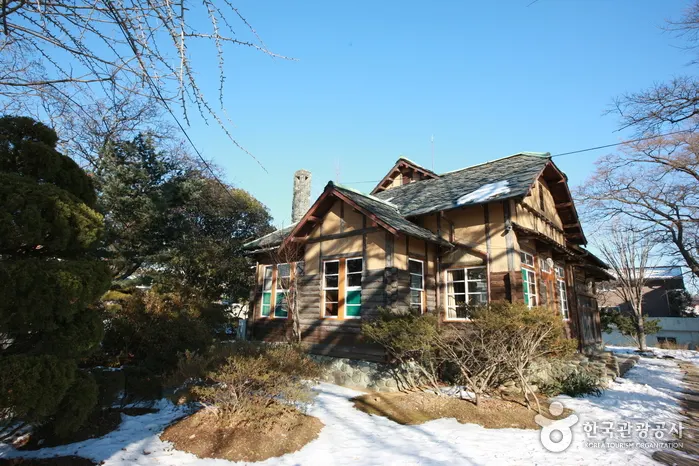
House of Lee Young-choon (이영춘가옥) · © KTO · KOGL Type 3
Korea
House of Lee Young-choon
House of Lee Young-choon in Gunsan, Jeollabuk-do, is a beautifully preserved early-20th-century Western-style residence built in 1922 for Dr.
Why go
House of Lee Young-choon in Gunsan, Jeollabuk-do, is a beautifully preserved early-20th-century Western-style residence built in 1922 for Dr. Lee Young-choon (1903-1980), a Western-educated Korean physician who pioneered tuberculosis research in Korea and later founded modern occupational-health medicine in the country. The two-story brick house combines Western architectural elements (gabled roof, brick walls, arched windows) with Korean spatial logic in the interior, and is one of the most intact examples of colonial-era Western residential architecture in the country. Now a public museum, the house preserves Dr. Lee's original consultation room, library, and family living spaces, with bilingual panels covering both his medical contribution — including the tuberculosis-eradication campaigns of the 1930s and the establishment of Korea's first industrial-medicine clinics after liberation — and the building's hybrid architectural significance as a document of the colonial-era Korean professional class. Free entry. Allow about an hour. Pair with the Gunsan Modern History Walking Course — the surrounding Gunsan port district preserves substantial colonial-era architecture including the former Japanese Customs House, the Bank of Joseon Gunsan Branch, and Hirotsu House (a preserved Japanese-style residence). Together the Gunsan modern-history circuit is one of Korea's most concentrated colonial-era architectural walks.
Quick highlights
- 1922 Western-style residence of pioneer TB researcher Dr. Lee
- Preserved consultation room, library, family spaces
- Hybrid Western-Korean colonial-era architecture
- Bilingual panels on medicine and architecture
- Pair with Gunsan Modern History Walking Course