Photo gallery
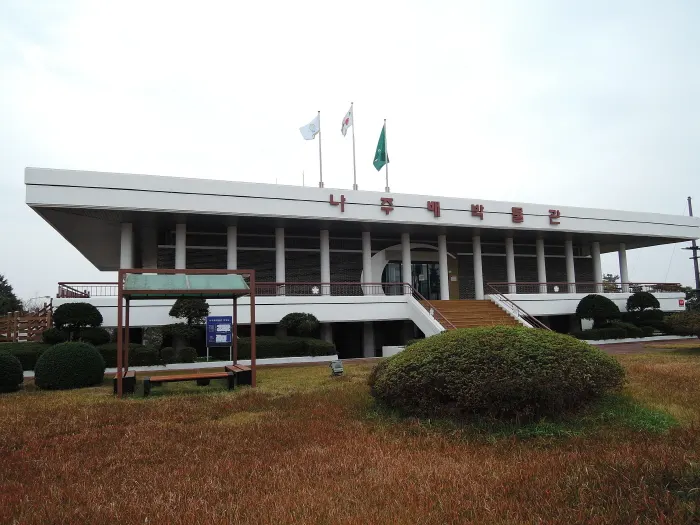
Naju Pear Museum (나주배박물관) · © KTO · KOGL Type 3
Korea
Naju Pear Museum
Naju Pear Museum is the dedicated public museum on the Naju pear — the Korean pear variety ("Bae") that is one of the country's most celebrated specialty agricultural products and a longtime export commodity, particularly to Japan, Taiwan, and Sou...
Why go
Naju Pear Museum is the dedicated public museum on the Naju pear — the Korean pear variety ("Bae") that is one of the country's most celebrated specialty agricultural products and a longtime export commodity, particularly to Japan, Taiwan, and Southeast Asia. Korean pears (Pyrus pyrifolia) are distinct from European pears in shape (spherical rather than tapered) and texture (crisp and juicy rather than soft), and Naju has been Korea's most-cited producer since the early 20th century when systematic cultivation began. The museum traces the broader Korean pear-cultivation tradition, the specific Naju microclimate that produces the largest, sweetest pears in Korea (mineral-rich Yeongsangang valley soils combined with a Naju-specific temperature-diurnal cycle), and the modern scientific research that has refined Naju pear varieties through the 20th and 21st centuries — including the flagship Shingo cultivar that dominates the export market. Original cultivation tools, period photographs, and a substantial outdoor pear-orchard experience area (with in-season pear tastings during autumn) complete the visit. Bilingual interpretation. Free entry. Allow about 90 minutes. Best in September-October during the pear harvest window. Pair with the Yeongam Pottery Museum, Yeongsanpo colonial-era port district, and the broader Naju cultural-and-food tourism circuit.
Quick highlights
- Public museum on the Naju pear, Korea's most celebrated pear variety
- Korean pear-cultivation tradition + specific Naju microclimate
- Modern scientific pear-variety research through 20th-21st century
- Original cultivation tools, period photographs
- Pair with Yeongam Pottery Museum