Itinerary
"A Glimpse into the Past: Kim Il-sung's Villa at Hwajinpo?"... Gangwon's Hwajinpo Castle, a Stark Reminder of Division
Explore Hwajinpo Castle, Kim Il-sung's former villa in Gangwon, offering a unique window into Korean division and modern history.
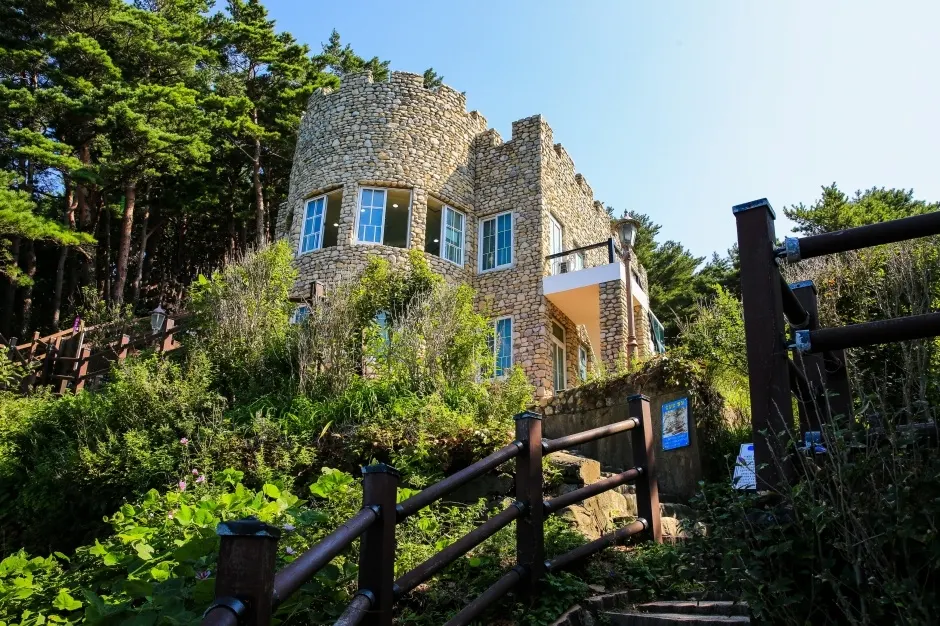
Hwajinpo Castle, often referred to as Kim Il-sung's Villa, stands as a stark architectural testament to a turbulent past. Located in the scenic Hwajinpo area of Goseong, Gangwon Province, this preserved villa offers a unique and sobering glimpse into the pre-Korean War era when this region was under North Korean control. For travelers with a keen interest in the intricate tapestry of Korean modern political history and the ongoing narrative of division, this site provides an unparalleled opportunity for reflection and understanding.

A Villa's Story: Echoes of a Divided Nation
Hwajinpo Castle is more than just a building; it's a tangible piece of history, meticulously preserved as a registered Cultural Heritage site. Its primary significance lies in its association with Kim Il-sung, the founder of North Korea, who is said to have used it as a summer retreat before the Korean War.
The villa's location in Hwajinpo, a beautiful coastal area, contrasts sharply with the heavy historical weight it carries. This juxtaposition serves as a constant reminder of the complex geopolitical landscape that shaped the Korean peninsula.
The villa's preservation offers a rare opportunity to step back in time and visualize the period when this land was part of North Korea. Exhibits within the castle detail the tumultuous events of the Korean War and the broader context of inter-Korean political history.
These displays are crucial for understanding the deep-seated divisions and the enduring impact of the conflict on families and the nation as a whole. The architecture itself, while perhaps modest by modern standards, speaks volumes about the era and its political climate.
What Makes Hwajinpo Castle a Significant Historical Site?
The historical significance of Hwajinpo Castle is multi-faceted. Firstly, it represents a physical anchor to the period of North Korean administration in the area before the outbreak of the Korean War.
This era, often overshadowed by the war itself, is crucial for a comprehensive understanding of the peninsula's division. The villa provides a concrete, albeit somber, connection to the past, allowing visitors to visualize the historical context in a way that textbooks alone cannot convey.
Secondly, as a registered Cultural Heritage site, its preservation ensures that future generations can learn from its historical narrative. The exhibits focus on the Korean War and the subsequent decades of inter-Korean relations, offering insights into the political tensions, the human cost of conflict, and the ongoing quest for peace and reunification.
For foreign travelers particularly interested in the specific nuances of Korean modern history and the dynamics of the divided peninsula, Hwajinpo Castle stands out as a singularly direct and impactful heritage site.
Exploring the Site and Its Historical Exhibits
Visiting Hwajinpo Castle allows travelers to immerse themselves in the historical narrative presented within its walls. The preserved villa itself serves as the main exhibit, offering a tangible link to Kim Il-sung's presence in the region.
Inside, carefully curated displays present artifacts, photographs, and documents related to the Korean War and the political history of the division. These exhibits are designed to educate visitors about the specific circumstances that led to the current state of affairs on the Korean peninsula.
Beyond the villa, the surrounding area of Hwajinpo also holds historical significance. The natural beauty of the coastline provides a backdrop that starkly contrasts with the heavy history associated with the site.
Visitors can take time to appreciate the landscape while contemplating the events that unfolded here. Understanding the context of the pre-war period and the subsequent division is key to fully appreciating the weight and importance of Hwajinpo Castle as a historical landmark.
Tips for Visiting Hwajinpo Castle
When planning a visit to Hwajinpo Castle, it's advisable to allocate sufficient time to fully absorb the historical context. The site is not just a quick stop but a place for thoughtful consideration.
Consider visiting during daylight hours to best appreciate the exhibits and the surrounding scenery. As the villa is a site of significant historical and political importance, approaching the visit with an open mind and a willingness to learn about a complex past is recommended.
While specific tour availability can vary, checking local tourism information or inquiring at nearby visitor centers can provide details on guided tours that might offer deeper insights. Given its location in Gangwon Province, combining a visit to Hwajinpo Castle with other historical sites or natural attractions in the region can create a well-rounded itinerary.
Remember to check operating hours and any admission fees that may apply before your visit.
Where is Hwajinpo Castle located?
Hwajinpo Castle is situated in the Hwajinpo area of Goseong, Gangwon Province, South Korea.
What can I see at the castle?
You can see the preserved villa, exhibits on the Korean War, and displays about inter-Korean political history.
What is the admission fee?
Admission fees typically apply, but it's best to check current prices locally before visiting.
What are nearby attractions?
Nearby attractions include the beautiful Hwajinpo Lake and the DMZ Museum (Demilitarized Zone).
How can I get there?
Public transportation options may be limited; consider driving or joining a guided tour from major cities.