Itinerary
"A Glimpse into Early Kingdoms' Defense?"... Jeongbuk-dong Earthen Fortification, Cheongju's Ancient Military Secret
Step back in time at Jeongbuk-dong Earthen Fortification, a well-preserved relic of early Korean kingdoms. Discover its unique military architecture.
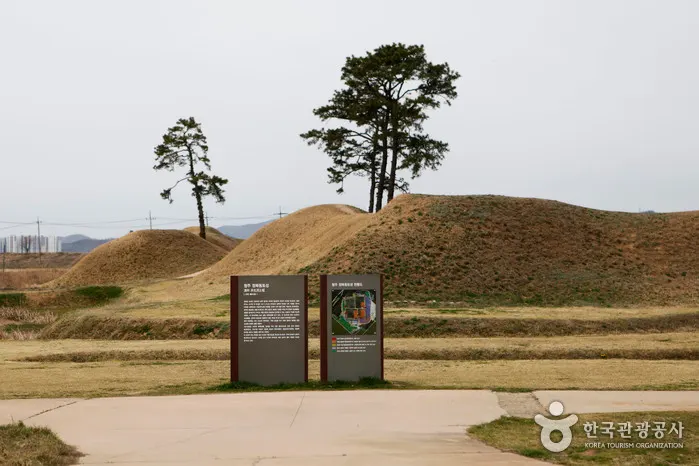
Imagine a time when Korea's borders were defined not by stone, but by earth. In Cheongju's Jeongbuk-dong, an ancient earthen fortification stands as a testament to early Korean kingdoms, meticulously preserved and designated as a Korean Treasure. This site offers a unique window into a less-discussed aspect of Korean military history, appealing to those who seek a deeper understanding of ancient defensive structures beyond the more common stone fortresses.

The Enduring Appeal of Earthen Walls
The Jeongbuk-dong Earthen Fortification is a remarkable example of early Korean defensive architecture, dating back to the Early Three Kingdoms period (roughly 1st to 3rd centuries CE). Unlike the grand stone fortresses that often capture the historical imagination, this fortification is constructed primarily from rammed earth, a technique known as 'tuchuk' (토축).
The sheer scale and the preservation of these earthen walls are what make this site so significant. It showcases a different approach to military engineering, one that relied on the natural landscape and the labor-intensive process of compacting soil to create formidable defenses.
Designated as Korean Treasure No. 141, the fortification's importance is officially recognized. Its strategic location, likely chosen for its advantageous terrain, allowed for effective surveillance and defense against potential threats of the era.
While much of the original structure has inevitably succumbed to the passage of time, what remains offers substantial insight into the construction methods, layout, and defensive strategies employed by the people of that distant age. Visiting this site is akin to walking through a living history book, where the very ground tells a story of survival and resilience.
What Makes This Fortification Unique?
The primary distinction of the Jeongbuk-dong Earthen Fortification lies in its material and construction method. While many visitors might be familiar with Korea's impressive stone castles and fortresses, this site highlights the prevalence and effectiveness of earthen fortifications in earlier periods.
The rammed earth technique involves layering soil and compacting it intensely, creating a dense and durable structure. This method was not only practical for the available resources of the time but also proved to be a highly effective defensive measure when executed with the skill evident at Jeongbuk-dong.
Furthermore, its status as one of the best-preserved earthen fortifications from this early period makes it a rare find. Many similar structures have been lost to erosion, agricultural development, or the reuse of materials over centuries.
The Jeongbuk-dong site, however, retains a significant portion of its original form, allowing archaeologists and visitors alike to appreciate its original scale and design. This preservation offers a tangible connection to the past, enabling a more accurate understanding of military architecture and settlement patterns from the Early Korean Kingdoms.
Exploring the Site and Its Surroundings
A visit to the Jeongbuk-dong Earthen Fortification is a journey into a quiet, historical landscape. The site itself is largely an open expanse, allowing you to walk along the remnants of the earthen ramparts and visualize the ancient defenses. While there aren't elaborate buildings or reconstructions, the sheer presence of the earthworks is captivating.
Informational signage is typically available, providing context about the fortification's history, construction, and significance. Allow yourself time to simply wander and absorb the atmosphere of this ancient military outpost.
The fortification is situated in a relatively peaceful, rural area of Cheongju, making it a good complement to other attractions in the city. It’s an ideal spot for those interested in history, archaeology, or simply seeking a less crowded, more contemplative historical experience.
Consider combining your visit with other nearby historical sites or natural attractions in Cheongju to create a well-rounded itinerary. The simplicity of the site allows for a focused appreciation of its specific historical value.
Practical Tips for Your Visit
The Jeongbuk-dong Earthen Fortification is accessible to the public, and typically, there is no admission fee, reflecting its nature as a historical site rather than a commercial attraction. The best times to visit are generally during the spring and autumn, when the weather is pleasant for outdoor exploration.
Wear comfortable walking shoes, as you'll be traversing uneven terrain along the earthworks. It's advisable to check local weather forecasts before your visit and bring water, especially during warmer months.
Getting to the site usually involves a combination of public transport and potentially a short taxi ride or walk, depending on your starting point in Cheongju. Parking may be available nearby, but it's best to verify options in advance.
Since it's an outdoor historical site, there are limited facilities on-site, so plan accordingly. The experience is about immersing yourself in the historical landscape, so a leisurely pace is recommended to fully appreciate its significance.
Where is the Jeongbuk-dong Earthen Fortification located?
It is situated in Jeongbuk-dong, Cheongju, South Korea.
What is the main feature of this site?
It is a well-preserved ancient earthen fortification from the Early Korean Kingdoms period.
Is there an admission fee?
Typically, there is no admission fee to visit this historical site.
What other attractions are nearby?
Consider visiting other historical sites and cultural attractions within Cheongju.
How can I get there and what should I expect?
Accessible by public transport and local transit; expect outdoor walking on uneven terrain.