Itinerary
"A City of Royal Tombs Rise from the Earth?"... Gyeongju Daereungwon, Where Silla Kings Sleep
Step into a sprawling park dotted with grass-covered mounds, the final resting places of Silla royalty. Explore Cheonmachong and marvel at the scale of Hwangnamdaechong.
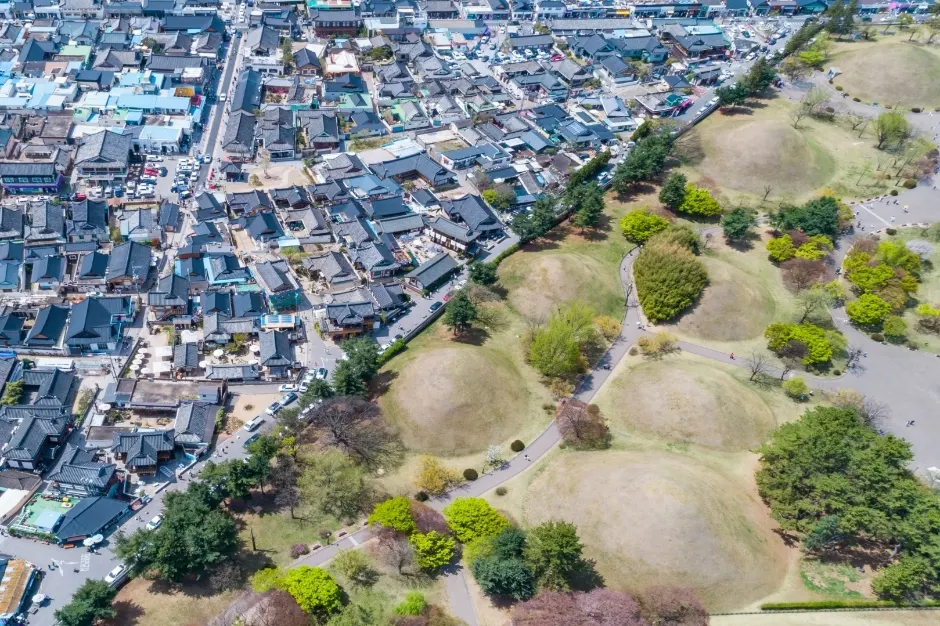
Imagine a landscape where the earth itself rises in the form of grand, grass-covered mounds, each a silent testament to a bygone era. This is Gyeongju Daereungwon, a unique park cradling 23 royal tombs from the Silla Dynasty (4th-6th centuries). It's a place where history breathes, inviting you to walk amongst the final resting places of kings and queens, offering a profound connection to Korea's ancient past.

The Majesty of Silla's Royal Necropolis
Daereungwon Ancient Tomb Complex is not merely a collection of burial sites; it is the heart of Silla's regal history, a sprawling green expanse where 23 majestic tombs stand as enduring monuments. These aren't structures built by human hands in the conventional sense, but rather colossal earthworks, each a carefully constructed mound designed to house the remains of Silla's most esteemed rulers.
The sheer scale and uniformity of these grassy pyramids, scattered across the park, create a surreal and awe-inspiring panorama, unlike any other historical site in Korea.
The complex is a visual narrative of Silla's golden age, a period marked by significant territorial expansion and cultural flourishing. The tombs, dating primarily from the 4th to 6th centuries, represent the zenith of Silla's power and influence.
Their distinctive grass-covered slopes are not just aesthetically pleasing but also serve a practical purpose, protecting the subterranean chambers within from the elements. Walking through Daereungwon, you are literally treading on centuries of history, with each mound a potential treasure trove of untold stories and archaeological significance.
Exploring Cheonmachong: A Glimpse into the Past
Among the 23 tombs, Cheonmachong stands out as a particularly significant and accessible site for visitors. Unearthed in 1971, this tomb yielded a spectacular treasure: the 'Cheonma-do' (Heavenly Horse painting) on a saddle flap, giving the tomb its name.
This vibrant artwork, rendered in vivid colors, offers a rare and precious glimpse into the artistic sensibilities and beliefs of the Silla people. The discovery of such a well-preserved artifact within a royal tomb underscores the importance of Daereungwon as a repository of invaluable historical and cultural relics.
What makes Cheonmachong especially compelling is that visitors can actually enter the tomb chamber. While the original burial goods have been moved to museums for preservation, the reconstructed interior allows you to appreciate the tomb's architecture and imagine the solemn rituals that once took place here.
Standing within the dimly lit space, surrounded by the earthy scent and the weight of history, provides a tangible connection to the individuals laid to rest within these ancient mounds. It’s a deeply moving experience that transcends mere observation.
Hwangnamdaechong: A Monument of Royal Grandeur
If Cheonmachong offers an intimate glimpse, Hwangnamdaechong presents a view of unparalleled royal grandeur. This is one of the largest royal tombs in the Daereungwon complex, a colossal double-mound tomb that speaks volumes about the power and status of the rulers it entombs. Its impressive size is a testament to the Silla Kingdom's peak prosperity and its advanced organizational capabilities in constructing such monumental structures.
Excavations at Hwangnamdaechong have revealed an astonishing array of artifacts, including thousands of pieces of pottery, intricate gold jewelry, and other precious objects. These findings provide critical insights into the Silla elite's lifestyle, their trade networks, and their sophisticated craftsmanship.
The sheer volume and quality of the grave goods recovered highlight the wealth and artistic achievements of the era, solidifying Hwangnamdaechong's status as a paramount historical treasure.
Practicalities for Your Visit to Daereungwon
Visiting Daereungwon is a straightforward yet deeply rewarding experience. The complex is centrally located within Gyeongju, making it easily accessible for most travelers.
The park is designed for leisurely exploration, with well-maintained paths winding between the tombs. Allow at least one to two hours to fully appreciate the scale and atmosphere of the site, more if you plan to visit the nearby Gyeongju National Museum to see the artifacts unearthed from these very mounds.
Admission to the park is required, with a modest fee typically charged. The grounds are generally open from early morning until evening, though specific hours can vary seasonally.
Comfortable walking shoes are highly recommended, as you'll be doing a fair amount of walking on the park's pathways. Consider visiting during the spring or autumn for the most pleasant weather, when the surrounding greenery is at its most vibrant or displays beautiful fall colors, enhancing the already picturesque scenery.
Where is Daereungwon Tomb Complex located?
It's located in the center of Gyeongju, Gyeongsangbuk-do, easily accessible by public transport or on foot.
What are the main attractions within Daereungwon?
The main attractions are the 23 Silla royal tombs, including the publicly accessible Cheonmachong and the large Hwangnamdaechong.
What is the admission fee for Daereungwon?
There is a small admission fee, typically around 2,000 KRW for adults.
What are good nearby attractions to combine with Daereungwon?
Consider visiting the Gyeongju National Museum, Hwanglidan-gil street, or Donggung Palace and Wolji Pond.
How can I best experience Daereungwon?
Walk the paths, enter Cheonmachong, and imagine the Silla era. Allow 1-2 hours for exploration.