Itinerary
Korean Folk Village: Joseon Life in Yongin
See 270-plus regional Joseon-era houses in a walkable open-air museum, then use the layout to plan a focused half-day in Yongin.
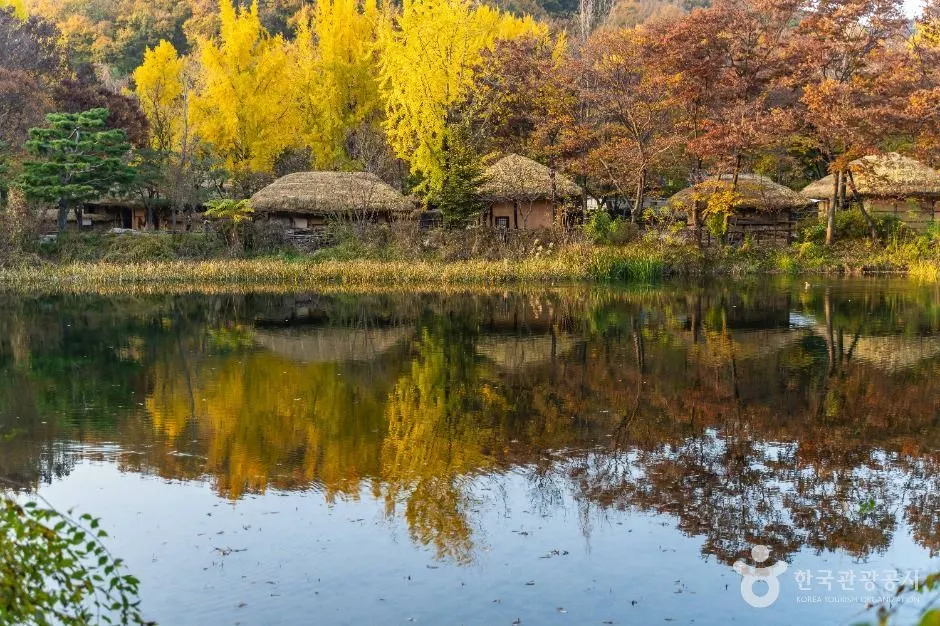
The Korean Folk Village in Yongin is one of the most-visited places in Gyeonggi Province, and it is almost always misread. Guides describe it as 'the largest reconstructed traditional village in Korea,' which is true, but the word most visitors miss is 'reconstructed.' This is not Hahoe or Yangdong — the two UNESCO-inscribed Joseon-era villages where people still live in their ancestral homes. Korean Folk Village opened on October 3, 1974 as South Korea's first open-air museum, built during a decade when westernization was erasing regional vernacular architecture faster than anyone could document it. What it does — assemble more than 260 traditional houses from every region of late-Joseon Korea onto a single 245-acre site — is a museum's job, not a village's job. Once you see it that way, four hours here start to make sense.
Museum, not village — why the category matters
Korea has two categories of hanok tourism, and they answer different questions. UNESCO-inscribed villages like Hahoe (in Andong) and Yangdong (in Gyeongju) are living settlements: the houses are original, still lived in by descendants of the founding clans, and the site's value comes from continuity. You go to see one place, deeply. Korean Folk Village is the opposite. It is an open-air museum in the tradition of Sweden's Skansen or Colonial Williamsburg — a curated assembly of buildings brought together for comparison. The houses were relocated from every province, or faithfully reconstructed when relocation was impossible, and grouped so that a Jeolla-region farmhouse stands within a few minutes' walk of a Gyeongsang yangban compound and a Jeju thatched cottage. You come here to read the differences between regions, not to feel the continuity of one place.
This matters because it changes what a good visit looks like. At Hahoe you walk slowly and let the setting land. At the Folk Village you walk with your eyes on the roofs — the black-tile ridges of yangban homes in the north end, the straw-thatched circular Jeju cottages near the south stream, the low earthen walls of Chungcheong farm compounds in between. The museum labels every cluster with the region it represents. If you have already visited (or plan to visit) one of the UNESCO villages, come here first and treat it as the primer. If you're only going to see hanok once on your trip, the Folk Village gives you every regional variant in a single afternoon, and Hahoe gives you one house done right.
The drama-filming layer — where the boundary blurs
For twenty years the Folk Village has doubled as the Korean television industry's default Joseon backlot. Jewel in the Palace (Dae Jang Geum, 2003-04) shot the palace kitchen and commoner-market scenes here. Sungkyunkwan Scandal (2010) used the yangban compounds for its academy interiors. Moon Embracing the Sun (2012) filmed local markets, private residences, and night scenes on the same paths visitors walk during the day. Kingdom (2019) shot specific plague-village scenes here. If you have watched more than one Korean historical drama, you have already seen this village — you just didn't know its name.
The interesting side effect is that visitors routinely mistake filming decorations for museum content. A market stall dressed for a drama shoot the previous week may still have its prop signage up when you walk past it; a scholar's study may hold a fake book prop rather than a museum-vetted reproduction. Staff are relaxed about this — the site is honest that it is both a museum and a working set — but it means the 'authenticity' rules are different from what you'd expect at a national museum. Treat everything with a printed regional-context label as museum content, and treat everything else as atmosphere. If you're specifically here for a drama pilgrimage, the site publishes a filming-locations map at the front gate; ask for it in English.
A focused four-hour route (and what to skip)
The full site is 245 acres and includes a small amusement park with rides, a haunted-house-style horror attraction, and a food court. If you try to do everything you will leave tired and having read nothing carefully. Four hours is enough for a focused visit; here is how to spend it.
Enter at the main gate and go straight to the traditional village core (do not detour into the amusement rides zone on the left). Walk the northern circuit first — this is where the yangban compounds are, and where the four daily performances rotate through the central open field: nong-ak (farmers' percussion), jultagi (tightrope walking, a UNESCO-recognized art in its own right), mounted martial arts on horseback, and a traditional wedding. Check the day's performance schedule at the gate; each show runs about 20 minutes and they cluster in the late morning and early afternoon. Aim to catch at least the jultagi and the mounted martial arts — the tightrope walker's satirical banter with the audience is the closest most visitors will get to genuine folk performance in Korea, and the mounted-archery scene is what you have seen in every Joseon-era drama.
After the performances, walk the southern circuit past the Jeju thatched houses, the Chungcheong farm compounds, and the small stream that runs through the site. This is the quieter half and it is where the reading rewards the walk. End at the Korean Folk Museum building near the south exit for 20 minutes of context (masks, agricultural tools, seasonal-rite dioramas). Skip the World Folk Museum unless you have young kids and skip the amusement park entirely — the rides are unremarkable and the site is not why you came.
Pair with Suwon Hwaseong or Everland — not both
The Folk Village sits inside the Yongin-Suwon day-trip cluster, and it pairs cleanly with exactly one other stop. Choose based on what kind of day you want.
For a heritage day, pair with Suwon Hwaseong — the UNESCO-inscribed 18th-century fortress a 30-minute bus ride away in central Suwon. The Folk Village gives you the vernacular architecture (how ordinary Koreans lived); Hwaseong gives you the imperial architecture (how the state expressed itself). Together they cover both registers of late-Joseon design in one day, and both sit on the same Suwon Station transit hub, which makes the return to Seoul simple.
For a family day, pair with Everland — Korea's largest theme park, 15 minutes further east in Yongin — and do the Folk Village in the morning when the animatronics of the rides won't compete for attention. Do not try to pair the Folk Village with both. The three-site day is a trap; you will do none of them well.
Official visitor information
Address: 90 Minsokchon-ro, Giheung-gu, Yongin-si, Gyeonggi-do (경기도 용인시 기흥구 민속촌로 90).
Opening hours: Monday-Thursday 10:00-19:00; Friday-Sunday and public holidays 10:00-21:30. Extended evening hours in summer; check the official site for seasonal night-illumination programming. Last admission approximately one hour before closing.
Admission (2026 published rates): Adult and youth (14-64) ₩32,000 · Child (36 months-13) ₩26,000 · Senior (65+) ₩22,000. A separate 'free pass' ticket includes the amusement rides; the standard ticket above covers the traditional village, all performances, and both folk museums.
Transportation: The site runs a free shuttle bus from Suwon Station Exit 4 (10:30, 12:30, 14:30 outbound) with returns at 13:50 and 16:00, first-come first-served. From Seoul, take a subway (Line 1) to Suwon Station and use the shuttle, or a KTX / Suin-Bundang subway to Suwon and the same shuttle. Direct city bus 10-5 from Suwon Station runs more frequently but takes about 40 minutes. From Gangnam in Seoul, a paid intercity coach service also operates on a limited schedule.
Contact: +82-31-288-0000 · koreanfolk.co.kr · Korea Travel Helpline 1330 (multilingual).
- Read the site as an open-air museum, not a preserved village — the regional hanok clusters are the point, not the amusement rides.
- Catch the jultagi (tightrope) and mounted martial-arts performances; skip the amusement park unless you have kids under 10.
- Weekdays (Mon-Thu 10:00-19:00) are noticeably quieter than the extended Fri-Sun evenings.
- Take the free Suwon Station Exit 4 shuttle at 10:30 — the 12:30 fills up on weekends and it is first-come first-served.
- Pair with Suwon Hwaseong (heritage day) or Everland (family day) — never both in the same day.
Is Korean Folk Village a real historic village?
No — and this is the most common misunderstanding. It is a 1974 open-air museum. The 260-plus buildings are late-Joseon houses that were relocated from around the country or faithfully reconstructed on-site. If you want a village where people still live in ancestral homes, visit the UNESCO-inscribed Hahoe (Andong) or Yangdong (Gyeongju) instead. If you want to see every regional style of hanok side-by-side in one afternoon, the Folk Village is unmatched in Korea.
How long should I budget?
Four hours covers the traditional-village core, at least two of the four daily performances, and the small Korean Folk Museum. A full day is only worth it if you are adding the amusement-park section (with children) or a leisurely lunch on-site. If you are also visiting Suwon Hwaseong the same day, plan three hours here and start by 10:00.
Can I get there from Seoul without a car?
Yes. The standard route is subway Line 1 to Suwon Station (about one hour from central Seoul), then the free village shuttle from Exit 4 at 10:30, 12:30, or 14:30. City bus 10-5 from the same station runs on a more frequent schedule if you miss the shuttle. Total door-to-door time from central Seoul is roughly 90 minutes.
Which K-dramas were filmed here?
Jewel in the Palace (Dae Jang Geum, 2003-04), Sungkyunkwan Scandal (2010), Moon Embracing the Sun (2012), and scenes from Kingdom (2019), among many others. Ask at the front gate for the English drama-filming map; specific buildings are marked. Note that filming props are sometimes left in place after a shoot — treat labeled museum content as authentic and everything else as atmosphere.
Is it worth going in winter?
Yes, if you dress for it. The performances continue year-round (the tightrope walker performs in a padded jeogori) and the snow-on-thatch scenes are photogenic; the Fri-Sun evening lighting program extends into winter. The trade-off is that some outdoor food stalls close and the walk between the northern and southern circuits gets cold. Weekdays in late January and February are the quietest days of the year on-site.
Do I need to buy tickets in advance?
Not for admission — the gate rarely queues, even on weekends. Advance discounted vouchers through third-party sellers (Klook, Trip.com, KoreaTravelEasy) typically save 15-25 percent versus the ₩32,000 gate rate and are worth the two minutes it takes to redeem at the ticket booth. Performances and museums are included in the standard ticket; the separate 'free pass' upgrade only matters if you plan to ride the amusement park rides.
![Suwon Hwaseong Fortress [UNESCO World Heritage] (수원 화성 [유네스코 세계유산])](https://trsaacctrizfabsdctkr.supabase.co/storage/v1/object/public/place-images/kto-visitkorea-en/264204/hero.webp)