Itinerary
Dongnagwon House Visitor Guide — Jeonju Aristocratic Residence
Explore Dongnagwon House, a perfectly preserved Joseon-era hanok in Jeonju. Discover its traditional architecture, historical artifacts, and the unique experience of staying overnight.
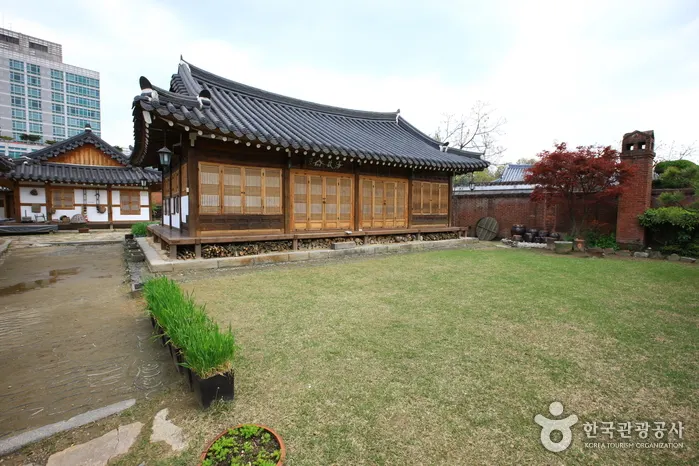
The Dongnagwon House in Jeonju Hanok Village provides a getaway to experience hanok stay and traditional Korean life. Affiliated with Jeonju Kijeon College, Dongnagwon is also a memorial hall dedicated to W. M. Junkin, who came to Korea as a missionary from the South Presbyterian Church of the United States in 1892. Dongnagwon is a reproduction of the old hanok houses in Jeonju from the time when W. M. Junkin was doing his missionary work in the area. It is comprised of three buildings: Anchae (main hall), Sarangchae (guest house), and Haengnangchae (servants’ quarters). · · Visitors to Dongnagwon can learn and experience traditional Korean culture such as music, crafts, and dance while inhabiting traditional lodging. In addition to providing accommodation for individual guests, Dongnagwon is also used for group accommodations or activities such as seminars, conferences, and family events. For groups of 30 or more, it is possible to rent out the entire venue (in addition to all facilities, including Seungdokdang, Seunghwadang, Cheongyuje, and the front yard).
Why Dongnagwon House matters
Imagine stepping back in time, the scent of aged wood filling the air as you walk through the courtyards of a noble Joseon-era household. Dongnagwon House in Jeonju offers exactly this immersion. As one of the most significant preserved hanoks within the famed Jeonju Hanok Village, it stands not merely as a relic, but as a living testament to Korea's architectural and social history. This estate provides a rare glimpse into the life of the yangban aristocracy, inviting visitors to explore its intricate layout and rich past.
The segregation of spaces reflects the Confucian social order of the time. The sarangchae, or men's quarters, was a formal space for study, receiving guests, and conducting affairs. Adjacent to it, the anchae, the women's inner quarters, offered a more private sanctuary.
Beyond its structural beauty, Dongnagwon House serves as a captivating museum of Joseon-era life. Several rooms are dedicated to showcasing the family's rich history, featuring displays of ancestral genealogy charts, known as jokbo.
Experience Traditional Living: Hanok Stay and Cultural Immersion
Dongnagwon House offers a unique opportunity for visitors to not just observe, but to actively participate in traditional Korean heritage through its hanok-stay program. This allows travelers to spend a night within the historic walls, experiencing the tranquility and unique atmosphere of a Joseon-era residence firsthand.
The hanok-stay accommodations are designed to maintain historical authenticity while providing modern comforts. Guests can sleep on traditional ondol floors, experience the subtle beauty of minimalist interiors, and enjoy the serene ambiance of the traditional courtyards.
This immersive experience goes beyond simple sightseeing, offering a deeper understanding and appreciation of hanok architecture and the traditional Korean way of life. It's a chance to slow down and savor the quiet elegance of a preserved past.
Dongnagwon House is conveniently located within the expansive Jeonju Hanok Village, making it an easily accessible addition to any itinerary exploring this popular cultural district. While the village itself is a major draw, Dongnagwon offers a more focused and in-depth experience of historical residential architecture. Allocate sufficient time to wander through its various sections and absorb the historical narratives presented.
Official visitor information
Official address: 33-6, Eunhaeng-ro, Wansan-gu, Jeonju-si, Jeonbuk-do.
The official source does not publish fixed visiting hours; check the linked official website before departure.
No fixed closure day is listed in the current official record.
Parking: * Nearby public parking lot.
Official information contact: • 1330 Travel Hotline: +82-63-1330 · (Korean, English, Japanese, Chinese) · • For more info: +82-63-285-3490.
How to use this guide
Use the official information above as the planning baseline. Opening arrangements, programs, admission conditions, and access rules can change after this review. Follow the official source links before traveling, especially when your visit depends on a particular exhibition, performance, seasonal activity, or facility.
The remaining recommendations on this page are editorial guidance for understanding the setting and organizing a visit. They are not a substitute for instructions issued by the venue, local government, cultural-property authority, or transport operator.
Responsible visit checklist
Before leaving
- Open the official venue page and confirm the latest operating notice.
- Check weather and transport conditions on the day of travel.
- Respect residential, religious, ecological, and cultural-property rules where applicable.
- Allow flexibility rather than relying on an exact minute-by-minute schedule.
- Use the official information contact when accessibility or reservation details are essential.
Where is Dongnagwon House?
33-6, Eunhaeng-ro, Wansan-gu, Jeonju-si, Jeonbuk-do
Where should I confirm current hours and closures?
Use the official source links in the reviewed-for-accuracy panel on this page.
When was this information checked?
The reviewed-for-accuracy panel shows the latest human review date and source record.