POPULAR
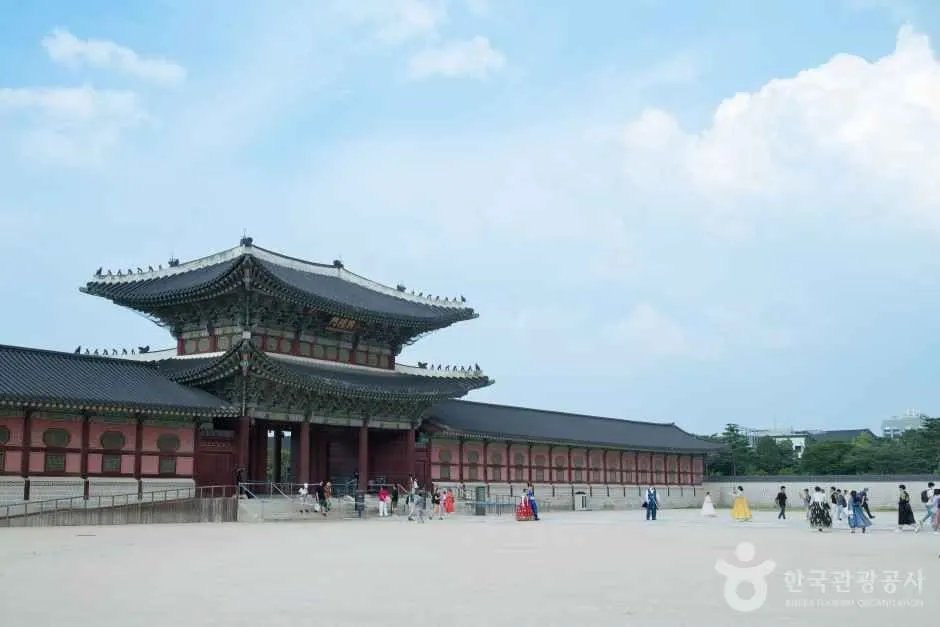
Gyeongbokgung Palace (경복궁) · © KTO · KOGL Type 1
Seoul
Gyeongbokgung Palace was built in 1395 as the official palace of the Joseon dynasty by Yi Seong-gye, the future King Taejo and founder of the new regime.
Gyeongbokgung Palace was built in 1395 as the official palace of the Joseon dynasty by Yi Seong-gye, the future King Taejo and founder of the new regime. Gyeongbokgung Palace is commonly referred to as the Northern Palace because of its location to the north, comparied to Changdeokgung Palace in the east and Gyeonghuigung Palace in the west. Gyeongbokgung Palace is arguably the most beautiful and is the largest of all five palaces. Many Joseon kings were crowned here. The premises were once destroyed by fire during the Imjin War (1592-1598). However, all of the palace buildings were later restored under the leadership of Heungseondaewongun during the reign of King Gojong. The assassination of Empress Myeongseong, however, resulted in Gyeongbokgung Palace losing its function as a royal palace, eventually witnessing the downfall of the Joseon dynasty. Gyeongbokgung Palace retains the original Gyeonghoeru Pavilion, a prime example of Joseon architecture, and the Hyangwonjeong Pavilion and pond. The sculptures in the Geunjeongjeon Hall exemplify Joseon-era sculpture techniques. The west side of the area outside Heungnyemun Gate is occupied by the National Palace Museum of Korea, while the eastern side of Hyangwonjeong Pavilion within the Gyeongbokgung Palace is occupied by the National Folk Museum of Korea. Official location: 161 Sajik-ro, Jongno-gu, Seoul. Visiting hours: November-February 09:00-17:00 (Last admission 16:00) March-May & September-October 09:00-18:00 (Last admission 17:00) June-August 09:00-18:30 (Last admission 17:30). Closure information: Tuesdays (If Tuesday falls on a public holiday, it will be closed on the following business day instead). Parking: Available. Information contact: +82-2-3700-3900.
Other places in Seoul that pair well with this visit.
Long-form editorial articles with practical info and visual context.
161 Sajik-ro, Jongno-gu, Seoul
November-February 09:00-17:00 (Last admission 16:00) March-May & September-October 09:00-18:00 (Last admission 17:00) June-August 09:00-18:30 (Last admission 17:30)