Itinerary
Gyeongbokgung Palace: Three Attractions in One
Plan Gyeongbokgung as a palace complex plus two free national museums, with a walking order that accounts for the daily guard ceremonies.
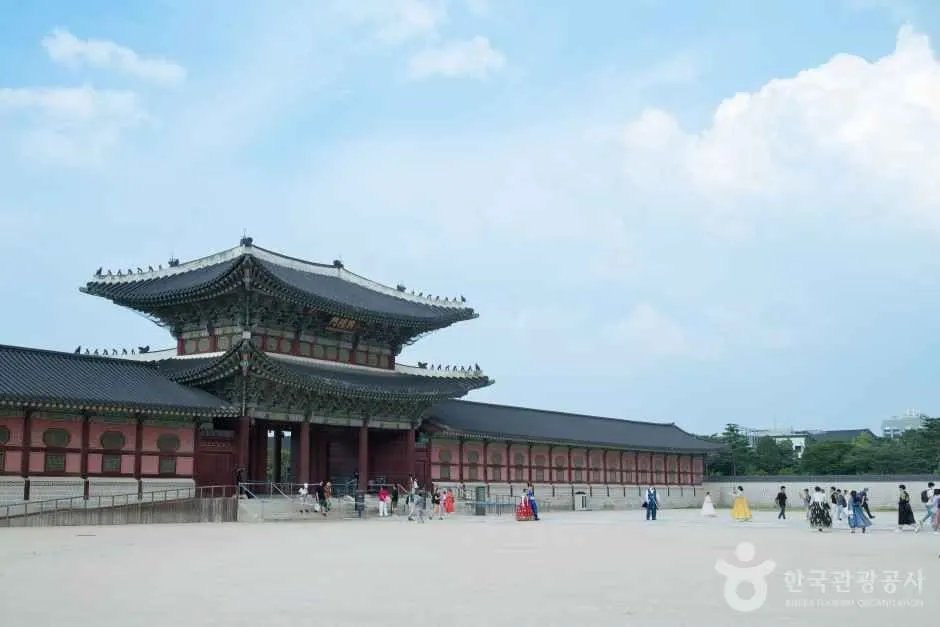
Every first-time visitor to Seoul is told the same three things about Gyeongbokgung: it was the main Joseon royal palace, it was founded in 1395, and there is a guard-changing ceremony worth seeing. All three are true. All three under-sell the site. Your KRW 3,000 ticket buys you access to a large working palace complex plus two national museums that sit inside its walls — the National Palace Museum of Korea and (as of writing) the National Folk Museum of Korea — both free, both worth an hour on their own. The Gwanghwamun ceremony is not one event but four staged across the day. And Gyeongbokgung versus Changdeokgung is a genuine choice, not an obvious default. Here is how to actually walk this place.
Why Gyeongbokgung is the palace it is
Gyeongbokgung was founded in 1395 by King Taejo as the primary palace of the newly established Joseon Dynasty. It flourished under Sejong the Great (r. 1418-1450), the reign that gave Korea Hangul, water clocks, and the astronomical instruments many of which trace back to workshops on these grounds. Then in 1592 the Imjin War destroyed it. What most guides skip is the gap: reconstruction stalled, and the palace sat abandoned for roughly 270 years. When Queen Sinjeong finally ordered rebuilding in 1865, the young king Gojong moved in on the second day of the seventh month of 1868. By 1888 the rebuilt palace held around 500 structures.
That number matters because of what happened next. After annexation in 1910, the Japanese Government-General of Korea systematically dismantled the palace. By the end of the colonial period only about forty of those five hundred buildings remained. A Government-General office was built directly in the palace's central axis between 1916 and 1926, physically blocking the throne hall from Gwanghwamun. What you walk today is the product of two long restoration campaigns — the first (1990-2010) recreated 89 buildings, and the second (2008-2045) is scheduled to recreate 90 more. When a plaque tells you a hall was 'reconstructed,' it is almost always telling you the truth: this is a palace being physically re-assembled in real time.
The three buildings that actually earn the ticket
Geunjeongjeon is the throne hall — the two-tier pavilion on the raised stone platform at the center. It is the largest main hall of any Joseon palace, and it is where you should spend the first ten unhurried minutes. Walk to the front, sit on the low ledge, and look at the roof bracketing rather than the throne inside. The multi-tiered dancheong painting on the underside of the eaves is why photographers with tripods come at opening hour.
Gyeonghoeru is the banquet hall on the artificial island in the western pond. From the outside it is beautiful; the interior is not routinely open to walk-in visitors, but timed guided access is offered on a separate booking. If you have a summer visit, the pond around Gyeonghoeru is the coolest microclimate on the grounds. Sit five minutes.
Hyangwonjeong is the small hexagonal pavilion on its own tiny island toward the north end, built between 1867 and 1873. It is smaller than the photos suggest, but it is the picture-postcard shot of Gyeongbokgung for a reason. Walk here last; it lines up with the north gate and the museums.
The Gwanghwamun ceremony is four events, not one
Most itineraries write it up as 'the changing of the guard at noon.' It is not one ceremony. There are four staged events, every day the palace is open (so every day except Tuesday, weather permitting): the Changing of the Royal Guard at 10:00 and 14:00, each running about 20 minutes; and the Guarding of Gwanghwamun Gate at 11:00 and 13:00, each running about 10 minutes. On top of that, a public military training demonstration runs at 09:35 and 13:35.
Practical read: the 10:00 changing is the best one to plan around. Crowds are thinner, the light on the gate is directional, and you can drift straight into the palace afterward at opening hour. The 14:00 changing is denser but has better sun in winter. The two 'Guarding of the Gate' slots at 11:00 and 13:00 are shorter and quieter and are the honest sleeper option for photographers who want the costumes without the tour-bus crowd. Rain and severe heat can cancel any of them; the palace posts same-day notices at the ticket booth.
The two museums that come with your ticket
This is the part almost no first-time itinerary uses. The National Palace Museum of Korea sits inside the palace grounds, just south of Heungnyemun, and admission is free. Its permanent galleries cover royal court life, ceremonial regalia, and the astronomical and scientific instruments Sejong's court produced. Sixty to ninety minutes is the right budget. If you have a rainy morning or a hot August afternoon, walk here first and reverse the day.
The National Folk Museum of Korea, in the northeast quadrant of the palace grounds, is also free and covers Korean daily life across the Joseon and modern eras — costumes, agricultural tools, seasonal festivals, funerary practice. It is the underrated indoor complement to a palace visit. One note: this museum is scheduled to relocate to Sejong City around 2026, and interim closures or partial exhibitions are possible during the move. Confirm on-site before building a plan around it.
The two museums together are the reason to give Gyeongbokgung a half-day rather than 90 minutes. They are also the summer-and-winter hedge: air-conditioned in July, heated in January, both free, both within the same fence line.
Gyeongbokgung or Changdeokgung: it is a real choice
If you only visit one Seoul palace, Gyeongbokgung is the correct default for scale, symmetry, and the ceremonial front axis from Gwanghwamun to the throne hall. Changdeokgung is the correct choice for garden atmosphere and continuous authenticity — it is a UNESCO World Heritage site and its Huwon (Secret Garden) is only accessible on a timed guided walk. Two rules of thumb from repeated visits: if it is your first Seoul day and you want the postcard, choose Gyeongbokgung. If it is your second palace, or you have a strong preference for gardens over ceremony, choose Changdeokgung. The KRW 10,000 integrated palace ticket makes both plus Changgyeonggung, Deoksugung, and Jongmyo Shrine accessible for three months from purchase — for anyone doing two or more palaces, this is the ticket to buy at the first booth.
Timing, hanbok, and the pairing that actually works
Weekend afternoons in spring and autumn are the peak — busloads plus hanbok photographers pack the front courtyard from 11:00 to 15:00. A weekday 09:00 opening walk plus the 10:00 ceremony plus one museum plus lunch in Bukchon is the schedule most first-time visitors should copy. Hanbok wearers enter the palace free of charge, which is why the rental shops around Anguk Station stay full; if you were going to take photographs on the grounds anyway, the KRW 15,000-25,000 two-hour rental more than covers the KRW 3,000 saved admission and is standard practice.
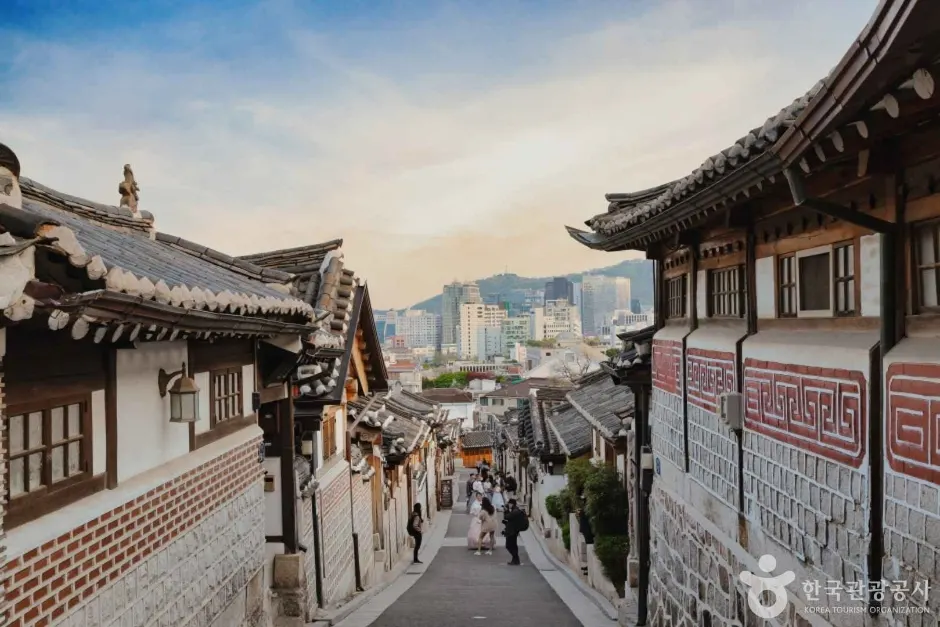
The natural pair after Gyeongbokgung is Bukchon Hanok Village (15 minutes on foot east) and Insadong (20 minutes south). Bukchon is the traditional-tile-roof residential zone and photographs better in soft late-afternoon light; Insadong is the tea-house and gallery street for early evening. This turns a palace visit into a walkable half-day loop without a taxi.
Official visitor information
Address: 161 Sajik-ro, Jongno-gu, Seoul (서울특별시 종로구 사직로 161). Nearest metro: Gyeongbokgung Station (Line 3), Exit 5, directly onto the palace grounds.
Opening hours: March-May and September-October 09:00-18:00 (last entry 17:00) · June-August 09:00-18:30 (last entry 17:30) · November-February 09:00-17:00 (last entry 16:00).
Closed: Tuesdays. If Tuesday falls on a public holiday, the closure moves to the following business day.
Admission: KRW 3,000 adults. Free for visitors under 19 and 65 and over. Free for anyone wearing hanbok (rental hanbok counts).
Integrated Palace Ticket: KRW 10,000 covering Gyeongbokgung, Changdeokgung (with Huwon Secret Garden), Changgyeonggung, Deoksugung, and Jongmyo Shrine. Valid three months from purchase. Available at any of the five ticket booths.
Guard ceremonies (all at Gwanghwamun Gate, cancelled Tuesdays and in heavy rain/extreme heat): Changing of the Royal Guard 10:00 and 14:00 (about 20 min each); Guarding of the Gate 11:00 and 13:00 (about 10 min each); Public Military Training 09:35 and 13:35.
On-grounds museums (both free, separate opening hours — check on-site): National Palace Museum of Korea (south of Heungnyemun); National Folk Museum of Korea (northeast quadrant, scheduled relocation to Sejong City around 2026 — confirm status before visiting).
Contact: +82-2-3700-3900.
- Enter at 09:00, watch the 10:00 ceremony from the front of Gwanghwamun, then walk in — this beats trying to reverse the sequence.
- The two on-grounds national museums are both free and worth an hour each. Use them as your weather hedge in July heat and January cold.
- Four ceremony events per day, not one: 10:00 and 14:00 for the full changing, 11:00 and 13:00 for the shorter gate-guarding, plus training at 09:35 and 13:35.
- Hanbok wearers enter free. Rentals near Anguk Station run KRW 15,000-25,000 for two hours — worth it if you were photographing anyway.
- Buy the KRW 10,000 integrated ticket at the first booth if you plan to visit any second palace within three months.
How long should I budget for a visit?
Ninety minutes for the palace alone at a fast pace; three to four hours if you also do the National Palace Museum and the folk museum. A half-day is honestly the right budget the first time — the KRW 3,000 ticket materially under-prices what is on the grounds.
Is Gyeongbokgung open on Tuesdays?
No. Both the palace and the Gwanghwamun guard ceremonies are closed on Tuesdays. If Tuesday falls on a public holiday, the closure shifts to the following business day. This is the single most common trip-planning error at this site.
What time is the changing of the guard?
The Changing of the Royal Guard runs at 10:00 and 14:00 for about 20 minutes each. A shorter Guarding of the Gate ceremony runs at 11:00 and 13:00 for about 10 minutes. A public military training demonstration runs at 09:35 and 13:35. All are at Gwanghwamun Gate; all are cancelled on Tuesdays and can be cancelled in heavy rain or extreme heat.
Do I need to rent hanbok?
No, but hanbok wearers enter the palace free of charge, which is why rental is so widespread. Rentals around Anguk Station and near Gyeongbokgung Station cost roughly KRW 15,000-25,000 for two hours. If you were planning to photograph the palace anyway, it pays for itself.
Should I visit Gyeongbokgung or Changdeokgung?
If it is your first Seoul palace and you want the biggest, most symmetrical throne-hall approach, choose Gyeongbokgung. If it is your second palace or you prefer atmospheric gardens, choose Changdeokgung and its Huwon Secret Garden. If you are visiting two or more palaces within three months, the KRW 10,000 integrated ticket removes the choice.
Are the on-grounds museums really free?
Yes. The National Palace Museum of Korea and the National Folk Museum of Korea both offer free admission and both sit inside the Gyeongbokgung grounds. The Folk Museum is scheduled to relocate to Sejong City around 2026, so confirm the status on-site before planning around it.