Seasonal
Gwanghalluwon Garden Visitor Guide — History, Attractions & Hours
Step into a timeless landscape at Gwanghalluwon Garden, where Joseon architecture meets the legendary tale of Chunhyang. Explore its serene ponds and symbolic islands.
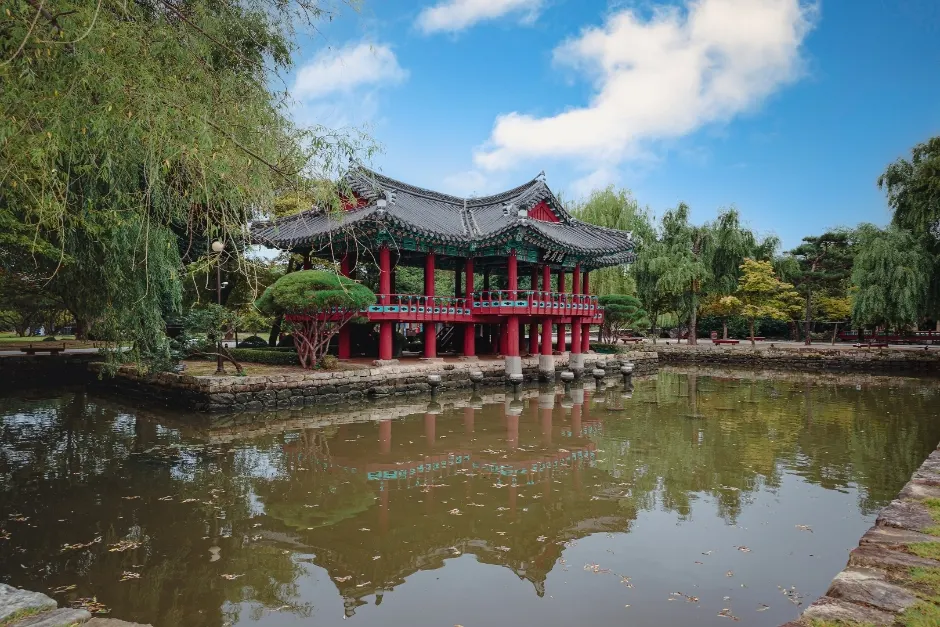
Originally known as Gwangtongnu, Gwanghalluwon Garden was built by Hwang Hui Jeongseung in 1419 during the reign of Joseon dynasty’s King Sejong. Because of its outstanding beauty, Governor Jeong In-ji gave the garden the name "Gwanghallu" in 1444, comparing it to a garden from the palace on the moon. It is famous as the location where Lee Mong-ryong and Chunhyang (two lovers from a well-known Korean folk story) first met. In the 1920s Chunhyangsa Temple was established in the neighboring area and a portrait of Chunhyang was hung in a place of honor. The garden is the venue of the Chunhyangjae Festival every spring, celebrating the deep and lasting love of the famous couple. The area around Gwanghalluwon Garden is full of many attractions, including Ojakgyo Bridge, symbolizing the bridge connecting Chilseok and Gyeonwu from the traditional story of Chilseok; and Chunhyang Hall, Wolmae-jip (house of Chunhyang's mother), Wanwoljeong Pavilion, Yeongjugak Pavilion, Samsinsan and many other traditional buildings.
Why Gwanghalluwon Garden matters


Gwanghalluwon Garden in Namwon unfurls a tapestry of natural beauty and literary heritage. This Joseon-era garden, centered around the elegant Gwanghallu Pavilion, invites visitors to wander through meticulously designed landscapes. More than just a visual delight, it serves as the enduring backdrop for Korea's most cherished folk tale, Chunhyangjeon, infusing the serene atmosphere with a sense of timeless romance and loyalty.
Gwanghalluwon Garden is inseparable from the beloved Korean folk tale, "The Tale of Chunhyang." This timeless story of a devoted young woman, Chunhyang, and her forbidden love for the nobleman Mongryong, is deeply woven into the fabric of the garden.
It is said that the garden was the very place where Chunhyang and Mongryong first met and pledged their love. This legendary connection transforms the picturesque scenery into a romantic pilgrimage site for many visitors, especially those familiar with the enduring narrative.
Within the garden's grounds, a shrine dedicated to Chunhyang stands as a testament to her enduring legacy. The shrine allows visitors to pay homage to the fictional heroine, reinforcing the deep cultural significance of the story.
Consider combining your visit with other local attractions in Namwon, such as the Chunhyang Theme Park, which further explores the folk tale, or the Namwon National Gugak Center for traditional Korean performing arts. This ensures a richer and more comprehensive experience of Namwon's cultural offerings.
Official visitor information
Official address: 1447 Yocheon-ro, Namwon-si, Jeonbuk-do.
Official visiting hours: April-October 08:00-21:00 November-March 08:00-20:00 * Free admission after 18:00.
Official closure information: N/A (Open all year round).
Parking: Available (Small vehicles: 213 spaces / Large vehicles: 66 spaces).
Official information contact: +82-63-620-8907.
How to use this guide
Use the official information above as the planning baseline. Opening arrangements, programs, admission conditions, and access rules can change after this review. Follow the official source links before traveling, especially when your visit depends on a particular exhibition, performance, seasonal activity, or facility.
The remaining recommendations on this page are editorial guidance for understanding the setting and organizing a visit. They are not a substitute for instructions issued by the venue, local government, cultural-property authority, or transport operator.
Responsible visit checklist
Before leaving
- Open the official venue page and confirm the latest operating notice.
- Check weather and transport conditions on the day of travel.
- Respect residential, religious, ecological, and cultural-property rules where applicable.
- Allow flexibility rather than relying on an exact minute-by-minute schedule.
- Use the official information contact when accessibility or reservation details are essential.
Where is Gwanghalluwon Garden?
1447 Yocheon-ro, Namwon-si, Jeonbuk-do
Where should I confirm current hours and closures?
Use the official source links in the reviewed-for-accuracy panel on this page.
When was this information checked?
The reviewed-for-accuracy panel shows the latest human review date and source record.