Seasonal
Hallasan Mountain Visitor Guide — Highest Peak & UNESCO Site
Conquer South Korea's highest peak, a UNESCO World Natural Heritage site. Discover diverse trails, volcanic beauty, and seasonal wonders on Jeju Island.
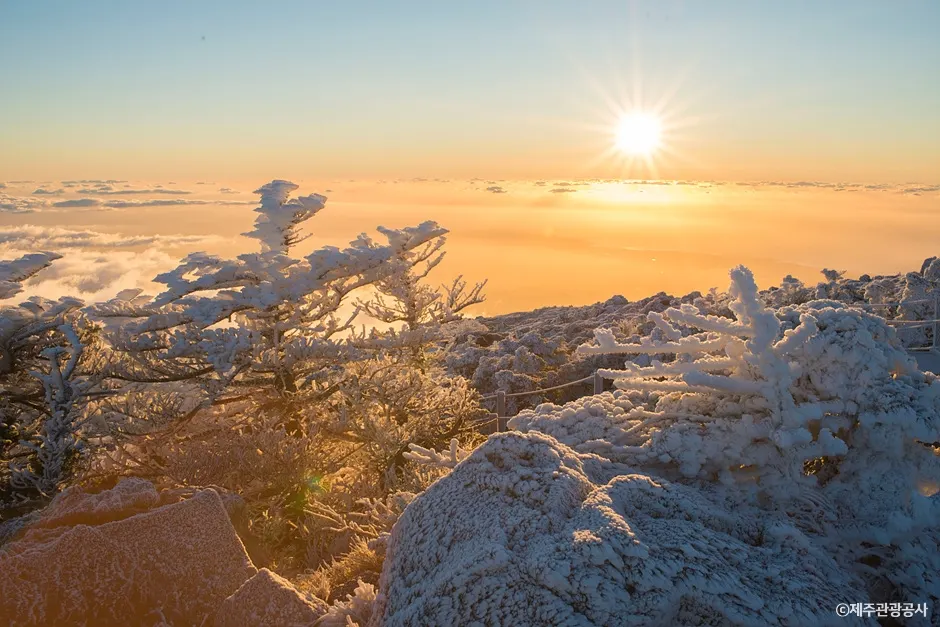
Hallasan Mountain stands proudly at the center of Jeju Island and is perhaps the island’s most memorable landmark. Also called Yeongjusan Mountain, meaning "mountain high enough to pull the galaxy," Hallasan Mountain is widely known by scientists for its geological value. Designated as a national park in 1970, there are 368 parasitic cones called "oreum" (Jeju dialect meaning peak) around the main mountain. · · Hallasan Mountain is famous for its vertical ecosystem of plants that results from the varying temperatures along the mountainside. Over 1,800 kinds of plants and 4,000 species of animals (3,300 species of insects) have been identified; to explore the mountain's treasures, simply follow one of the well-developed hiking trails.
Why Hallasan Mountain matters


Access to the summit trails (Seongpanak and Gwaneumsa) requires advance booking, especially during peak seasons like spring, summer, and autumn holidays. Reservations can typically be made online through the Hallasan National Park website.
Official visitor information
Official address: San 15-1 Topyeong-dong, Seogwipo-si, Jeju-do.
Official visiting hours: Varies by season and hiking trails; refer to the official website or inquire via phone call.
No fixed closure day is listed in the current official record.
Parking: Available.
Official information contact: +8264-713-9950.
Additional official details
Mountain Not Access Period: Hiking hours are subject to change according to season and park rangers' discretion. · For detailed information, please visit the official website..
Hiking Course: [Eorimok Trail] 6.8 km · Eorimok Trail Information Center - Nambyeok Point · · [Yeongsil Trail] 5.8 km · Yeongsil Rest Stop - Nambyeok Point · · [Gwaneumsa Temple Trail] 8.7 km · Gwaneumsa Camping Site - Summit (Dongneung) · · [Seongpanak Trail] 9.6 km · Seongpanak Trail Information Center - Summit (Dongneung) · · [Donnaeko Trail] 7 km · Donnaeko Trail Information Center - Nambyeok Point · · [Eoseungsaengak Trail] 1.3 km · Eorimok Trail Information Center - Eoseungsaengak · · [Seokguram Trail] 1.5 km · Chunghon Memorial Site parking lot - Seokguram.
Admission Fees: Free.
Restrooms: Available.
Parking Fees: Two-wheel vehicles 500 won · Compact cars (under 1,000 cc) 1,000 won · Mid-size cars (under 4 ton trucks) 1,800 won · Small bus (11-15 seats) 3,000 won · Mid-Large bus (over 16 seats / over 4 ton trucks) 3,700 won.
How to use this guide
Use the official information above as the planning baseline. Opening arrangements, programs, admission conditions, and access rules can change after this review. Follow the official source links before traveling, especially when your visit depends on a particular exhibition, performance, seasonal activity, or facility.
The remaining recommendations on this page are editorial guidance for understanding the setting and organizing a visit. They are not a substitute for instructions issued by the venue, local government, cultural-property authority, or transport operator.
Responsible visit checklist
Before leaving
- Open the official venue page and confirm the latest operating notice.
- Check weather and transport conditions on the day of travel.
- Respect residential, religious, ecological, and cultural-property rules where applicable.
- Allow flexibility rather than relying on an exact minute-by-minute schedule.
- Use the official information contact when accessibility or reservation details are essential.
Where is Hallasan Mountain?
San 15-1 Topyeong-dong, Seogwipo-si, Jeju-do
Where should I confirm current hours and closures?
Use the official source links in the reviewed-for-accuracy panel on this page.
When was this information checked?
The reviewed-for-accuracy panel shows the latest human review date and source record.