Seasonal
Geumneung Beach: Quieter Than Hyeopjae
Geumneung shares Hyeopjae's Jeju coastline but often has easier parking. Compare the two beaches and plan a quieter west-coast stop.
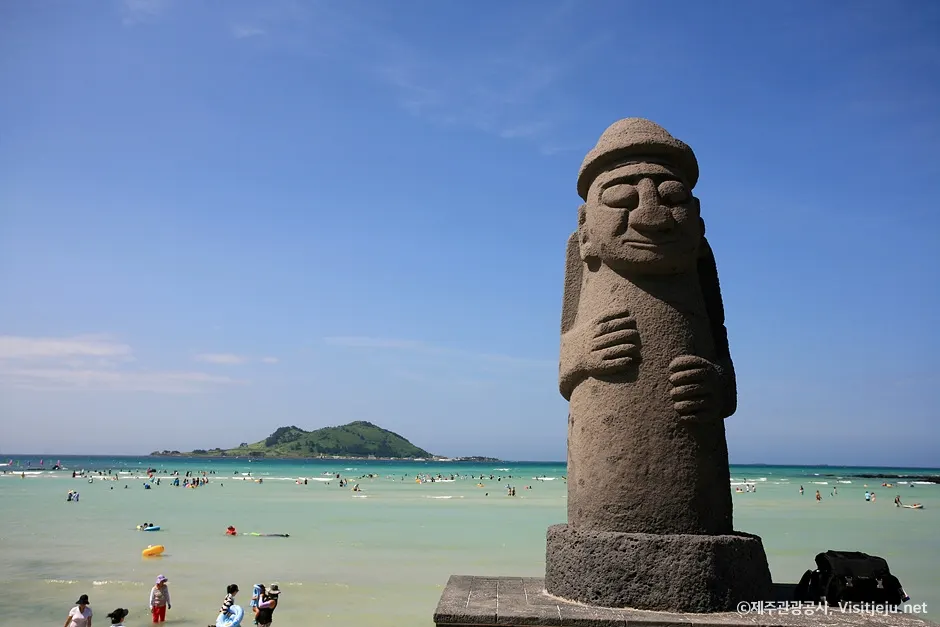
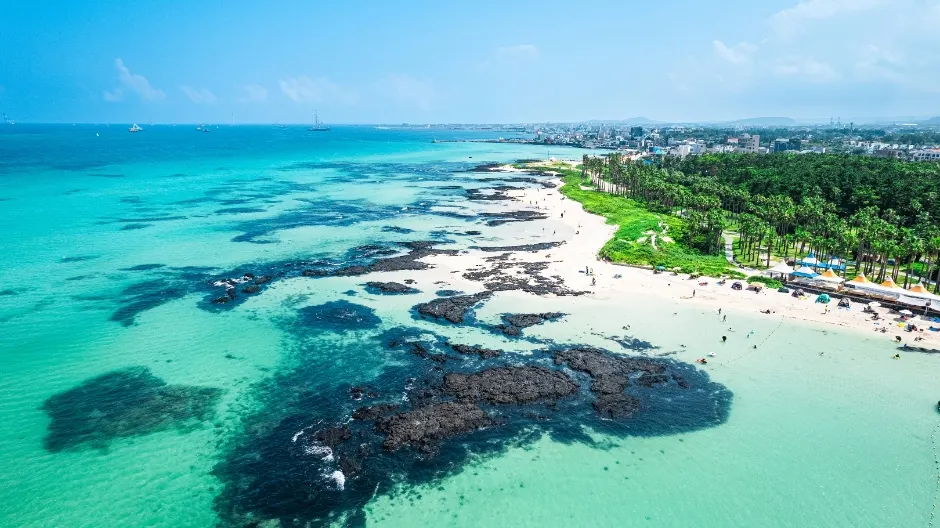
Ask any Jeju local which west-coast beach they'd send a first-time visitor to and they'll say Hyeopjae. Ask them where they'd send you if it's a weekend in July, they'll pause and say Geumneung. The two beaches share the same 1.2-kilometer stretch of white shell-sand coastline — the only thing separating them is a 400-meter reef and a much smaller parking lot. When Hyeopjae's lot fills up (which happens by 10 a.m. on summer weekends), Geumneung has spaces left. That's not an accident; that's the whole reason to know Geumneung exists.
Why Geumneung, not Hyeopjae
The beach itself is essentially identical to Hyeopjae: fine white sand made from crushed seashells, a shallow gradient that lets you wade out 40-50 meters before it deepens, calm water except during typhoons, and the picture-perfect view of Biyangdo Island rising off the coast. Both beaches share the same view and the same water conditions. Geumneung's advantage isn't scenery — it's the crowd. Because Hyeopjae is the one that shows up in every Jeju guidebook, tour buses go there. Geumneung's smaller parking lot filters out the group tours; you get individual families and Jeju locals instead.
One real difference: Geumneung has fewer beachfront cafes and food stalls. If you want a coffee with sea view, walk 10-15 minutes back to Hyeopjae's row of cafes and you'll get everything Hyeopjae has to offer. If you want a quiet swim without loud tour groups, Geumneung is where you actually swim.
The tide matters more than most guides say
Geumneung's shallow bottom is what makes the water look aquamarine in photos — but that turquoise is a mid-tide phenomenon. At high tide the water covers deeper sections and the color deepens toward blue-navy. At low tide the shallow bottom is exposed as damp sand and rock. The 90-minute window on either side of mid-tide is when you get the postcard color. Check Korean Meteorological Administration tide charts (data.kma.go.kr, or apps like 물때편) for Jeju-do before you go.
The other timing consideration is the sun angle. Because the coast faces roughly west-northwest, direct sunlight on the water peaks in the afternoon (14:00-17:00), which is when the aquamarine reads most vibrantly. Morning shots are softer and moodier — better for a stroll, less for the color pop everyone comes for.
Sunset over Biyangdo Island
Biyangdo — the small volcanic island offshore — is the reliable frame for a sunset shot. From about 30 minutes before sundown, the sun drops behind the island silhouette and lights the tide pools on the reef between Geumneung and Hyeopjae. The best position is on the reef itself (accessible on foot at low tide, be careful about being cut off) or from the walking path just above the sand at Geumneung's north end.
Jeju sunsets are earlier than mainland Seoul sunsets — roughly 5:20 p.m. in December, 7:45 p.m. in June. Confirm the local sunset time (any weather app) and arrive 30 minutes before.
Pair it with Hallim Park for a west-coast day
Geumneung is 15 minutes on foot or 3 minutes by car from Hallim Park (한림공원), a large botanical and folk-culture park with two subterranean lava caves. That combination — a morning at the park (2-3 hours), lunch at one of the boat noodle (해물칼국수) shops along the road between them, then afternoon at the beach — is the standard Jeju-west day that doesn't require moving between distant sights.
For a longer loop that includes the south coast, drive 45 minutes south to Yongmeori Coast (용머리해안) or Sanbangsan Mountain (산방산). But that's a different kind of day — cliff geology and hiking rather than beach swimming.
Official visitor information
Address: Geumneung-ri, Hallim-eup, Jeju-si, Jeju-do (제주특별자치도 제주시 한림읍 금능리).
Opening: The beach is open 24 hours and free to access. Lifeguards on duty during official swimming season (typically early July to late August).
Facilities: Public restrooms, outdoor showers, and changing rooms are provided near the main entrance. Basic; not luxury.
Parking: Free public parking, smaller lot than Hyeopjae — fills after Hyeopjae fills. Overflow parking along the coastal road.
Nearest bus: Jeju-Aewol-Hallim bus route 202. From central Jeju City the drive is about 40 minutes.
- Arrive after Hyeopjae's parking fills (usually by 10:00 on summer weekends) — Geumneung will still have space.
- Aim for the 90-minute window either side of mid-tide for the aquamarine color.
- Sunset shot: arrive at the reef between the two beaches 30 min before local sundown.
- Bring reef shoes if you plan to walk out to the tide pools — barnacles on the rocks.
- Pair with Hallim Park (15 min on foot) for a full west-coast day.
Geumneung or Hyeopjae — which one?
Same view, same water, different crowds. Hyeopjae has more cafes and tour buses; Geumneung has quieter sand and available parking. Park at Geumneung, walk to Hyeopjae for coffee, swim back at Geumneung.
Is it safe for kids to swim?
The gradient is very shallow — you can wade 40-50 meters out before it deepens. That's why families favor it. Still, stay within the marked swimming area during lifeguard season and watch for tide changes.
When does the water look most turquoise?
Mid-tide with afternoon sun (roughly 14:00-17:00 depending on season). Check tide charts before you go — high tide deepens the color, low tide exposes the sand.
How do I get there without a car?
Bus 202 from Jeju City stops at Geumneung. It's a 60-70 minute ride. Renting a car is standard for Jeju because the bus schedules are infrequent.