Itinerary
"A Glimpse into Gwangju's Missionary Past?"... Yangnim-dong, A Legacy of Western Architecture
Explore Missionary Wilson's House, a testament to early 20th-century Western architecture and a key site in Gwangju's modern history.
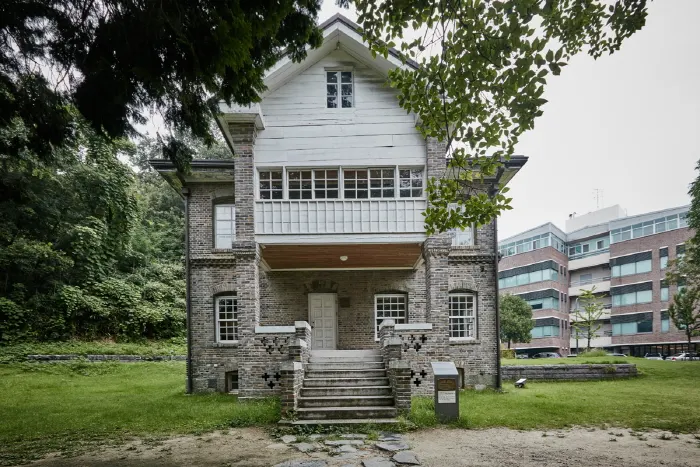
Stepping into the Yangnim-dong district of Gwangju feels like a journey back in time, particularly when you encounter Missionary Wilson's House. This early 20th-century brick structure, built by American medical missionary Robert M. Wilson, is one of the oldest Western-style residences remaining in the city. It stands as a silent witness to a pivotal era of cultural exchange and the early spread of Western influence in Jeolla Province, offering a unique perspective on Gwangju's evolving historical landscape.

The Architectural Echoes of Early 20th Century
Missionary Wilson's House, or 우일선 선교사 사택 (Uilseon Seon'gyosa Satak), is more than just an old building; it is a tangible link to the early days of Christian missionary work in Gwangju. Constructed in the early 1900s, its Western architectural style, characterized by the use of brick, immediately sets it apart from traditional Korean structures of the period.
The house was the residence of Robert M. Wilson, an American medical missionary who arrived in Gwangju with a mission to serve the local community through healthcare and spiritual guidance.
The choice of brick as a primary building material was a clear indicator of Western construction techniques being introduced to the region. This contrasts sharply with the typical wooden structures and tiled roofs common in Korean homes at the time.
The solid construction and design reflect the practical needs and aesthetic preferences of the missionaries, who aimed to establish a comfortable and functional living space while also building institutions that would serve the Korean populace. Its preservation within the Yangnim-dong mission compound ensures that this architectural heritage remains accessible.
A Hub of Missionary Activity in Yangnim-dong
The house is strategically located within the historic Yangnim-dong missionary compound, an area that was once the epicenter of Western missionary endeavors in Gwangju and the wider Jeolla Province. This compound was established by various missionary groups who arrived in Korea during the late Joseon Dynasty and early Japanese colonial period, seeking to spread Christianity and establish educational and medical facilities.
Missionary Wilson's House is one of several heritage buildings within this district that collectively tell the story of this significant historical period.
The presence of Western missionaries like Robert M. Wilson had a profound impact on the region's social and cultural development. Beyond their religious activities, they introduced modern medical practices, established schools, and brought new ideas and technologies.
The Yangnim-dong area, with its collection of Western-style houses and churches, became a symbol of this transformative era. Visitors exploring this area can gain a deeper understanding of how these foreign influences interacted with and shaped Korean society, creating a unique blend of cultures that is still visible today.
Experiencing the Legacy: What to See and Do
While visitors cannot typically enter the interior of Missionary Wilson's House, the experience of exploring its exterior and the surrounding grounds offers a valuable historical perspective. The architecture itself tells a story, and observing the details of the brickwork, the window placements, and the overall structure provides insight into the building’s origins and purpose.
Walking around the property allows one to appreciate the setting and imagine the daily life of the missionary family who resided there over a century ago.
The broader Yangnim-dong area complements the visit to the house. It is recommended to explore other heritage sites within the compound, such as the various churches and residences built by other missionaries.
These sites collectively form an open-air museum, illustrating the architectural diversity and the historical narrative of Western missionary influence. Taking a leisurely stroll through these historic streets provides a comprehensive view of Gwangju's cross-cultural past and its unique contribution to Korean modern history.
Planning Your Visit: Essential Tips
Missionary Wilson's House is located in the Yangnim-dong area, which is accessible by public transportation. It is advisable to check the latest information regarding accessibility and any specific visiting hours, although the exterior viewing is generally available at any time.
The best way to experience the site is often on foot, allowing ample time to absorb the historical atmosphere and explore the nearby heritage buildings. Comfortable walking shoes are recommended, as the area is best explored at a relaxed pace.
Consider visiting on a weekday to avoid larger crowds, allowing for a more intimate encounter with the historical site. The surrounding Yangnim-dong neighborhood also offers charming cafes and small shops, providing opportunities to rest and reflect on the historical journey.
Combining a visit to Missionary Wilson's House with exploration of these other cultural elements makes for a well-rounded and enriching experience of Gwangju's unique historical tapestry.
Where is Missionary Wilson's House located?
It is situated in the Yangnim-dong missionary compound in Gwangju, South Korea.
What can visitors see at the site?
Visitors can view the exterior of the historic Western-style brick house and explore the surrounding grounds and other heritage buildings in the compound.
Is there an admission fee?
Admission to view the exterior of the house and the grounds is typically free.
What other attractions are nearby?
Nearby attractions include other historic missionary residences and churches within the Yangnim-dong compound, as well as cafes and shops.
How can I get there?
The site is accessible by public transportation; it is best explored on foot once in the Yangnim-dong area.