4 Busan Beaches for Different Coastal Days

Compare four officially documented Busan beaches by size, setting, and nearby attractions before choosing where to spend a coastal day.

By Chansoo Yang6/14/2026Updated 7/24/20266 min read
4 Busan Beaches for Different Coastal Days

Busan is Korea’s largest coastal city, and its beaches are its signature draw. The four places in this guide were selected because each has an English page reviewed against official Korea Tourism Organization material, and because together they show clearly different sides of the city’s coastline rather than repeating one experience. Haeundae is the large, famous beach backed by hotels and events. Gwangalli is known for its evening view of Gwangan Bridge. Songjeong offers shallow water and a quieter, family-oriented setting. Songdo is one of Korea’s oldest beaches, tied to nearby parks and a historic memorial. Candidates that duplicated another entry were left out to keep the comparison clear.

Treat this as a comparison of stable coastal features, not a live bulletin. Water conditions, swimming-season dates, safety notices, event schedules, and facility operating hours change through the year and are set by local authorities, so this guide does not restate them. Swimming is typically managed within a designated summer season with lifeguards, and conditions vary by day and weather. Confirm the current notice from official Busan and district sources shortly before you go, and never enter the water outside supervised areas or ignore posted safety flags. Plan around any festival or seasonal closure your visit depends on.

A practical way to choose is by the kind of day you want. For a lively, full-service beach with the widest range of nearby attractions, Haeundae is the default. For evening atmosphere and cafes with a bridge view, Gwangalli fits best. For calmer, shallow water suited to families, Songjeong is the pick, with Jukdo Park nearby. For history and connected coastal parks, Songdo pairs with Amnam Park and the Jagalchi seafood market area. These beaches sit in different parts of the city, so check current transport and maps for the route you plan rather than assuming they combine into one short trip.

4 Busan Beaches for Different Coastal Days

  1. 1.Haeundae Beach (해운대해수욕장)
    Haeundae Beach (해운대해수욕장)

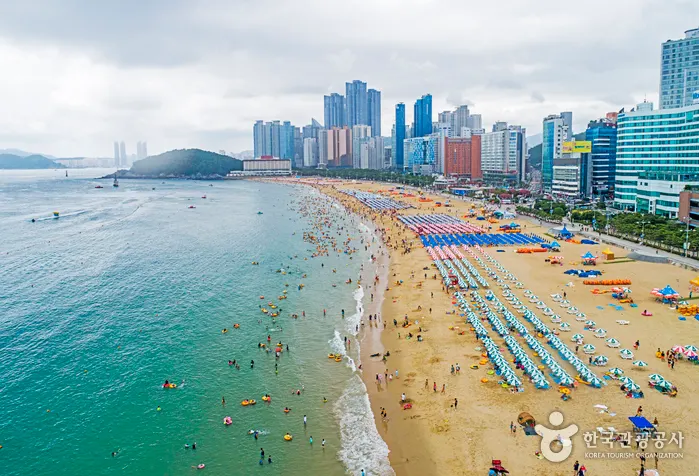
    Busan’s most famous beach, a 1.5 km white-sand strand backed by hotels, events, and nearby attractions.

    • About 1.5 km of white sand
    • Hotels and guesthouses nearby
    • Year-round events and festivals

    Haeundae Beach is the flagship choice in this guide. Its official Korea Tourism Organization description calls it the most famous beach in Busan, a white-sand beach roughly 1.5 kilometers long and 30 to 50 meters wide before a shallow bay that makes it good for swimming. The surrounding area has developed the full range of accommodation from luxury hotels to private guesthouses, and the beach is known for cultural events and festivals held throughout the year. Nearby facilities include Dongbaekseom Island, an aquarium, a yachting dock, and the BEXCO convention center. Choose it for a lively, full-service beach day, and confirm current swimming-season and event details from official sources before visiting.

    Address: 264 Haeundaehaebyeon-ro, Haeundae-gu, Busan
    More info
  2. 2.Gwangalli Beach (광안리해수욕장)

    Gwangalli Beach (광안리해수욕장)

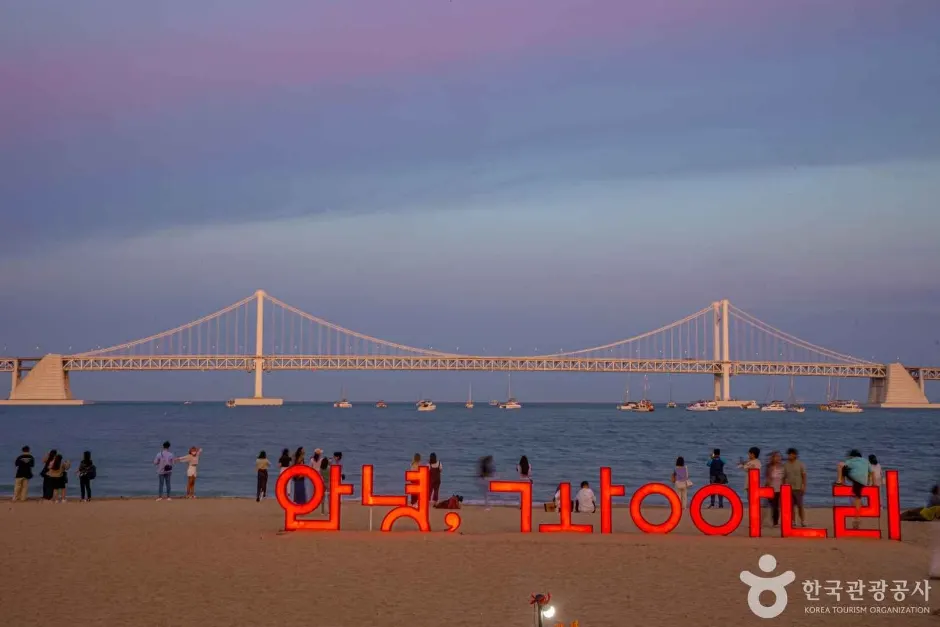
    A beach west of Haeundae famous for fine sand and the evening lights of Gwangan Bridge.

    • 1.4 km of fine sand
    • Restaurants and cafes nearby
    • Gwangan Bridge night view

    Gwangalli Beach is the evening-atmosphere choice here. Its official description explains that it lies to the west of Haeundae Beach, is 1.4 kilometers long and 25 to 110 meters wide, and is famous for its fine sand, with a past water-purification effort helping the nearby river ecosystem flourish. Beyond the beachfront, the Gwangalli area is filled with restaurants, romantic cafes, and fashion stores, and many visitors come in the evening to take in the bright lights of Gwangan Bridge stretching across the horizon. It suits a relaxed evening more than only daytime swimming. Confirm current facility hours and event schedules from official sources before visiting.

    Address: 219 Gwanganhaebyeon-ro, Suyeong-gu, Busan

    More info
  3. 3.Songjeong Beach (송정해수욕장)

    Songjeong Beach (송정해수욕장)

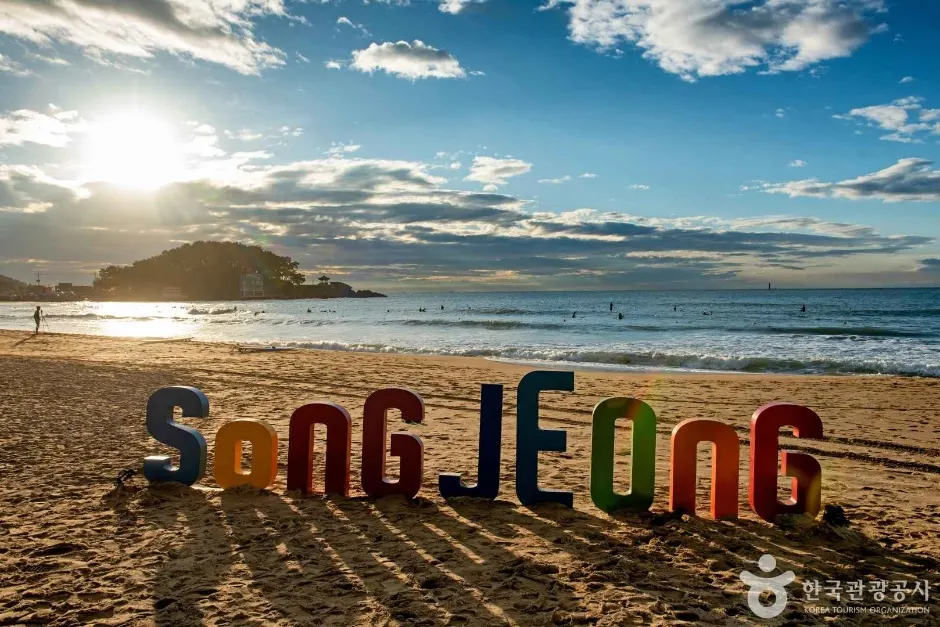
    A calmer beach with shallow water suited to families, with Jukdo Park and lighthouses nearby.

    • 1.2 km shallow-water beach
    • Family-friendly setting
    • Jukdo Park viewpoint nearby

    Songjeong Beach is the family choice in this guide. Its official description explains that it stretches 1.2 kilometers with a width ranging from 30 to 60 meters, and that the white sandy beach with shallow waters is ideal for families with young children. The area around the beach offers many raw-fish restaurants, and Jukdo Park to the north sits at the entrance to Songjeonghang Port, where the harbor’s white and red lighthouses and the view from Songiljeong Pavilion make popular photo spots. It offers a quieter alternative to the busier city beaches. Swimming is seasonal and supervised, so confirm current conditions and safety notices from official sources before going.

    Address: 62 Songjeonghaebyeon-ro, Haeundae-gu, Busan

    More info
  4. 4.Busan Songdo Beach (부산 송도해수욕장)

    Busan Songdo Beach (부산 송도해수욕장)

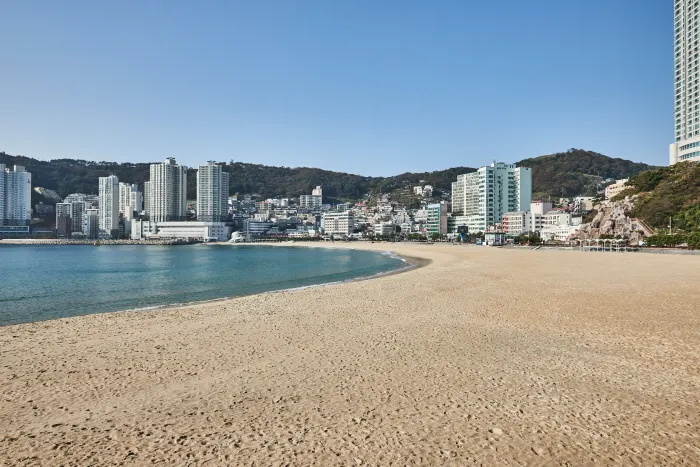
    One of Korea’s oldest beaches, opened in 1913, tied to Amnam Park and a wartime memorial.

    • Opened in 1913
    • Rebuilt and reopened in 2000
    • Amnam Park and memorial nearby

    Songdo Beach is the history-and-parks choice here. Its official description explains that it is 800 meters long and 50 meters wide, was one of the first beaches to open in Korea in 1913, and reopened after a comprehensive five-year reconstruction in 2000 with restored coastlines and fountains. Nearby attractions include the famed Jagalchi seafood market and Amnam Park, a coastal ecological park with a 3.8-kilometer promenade, an observatory, and raw-fish restaurants overlooking Busan’s Namhang Port. The area also holds the Provisional Capital Memorial Hall, used as the presidential residence when Busan was the temporary capital during the Korean War. Confirm current hours for these facilities from official sources before planning your route.

    Address: 100 Songdohaebyeon-ro, Seo-gu, Busan

    More info

FAQ

Which is the main, most famous Busan beach?

Haeundae Beach. Its official Korea Tourism Organization description calls it the most famous beach in Busan, a white-sand beach roughly 1.5 kilometers long and 30 to 50 meters wide before a shallow bay suited to swimming. The surrounding area has developed a full range of accommodation from luxury hotels to guesthouses, and the beach hosts cultural events and festivals through the year, with nearby facilities including Dongbaekseom Island, an aquarium, and a yachting dock. Confirm current swimming-season and event details from official sources before visiting.

Which beach is best for an evening or night view?

Gwangalli Beach. Its official description explains that it lies to the west of Haeundae, is 1.4 kilometers long and 25 to 110 meters wide, and is famous for its fine sand. The Gwangalli area is filled with restaurants, cafes, and shops, and many visitors come in the evening to take in the bright lights of Gwangan Bridge stretching across the horizon. It suits a relaxed evening rather than only daytime swimming. Confirm current facility hours and any event schedules from official sources before visiting.

Which beach is most suitable for families with young children?

Songjeong Beach. Its official description explains that it stretches 1.2 kilometers with a width of 30 to 60 meters and that its shallow waters make it ideal for families with young children. The area offers many raw-fish restaurants, and Jukdo Park to the north has a pavilion viewpoint and a photogenic harbor with white and red lighthouses. As with any beach, swimming is seasonal and supervised, so confirm current conditions and safety notices from official sources before going.

Which beach has the most history and connected parks?

Songdo Beach. Its official description explains that it is 800 meters long and 50 meters wide, was one of the first beaches to open in Korea in 1913, and reopened after a comprehensive five-year reconstruction in 2000. Nearby attractions include the Jagalchi seafood market, Amnam Park, a coastal ecological park with a long promenade and observatory, and the Provisional Capital Memorial Hall from when Busan was the wartime capital. Confirm current hours for these facilities from official sources before planning your route.

Can I rely on this guide for swimming conditions and event dates?

No. This guide records stable location and setting information reviewed on the stated fact-check date. Water conditions, swimming-season dates, lifeguard coverage, safety flags, festival schedules, and facility hours change through the year and are managed by local authorities. Always confirm official Busan and district sources before you travel, follow posted safety guidance, and never assume swimming is permitted simply because a beach appears in this comparison.