Itinerary
Baek In-je House Visitor Guide — History & Architecture
Step back in time at Baek In-je House, a remarkably preserved architectural marvel in Seoul. Explore traditional courtyards and period furnishings that reveal the lifestyle of a wealthy family during the Japanese colonial era.
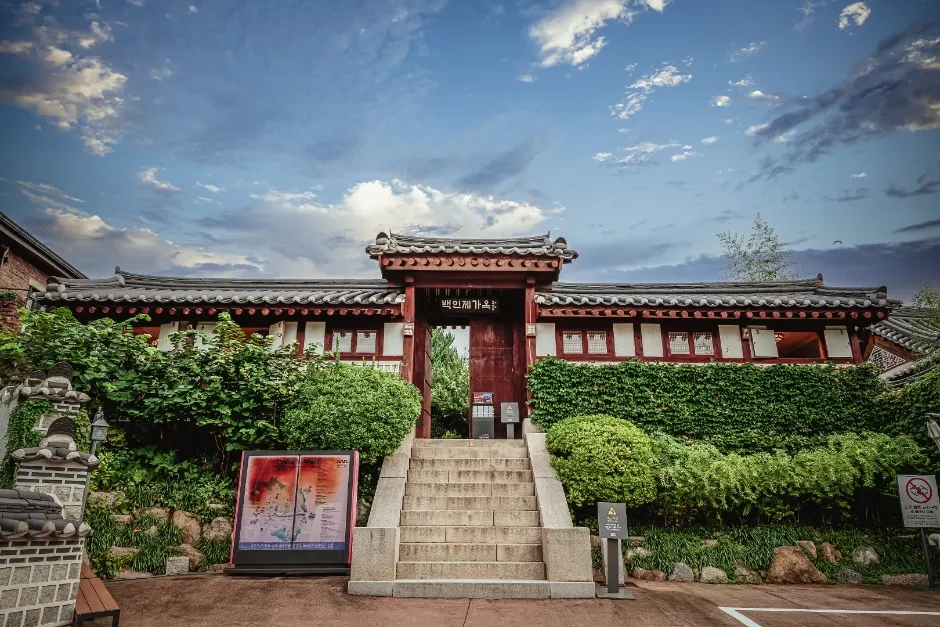
Baek In-je House, located in Bukchon Hanok Village, is a hanok built during the Japanese administration period that portrays modern hanok features. The structure consists of a main room offering a good view of the whole village, spacious bedrooms, a large garden, and annex buildings. As it maintains the beauty of a traditional hanok while incorporating the modern trend of its time, Baek In-je House is considered to be highly valuable in means of both architecture and history, representing the Bukchon Hanok Village together with Yun Bo-seon House.Baek In-je House was built from black pine, which was first introduced in Seoul during the Gyeongseong Expo in 1907, distinguishing itself from other upper-class houses of its time. Unlike other traditional hanok designs that separate the main building from the other rooms, Baek In-je House connects the two with a hallway, allowing convenient access between the two structures. The house also consists of a Japanese-style hallway and floor mat rooms, reflecting the interior trends of that period. Baek In-je House is also unique in that the main room is partially built as a two-story structure, a style that was never seen in any traditional hanok built during the Joseon period. ◎ Travel info featuring Korean Wave attractions - Drama The place where major shareholder Jin Do-jun and Sunyang Group Chairman Jin Yang-cheol meet is Baek In-je House. Baek In-je House is a representative modern hanok with a commanding view over Bukchon. The sarangchae (men's quarters), anchae (women's quarters), garden, and byeoldangchae (separate annex) give a glimpse into the lifestyles of the upper class at the time. The room where Jin Yang-cheol and Jin Do-jun met is the sarangchae. Interior tours are available with guided tour reservations, so be sure to check ahead.
Why Baek In-je House matters
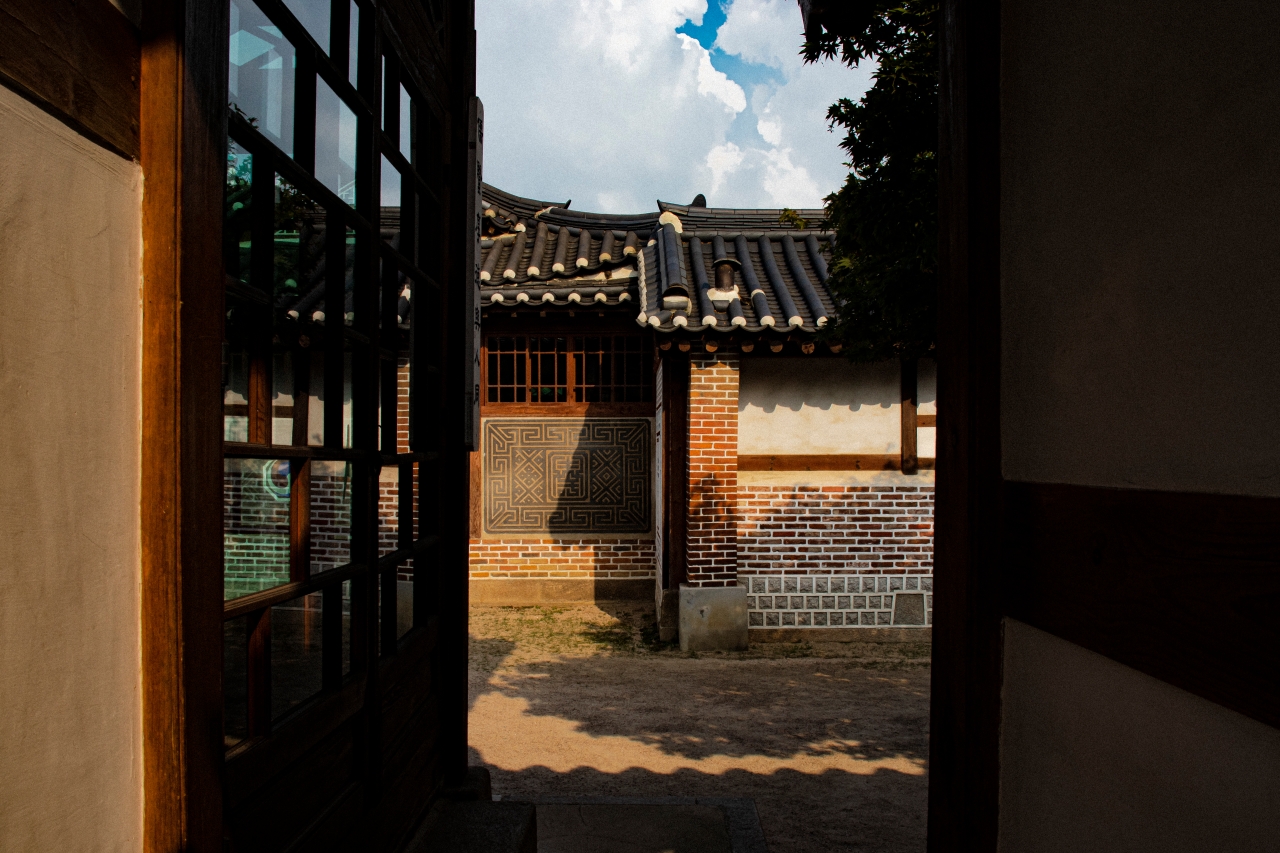
Its design masterfully blends traditional Korean hanok elements with subtle influences from contemporary architectural trends of the time. This fusion is evident in the meticulous craftsmanship, the arrangement of spaces, and the materials used, creating a structure that is both historically significant and aesthetically captivating.
The compound is not a single building but a collection of structures meticulously arranged around a central courtyard. This layout is characteristic of traditional Korean residences, emphasizing harmony with nature and a sense of privacy. The main house, known as the 'Anchae,' and the men's quarters, the 'Sarange,' are distinct yet connected, allowing for a flow between different functional areas.
As you move through the various rooms of Baek In-je House, you are immediately struck by the authentic period furnishings. These are not mere reproductions but original items that belonged to the Baek family, painstakingly preserved to offer a genuine glimpse into their lives.
Elegant wooden furniture, traditional Korean chests (jangseung), decorative screens, and everyday objects are displayed in their original settings. These artifacts provide invaluable insights into the domestic routines, social customs, and aesthetic sensibilities of an upper-class Korean family during the colonial period.
The interior design showcases a remarkable balance between traditional Korean aesthetics and the practicalities of early 20th-century living. You can observe the functional layout of the rooms, designed for specific purposes ranging from sleeping and dining to entertaining guests.
The courtyards are the heart of Baek In-je House, acting as transitional spaces that connect the various buildings and offer serene outdoor environments. Traditional Korean gardens, characterized by their naturalistic design and subtle beauty, surround these central areas.
The interconnectedness of the buildings around the courtyards is a key feature, allowing for a natural flow of movement and a sense of spaciousness. This design also facilitates ventilation and natural light, essential elements in traditional Korean architecture.
Located in the heart of Seoul, Baek In-je House is situated in a historically rich neighborhood, making it an ideal destination for those interested in Korean history and architecture. Its central location also makes it easily accessible and convenient to combine with visits to other nearby cultural sites.
The surrounding area itself is steeped in history, offering a broader context for understanding the significance of the house within the city's development.
Visiting Baek In-je House is an immersive experience that goes beyond simply observing a historical building. It is an opportunity to connect with the past, to understand the lifestyle and values of a prominent Korean family from a pivotal era.
Official visitor information
Official address: 16 Bukchon-ro 7-gil, Jongno-gu, Seoul.
Official visiting hours: 09:00-18:00 (Last entry 17:30) ※In the case of free viewing, only outside the facility (no entry inside the facility).
Official closure information: Mondays (open in the case of Monday being a public holiday), January 1.
Parking: Not available.
Official information contact: +82-2-724-0200.
How to use this guide
Use the official information above as the planning baseline. Opening arrangements, programs, admission conditions, and access rules can change after this review. Follow the official source links before traveling, especially when your visit depends on a particular exhibition, performance, seasonal activity, or facility.
The remaining recommendations on this page are editorial guidance for understanding the setting and organizing a visit. They are not a substitute for instructions issued by the venue, local government, cultural-property authority, or transport operator.
Responsible visit checklist
Before leaving
- Open the official venue page and confirm the latest operating notice.
- Check weather and transport conditions on the day of travel.
- Respect residential, religious, ecological, and cultural-property rules where applicable.
- Allow flexibility rather than relying on an exact minute-by-minute schedule.
- Use the official information contact when accessibility or reservation details are essential.
Where is Baek In-je House?
16 Bukchon-ro 7-gil, Jongno-gu, Seoul
Where should I confirm current hours and closures?
Use the official source links in the reviewed-for-accuracy panel on this page.
When was this information checked?
The reviewed-for-accuracy panel shows the latest human review date and source record.