Seasonal
N Seoul Tower: Four Ways Up Namsan
Compare the cable car, circular bus, Orumi elevator, and hiking trails to choose the right route up Namsan and plan your time at the tower.
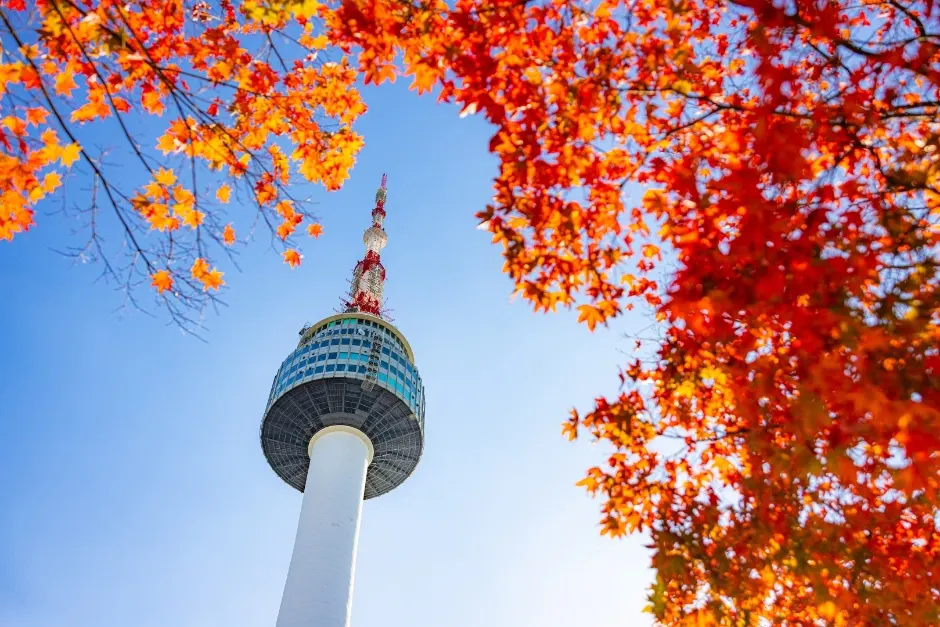
N Seoul Tower is the single most-photographed silhouette in the city — 236 meters of white steel on top of a 243-meter mountain, visible from almost anywhere in central Seoul. But 'go to N Seoul Tower' hides a real decision that guidebooks tend to skip: how do you actually get up there? The cable car queue on a Saturday afternoon runs 45 minutes each way. The yellow circular bus takes 20 minutes and drops you 100 meters from the base. There's a free incline elevator most tourists never notice. And there are two hiking trails, one gentle and one steep, that turn the trip into an hour outdoors instead of a queue. Which one you pick determines whether Namsan is a two-hour visit or a half-day one — and whether you spend anything at all beyond the subway fare.
What N Seoul Tower actually is
The steel structure on top of Namsan is 236 meters tall, and it sits on a mountain 243 meters above sea level, which puts the observation deck roughly 479 meters above the streets of Myeongdong at the base. The tower was structurally complete in 1971 as a communications and broadcast antenna. But the observation deck did not open to the public until October 1980 — for the first nine years the tower was closed to visitors because it overlooked the presidential residence, and security ruled out public access.
The 'N' in 'N Seoul Tower' is not from an original name. In 2005 CJ Group renovated the observation levels and rebranded the whole complex — the 'N' officially stands for Namsan, new, and nature. That renovation is what added the digital lighting scheme you see on the tower shaft every night. The colors are not random: blue means the day's air-quality index was good, green means average, yellow means bad, red means very bad. If you can see the tower from your hotel window, you can read Seoul's air quality without opening an app.
The love-locks tradition on the fence around the tower plaza began around 2006, shortly after the rebrand, and was later formally promoted by the operator. It is now part of the plaza rather than an accident — there are dedicated racks, and locks are sold in the gift shops. Whether it reads as sincere or as tourist-industry theater depends entirely on you; it is the single most-photographed feature after the tower itself.
Four ways up — with real trade-offs
The Namsan Cable Car is the default and the one you have seen in every travel photo. Base station is on Sopa-ro, a 10-15 minute uphill walk from Myeongdong Station Line 4 Exit 3. The ride itself is 3 minutes. It has run continuously since 1962, which makes it older than the tower it now serves. The catch is the queue: on a clear weekend afternoon expect 30-60 minutes in line to board, plus the same coming back down. Round-trip is affordable but not cheap; reconfirm the current fare at the base station before you buy. This is the correct pick if you want the ride itself to be part of the experience and you are visiting on a weekday morning or a weekday night.
The Namsan Circular Bus is the fastest and least photogenic option. Yellow buses numbered 01, 02, and 05 loop around the mountain and drop you within 100 meters of the tower plaza; a single ride costs the standard Seoul city bus fare on your T-money card. Boarding points sit at Chungmuro, Dongguk University, or Seoul Station depending on the route. Take this if you have kids, tired feet, or under 90 minutes total.
The Namsan Orumi is the option almost no first-time visitor knows about. It is a slanted incline elevator that runs alongside the cable car base station, is fully wheelchair accessible, and is completely free. It only covers the section from street level up to the cable-car boarding platform (it is not a lift to the tower itself), so it is most useful either as the last leg of a walking approach or as a way to skip the steep pedestrian ramp when combined with the cable car above.
The two hiking trails are the option worth choosing on a clear day. The gentler route starts from behind Namsangol Hanok Village near Chungmuro Station and climbs through wooded switchbacks to the tower plaza in about 40-50 minutes at a moderate pace. The steeper route starts from the Sopa-ro cable-car base and cuts straight up in around 25-30 minutes; it is basically a staircase and it will make your legs work. Both are paved, both are safe after dark under path lighting, and both remove the queue entirely. If you plan to eat at the top anyway, walking up and taking the cable car down is the pattern most locals use.
Free plaza vs. paid observation deck
This is the split that changes the trip's cost by an order of magnitude, and it is the single fact most guides bury. The tower plaza itself — the terrace with the love-lock fences, the panoramic viewpoints looking down over Seoul, the outdoor benches, the gift shops, the cafes — is free. You do not need a ticket to reach the plaza; you only need to get up the mountain. If a good view of Seoul at night is what you want, the plaza already delivers it, and it delivers a wide, open, outdoor view rather than the through-glass view from inside the tower.
The paid ticket is for the enclosed observation deck inside the tower itself, which sits roughly 130 meters above the plaza (adult admission is currently around KRW 29,000; youth and seniors around KRW 23,000; reconfirm at the ticket booth). The interior deck gives you altitude, glass, air conditioning, an interactive floor showing city landmarks, and the highest-point-in-Seoul photo you can take without a helicopter. It is worth paying for if the weather is clear enough to see the mountains ringing the city — on a hazy day (check the tower's own lighting color from the plaza first) it is not.
When to go — three visits, three different towers
Sunset is the crowded answer and it is crowded for a reason. Aim to arrive at the plaza 60-75 minutes before sunset so you have time to walk the perimeter, then watch the city switch on as the light fades. The tower's own shaft lighting comes on around civil dusk and reads best from the eastern plaza. Expect a full crowd, expect the cable-car queue to be at its worst, and hike up if you can.
A late-night visit (last hour before closing, typically after 21:30) is the emptier version of the sunset trip. The deck stays open until 22:30 on weekdays and 23:00 on weekends. You lose the sky color but you gain the plaza to yourself, and the city grid is at its most photogenic after 22:00 when office buildings still glow but ambient light drops.
A clear-morning visit is the underrated one and the only version that gives you range. On a bright day with low humidity you can see the Bukhansan ridgeline north of the city, the Han River bends, and — on the rare best days — as far as the mountains behind Incheon. Morning haze burns off between 10:30 (when the deck opens weekdays) and roughly noon. Nobody is at the deck this early; nobody is in the cable-car queue either.
What to pair it with
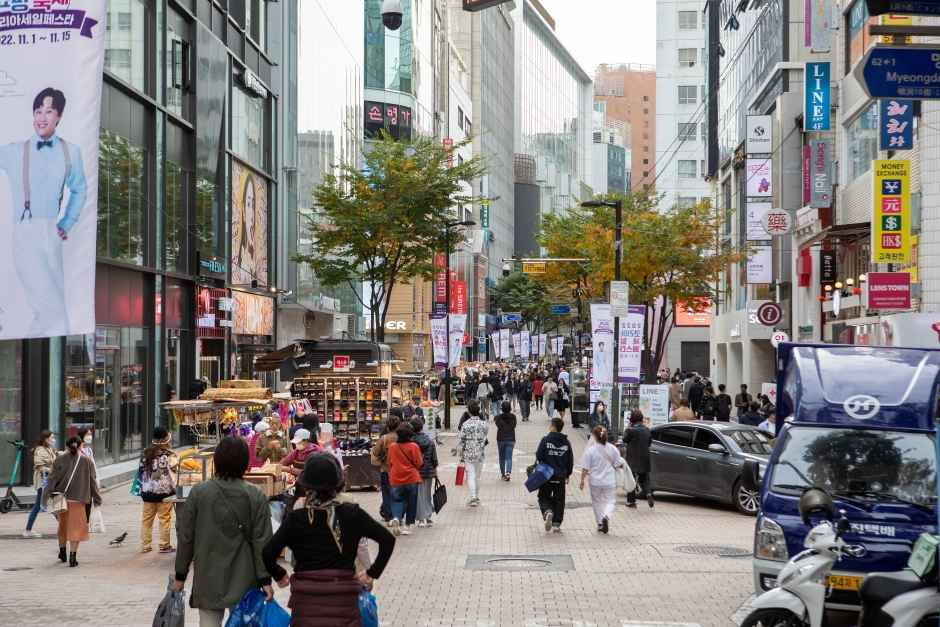
The natural first pairing is Myeongdong. Whether you cable-car up or bus up, you are within 15 minutes of Myeongdong Shopping Street on the way back down. Myeongdong is denser as a nighttime activity (street food carts run from around 17:00), so evening tower + evening Myeongdong is the standard combination for a first Seoul day.
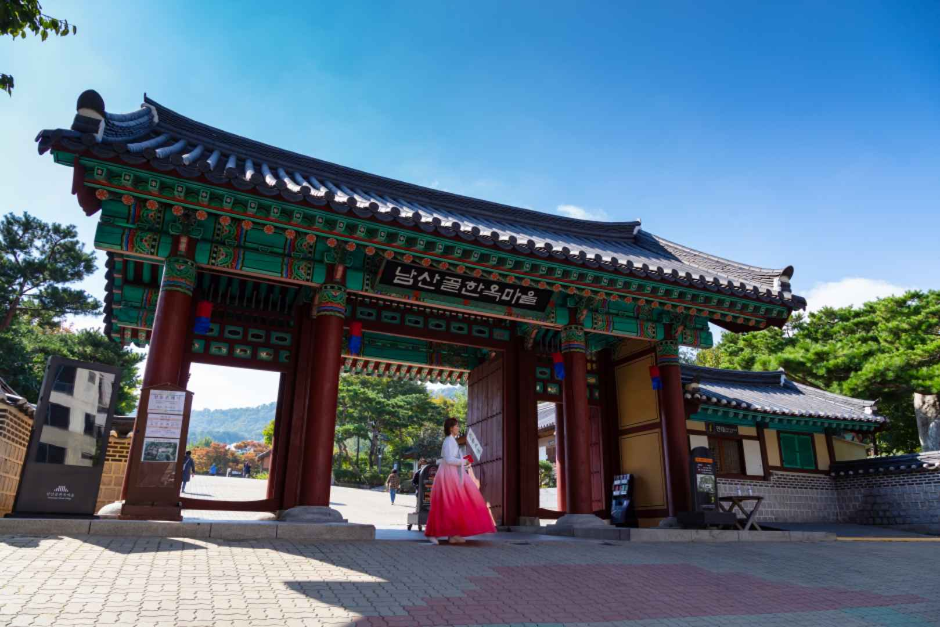
The better underrated pairing is Namsangol Hanok Village at the northern foot of the mountain, near Chungmuro Station. It is a small preserved cluster of relocated Joseon-era hanok houses set in a landscaped park, admission is free, and it takes 40-60 minutes. If you use the Namsangol hiking approach to the tower, you already start here — do the village first, then hike up to the tower, then take the cable car or bus down toward Myeongdong for dinner. That is the single best full-day Namsan itinerary if you have the legs.
Official visitor information
Address: 105 Namsangongwon-gil, Yongsan-gu, Seoul (서울특별시 용산구 남산공원길 105).
Observation deck hours: Monday-Friday 10:30-22:30 · Saturday-Sunday 10:00-23:00. Open year-round including public holidays. Last admission approximately one hour before closing; reconfirm on the operator site before you go.
Admission (observation deck only; the outdoor plaza is free): Adults (13+) KRW 29,000 · Children (3-12) and seniors (65+) KRW 23,000. Package tickets combining the deck with the cable car are sold at the base station and are usually cheaper than buying each separately.
Getting there: Myeongdong Station (Line 4) Exit 3 is closest to the cable-car base — 10-15 minutes on foot, mostly uphill. Chungmuro Station (Lines 3 and 4) is closest to Namsangol Hanok Village and the gentler hiking trailhead. Yellow Namsan circular buses (01, 02, 05) run from several downtown stops and drop within 100 meters of the plaza.
Contact: +82-2-756-2486. Website: seoultower.co.kr.
- The plaza is free — you only pay if you go inside the tower observation deck.
- Weekend afternoon cable-car queues can run 30-60 minutes each way. Hike up, cable-car down.
- Check the tower's own lighting color from the plaza before buying a deck ticket — blue-green means the view is worth it, yellow-red means it is not.
- The Namsan Orumi incline elevator (next to the cable-car base station) is free and wheelchair accessible.
- For a full-day plan, start at Namsangol Hanok Village (Chungmuro), hike the gentle trail up, then descend toward Myeongdong for dinner.
Do I need a ticket just to go up Namsan and see the tower?
No. The outdoor plaza at the base of the tower — including the love-lock fences and panoramic viewpoints — is free. You only pay for the enclosed observation deck inside the tower itself, which is a separate ticket (roughly KRW 29,000 adult, KRW 23,000 youth or senior).
Is the cable car worth it?
It is the most iconic way up and only 3 minutes each way, but queues on weekend afternoons and evenings routinely run 30-60 minutes. If you are visiting outside peak hours the answer is yes; at peak times, hiking up the Sopa-ro stairs (25-30 min) or taking the yellow Namsan circular bus is faster.
When is the best time to go?
Sunset is the most popular and the most crowded. A clear morning (10:30-noon) gives the widest view and no queues. Late night (21:30 until the 22:30/23:00 close) is emptiest and best for city-lights photos. Skip a hazy day — the tower's own lighting color from the plaza tells you: yellow or red means the observation deck view will be limited.
How do I get there from Myeongdong?
From Myeongdong Station (Line 4) take Exit 3 and walk 10-15 minutes uphill to the Namsan Cable Car base station on Sopa-ro. From there, either take the cable car up, ride the free Namsan Orumi incline elevator to the boarding platform, or hike the paved stairs beside the cable-car track (25-30 min).
Is it accessible with mobility issues or a stroller?
Yes. The Namsan Orumi incline elevator at the cable-car base is wheelchair accessible and free. From the top of the cable car, the plaza is paved and level. The observation deck inside the tower is served by elevators. Avoid the hiking trails and the pedestrian stair route if mobility is a concern.
Why does the tower change color at night?
The color reflects Seoul's air-quality index for that day: blue for good, green for average, yellow for bad, red for very bad. It has been part of the tower's lighting scheme since the 2005 renovation and rebrand from 'Seoul Tower' to 'N Seoul Tower.'