Itinerary
Heunginjimun Gate Visitor Guide — History & Location
Discover Heunginjimun Gate, Seoul's Treasure No. 1. Explore its unique defenses and historical significance amidst the bustling Dongdaemun district.
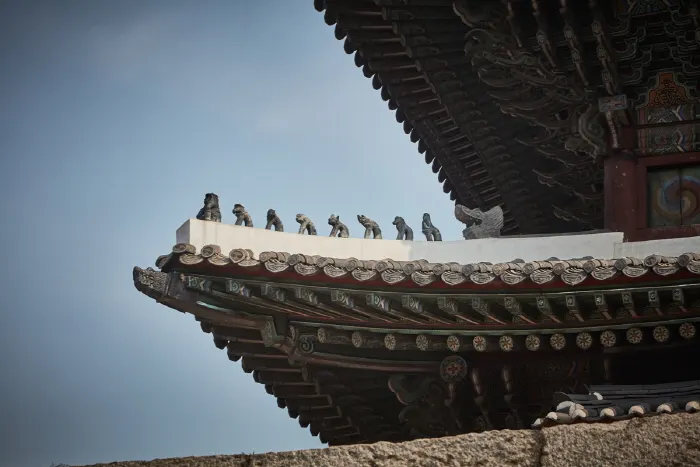
Heunginjimun Gate was built to protect Hanseongbu, which historically housed essential government facilities. Heunginjimun Gate was the gate on the east side of the outer wall of Seoul Fortress among eight gates. It is referred to as Dongdaemun Gate as well. The gate was constructed during King Taejo’s 5th year in 1396, remodeled during the reign of King Danjong in 1453, and was newly built in 1869 during the sixth year of King Gojong’s reign in 1869. · · The gate features a hipped roof with five front and two side compartments on a two-storied building. The thin and weak bracket system supports the eaves and is excessively decorated, reflecting the construction features of the late Joseon period. Also, outside of the fortress is the half-circle-shaped Ongseong, a small wall, to protect the gate. · · One of the unique factors of Heunginjimun Gate is that it is the only gate among Seoul’s eight to have Ongseong, further exhibiting the style of construction used during the late Joseon period.
Why Heunginjimun Gate - Dongdaemun Gate matters


This ongseong is a feature unique among the four main gates of old Seoul. While other gates may have had some form of outer defenses, the prominent, semi-circular structure at Heunginjimun is its most defining characteristic.
Allow ample time to explore the gate, its ongseong, and the surrounding historical context, as well as to enjoy the dynamic atmosphere of the modern district.
Official visitor information
Official address: 288, Jong-ro, Jongno-gu, Seoul.
The official source does not publish fixed visiting hours; check the linked official website before departure.
No fixed closure day is listed in the current official record.
Parking: Not available.
Official information contact: • 1330 Travel Hotline: +82-2-1330 · (Korean, English, Japanese, Chinese) · • For more info: +82-2-2148-4166 ·.
How to use this guide
Use the official information above as the planning baseline. Opening arrangements, programs, admission conditions, and access rules can change after this review. Follow the official source links before traveling, especially when your visit depends on a particular exhibition, performance, seasonal activity, or facility.
The remaining recommendations on this page are editorial guidance for understanding the setting and organizing a visit. They are not a substitute for instructions issued by the venue, local government, cultural-property authority, or transport operator.
Responsible visit checklist
Before leaving
- Open the official venue page and confirm the latest operating notice.
- Check weather and transport conditions on the day of travel.
- Respect residential, religious, ecological, and cultural-property rules where applicable.
- Allow flexibility rather than relying on an exact minute-by-minute schedule.
- Use the official information contact when accessibility or reservation details are essential.
Where is Heunginjimun Gate - Dongdaemun Gate?
288, Jong-ro, Jongno-gu, Seoul
Where should I confirm current hours and closures?
Use the official source links in the reviewed-for-accuracy panel on this page.
When was this information checked?
The reviewed-for-accuracy panel shows the latest human review date and source record.