Seasonal
Dokdo Visitor Guide — Location, Geology & National Significance
Explore Dokdo, the remote volcanic islets in the East Sea. Discover its unique geology, seabird colonies, and profound national significance.
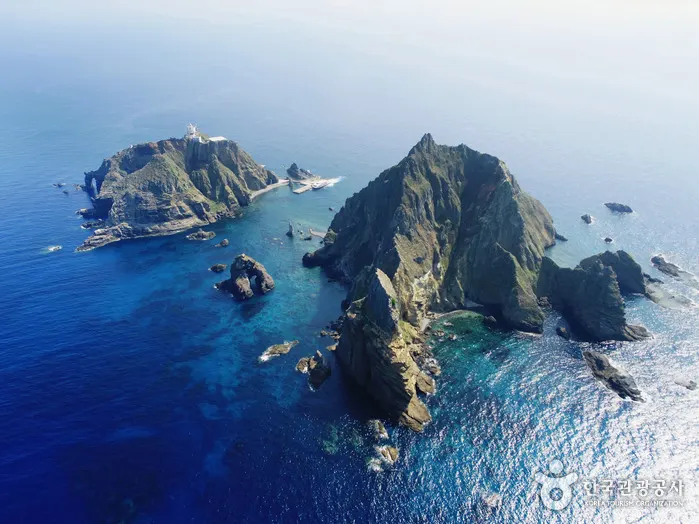
Located 87.4 kilometers away from Ulleungdo Island, Dokdo is an island on the east coast of Korea. Dokdo comprises two major islands called Dongdo (East Island), located at a latitude of 37°14'N and a longitude of 131°52'E, and Seodo (West Island), located at a latitude of 37°14'N and a longitude of 131°51'E. Designated as a Natural Monument, Dokdo is a protected natural reserve that serves as a home to several rare and endangered bird species. Civilian access to Dokdo was prohibited in accordance with Article 33 of Cultural Heritage Protection Act until March 24, 2005, when adjustments were made with the law, granting the public access to Dongdo and Seodo under certain conditions. Since then, continued adjustments have been made, such as abolishing the number restriction of daily visitors, allowing more visitors to appreciate the beauty of Dokdo. · · Dongdo, located on the southeastern coast, has a circumference of 2.8 kilometers and a surface area of 73,297 ㎡ with its highest peak reaching 98.6 meters. It also has a lighthouse and a wharf along with other marine and fishery facilities. As for Seodo, located on the northwestern coast, it has a circumference of 2.6 kilometers and a surface area of 88,740 ㎡ with the highest peak reaching 168.5 meters. Seodo houses living quarters of Dokdo's residents, where fishers seek shelter in case of an emergency. Several uniquely shaped rock formations are scattered surrounding the two major islands, such as Gajaebawi Rock, Chotdaebawi Rock, and Eolgulbawi Rock to name a few. The total surface area of all the rocks combined is 25,517 ㎡.
Why Dokdo matters

The islands' strategic location in the East Sea has made them a subject of international attention and a symbol of national resilience. Despite their small size, the two main islets, Dongdo (East Islet) and Seodo (West Islet), along with the surrounding rocks, represent a significant part of Korean maritime territory.
This dark, porous volcanic rock gives Dokdo its characteristic rugged and imposing look, with sheer cliffs plunging into the surrounding sea. The unique geological structure has been shaped by millennia of erosion from wind and waves, creating intricate rock formations and sea caves.
The surrounding waters are also rich in marine biodiversity, thanks to the unique currents and underwater topography. Observing these natural phenomena offers a different perspective on Dokdo, highlighting its ecological value.
Visiting Dokdo is not a casual undertaking; it requires planning, patience, and a degree of luck with the weather. Public ferries depart from Ulleungdo, the nearest inhabited island, but service is highly dependent on sea conditions.
When planning your visit, remember that Dokdo is a protected area with limited facilities. Visitors should be prepared for a rugged environment and respect all regulations regarding landing and exploration. The focus of a Dokdo visit is often on appreciating its symbolic importance and natural beauty from the sea, rather than extensive on-site activities. Flexibility and a spirit of adventure are key.
Official visitor information
Official address: 55 Dokdoisabu-gil, Ulleung-gun, Gyeongsangbuk-do.
The official source does not publish fixed visiting hours; check the linked official website before departure.
Official closure information: * Cruise may not operate during adverse weather.
Parking availability is not stated in the current official record.
Official information contact: +82-54-790-6641.
How to use this guide
Use the official information above as the planning baseline. Opening arrangements, programs, admission conditions, and access rules can change after this review. Follow the official source links before traveling, especially when your visit depends on a particular exhibition, performance, seasonal activity, or facility.
The remaining recommendations on this page are editorial guidance for understanding the setting and organizing a visit. They are not a substitute for instructions issued by the venue, local government, cultural-property authority, or transport operator.
Responsible visit checklist
Before leaving
- Open the official venue page and confirm the latest operating notice.
- Check weather and transport conditions on the day of travel.
- Respect residential, religious, ecological, and cultural-property rules where applicable.
- Allow flexibility rather than relying on an exact minute-by-minute schedule.
- Use the official information contact when accessibility or reservation details are essential.
Where is Dokdo?
55 Dokdoisabu-gil, Ulleung-gun, Gyeongsangbuk-do
Where should I confirm current hours and closures?
Use the official source links in the reviewed-for-accuracy panel on this page.
When was this information checked?
The reviewed-for-accuracy panel shows the latest human review date and source record.