Seasonal
Gyeonggijeon Shrine: Portraits and Bamboo
See King Taejo's portrait replica, the bamboo grove, and historic filming courtyards, then follow a practical walking order through the shrine.
Every visitor who reads that Gyeonggijeon Shrine 'houses King Taejo's portrait' assumes they'll see a 15th-century royal portrait when they walk in. They won't. The original portrait — a National Treasure (No. 317) painted in 1872 as a copy of the lost 15th-century original — is preserved at the Jeonju National Museum, a 10-minute drive away. What's inside the Gyeonggijeon main hall today is a well-executed 2013 replica. Which makes Gyeonggijeon less about the portrait and more about everything else on the grounds — and that everything else is actually the reason to spend an hour here.
Why the shrine exists at all
Gyeonggijeon was founded in 1410 to house a royal portrait of King Taejo (Yi Seong-gye, 1335-1408), the founder of the Joseon Dynasty. Jeonju was chosen because it's the ancestral seat of the Yi royal clan — Taejo's family originated here before rising to found the dynasty. The original 1410 hall was destroyed during the 1592 Imjin War, rebuilt in 1614, and has stood since then with periodic restorations. The name changed from 'Eoyongjeon' to 'Gyeonggijeon' in 1442 during King Sejong's reign.
The reason the site matters is that it's the only remaining shrine of its kind in Korea — Joseon originally maintained five regional Taejo-portrait shrines, but only Gyeonggijeon survived the wars, colonial period, and Korean War intact. So the building itself, its bracketing, its main-hall roof structure, are documentary evidence of early Joseon official architecture in a way most palaces (repeatedly rebuilt after fires) aren't.
What's actually worth your time on the grounds
Walk the grounds in this order and the site opens up. Enter the front gate. Skip the main portrait hall on the way in and go left to the bamboo grove (대나무숲) that flanks the eastern wall. It's small — maybe 50 meters of path — but the sound insulation from Jeonju Hanok Village outside is immediate, and it's the quietest single spot in central Jeonju. Sit on the bench for 5 minutes.
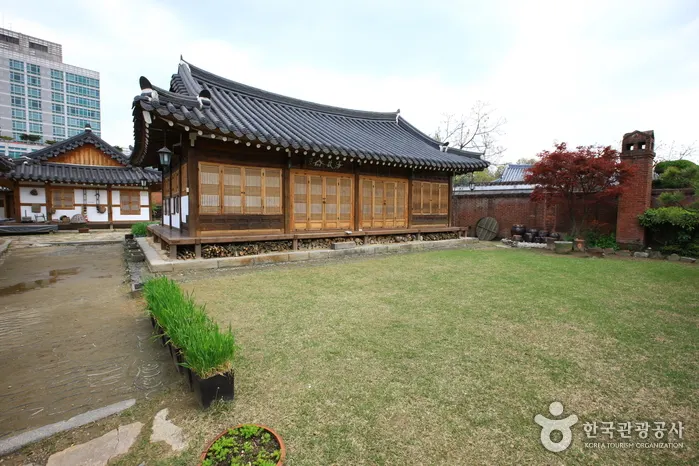
Then walk the western courtyards behind the main hall. These outer courtyards were used as filming locations for several major Korean historical dramas (사극) — including scenes from tvN's 'The Throne' (사도) and 'Mr. Sunshine.' They're identified with small plaques. If you've watched any Joseon-era K-drama in the last decade, you've probably seen these walls; recognizing them in person is a real 'oh, this is where they filmed' moment.
Only after those two side visits, walk into the main shrine hall itself and see the portrait replica in context. The building is more impressive from directly inside than from photos — the bracketing structure of the roof is unusually well-preserved. The replica portrait itself is technically excellent but you now know it's a replica, so the interesting thing is the setting, not the object.
Timing and how to avoid the crowds
Jeonju Hanok Village is Korea's most-visited hanok tourist zone, and Gyeonggijeon is its centerpiece. Weekend afternoons (13:00-17:00) are packed — you'll be walking shoulder to shoulder through the front courtyard, and the bamboo grove loses its point when there are 40 people in it. Aim for a weekday morning (open at 09:00) or a weekday evening after 17:00 in the extended summer hours.
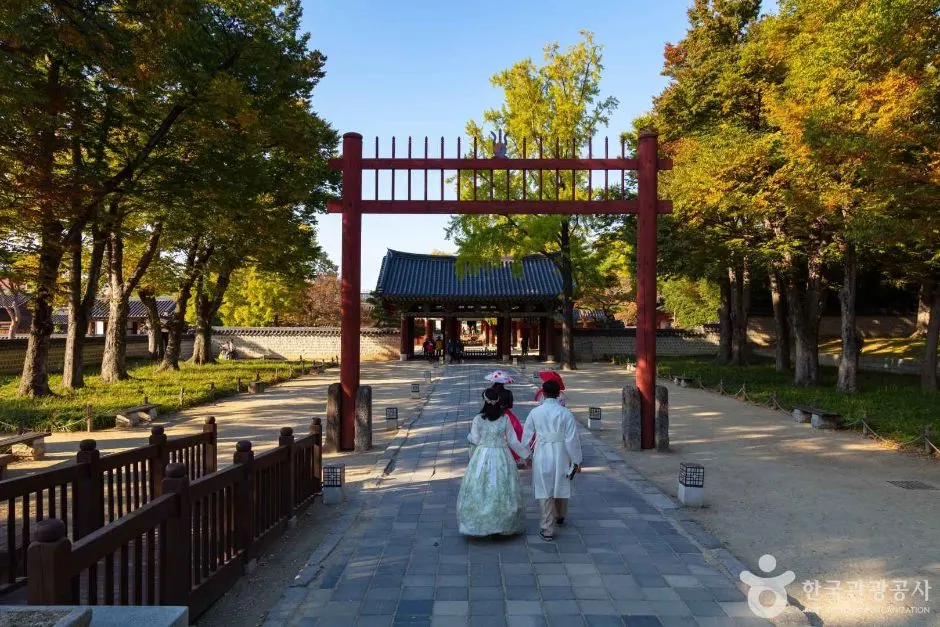
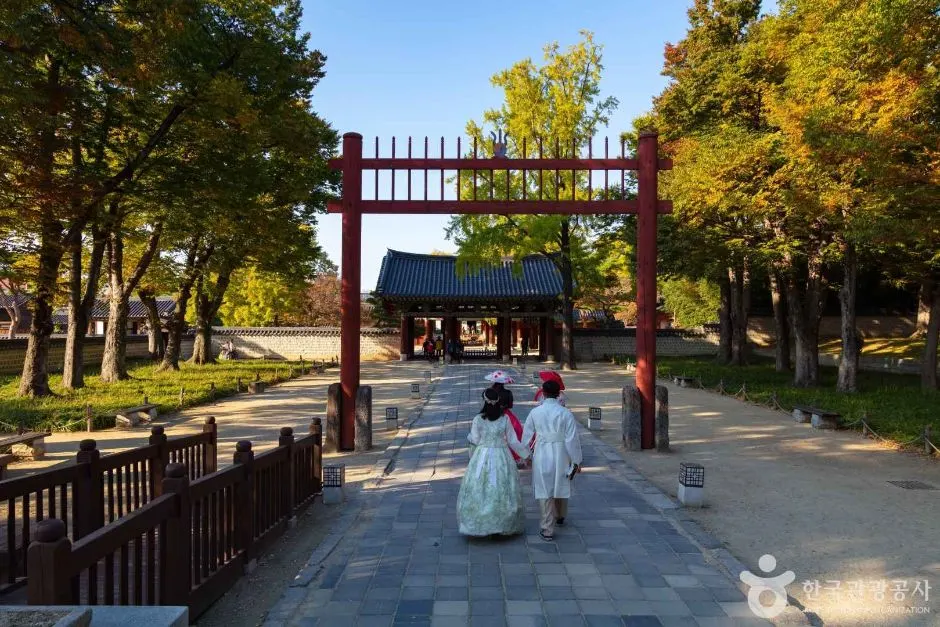
Hanbok-rental tourists photographing themselves peaks in the main courtyard 11:00-15:00. If you're wearing your own hanbok (rental is standard in Jeonju), you're one of them; the crowd is the point. If you're photographing the architecture instead, come early or late.
Pair with Nambu Market and hanbok rental
The standard Jeonju day: arrive at Jeonju Hanok Village mid-morning, rent hanbok at one of the many shops on the main street (KRW 15,000-25,000 for 2-3 hours), walk to Gyeonggijeon (which waives admission for hanbok wearers), explore the shrine and adjacent side streets, then head to Nambu Market (남부시장) 10 minutes south on foot for lunch. Nambu's night market (Fri-Sat evenings) is where local university students eat — a very different mood from the daytime hanok tourist crowd.
For the portrait completists: after Gyeonggijeon, take a bus or 10-min taxi to Jeonju National Museum (jeonju.museum.go.kr) to see the actual National Treasure #317 original. Admission is free. The museum also holds significant Baekje-era artifacts from the Jeollabuk region, so budget 60-90 minutes.
Official visitor information
Address: 44 Taejo-ro, Wansan-gu, Jeonju-si, Jeonbuk-do (전라북도 전주시 완산구 태조로 44).
Opening hours: March-May and September-October 09:00-19:00 · June-August 09:00-20:00 · November-February 09:00-18:00. Last admission 1 hour before closing.
Closed: None (open year-round including holidays).
Admission: KRW 3,000 adults, KRW 2,000 youth, KRW 1,000 children. Free for hanbok wearers.
Parking: Available on-site; small lot, fills fast on weekends. Jeonju Hanok Village public parking (5 min walk) is the reliable option.
Contact: Jeonju City tourism +82-63-281-2891. Original portrait viewing: Jeonju National Museum (jeonju.museum.go.kr).
- The portrait inside is a replica; the National Treasure original is at Jeonju National Museum next door.
- Walk the bamboo grove and drama-filming courtyards before the main hall — quieter and more interesting than most guides mention.
- Weekday mornings (09:00 opening) or evenings after 17:00 avoid the tour crowds.
- Hanbok wearers enter free — this is the standard Jeonju hanok village play.
- Nambu Market (10-min walk south) is lunch; the Fri-Sat night market is where locals actually eat.
Is the King Taejo portrait real?
The portrait on display at Gyeonggijeon is a 2013 replica. The National Treasure (No. 317) original — an 1872 copy of the lost 15th-century original — is preserved at the Jeonju National Museum, a 10-minute drive away, where admission is free.
How long does it take?
A focused visit is 45-60 minutes: bamboo grove, western drama-filming courtyards, main hall. If you're in hanbok photographing, add another 30-60 minutes for shots around the main courtyard.
Is it worth going if I've already visited a Seoul palace?
Yes — Gyeonggijeon is architecturally distinct. It's a Joseon-era portrait shrine (사당), a category that mostly didn't survive elsewhere in Korea. It's smaller than Gyeongbokgung but the individual buildings are older and less reconstructed.
Do I need to rent hanbok?
Not required, but hanbok wearers enter free (saving KRW 3,000) and photograph better in the hanok setting. Rental shops are on every corner of Jeonju Hanok Village; KRW 15,000-25,000 for 2-3 hours is standard.