Seasonal
Jeju Geum Parasitic Cone Visitor Guide — Geological Marvel Facts
Explore Geum Parasitic Cone, a stunning tuff cone on Jeju Island. Discover its volcanic history, enjoy scenic trails, and witness Jeju's unique geological formations.
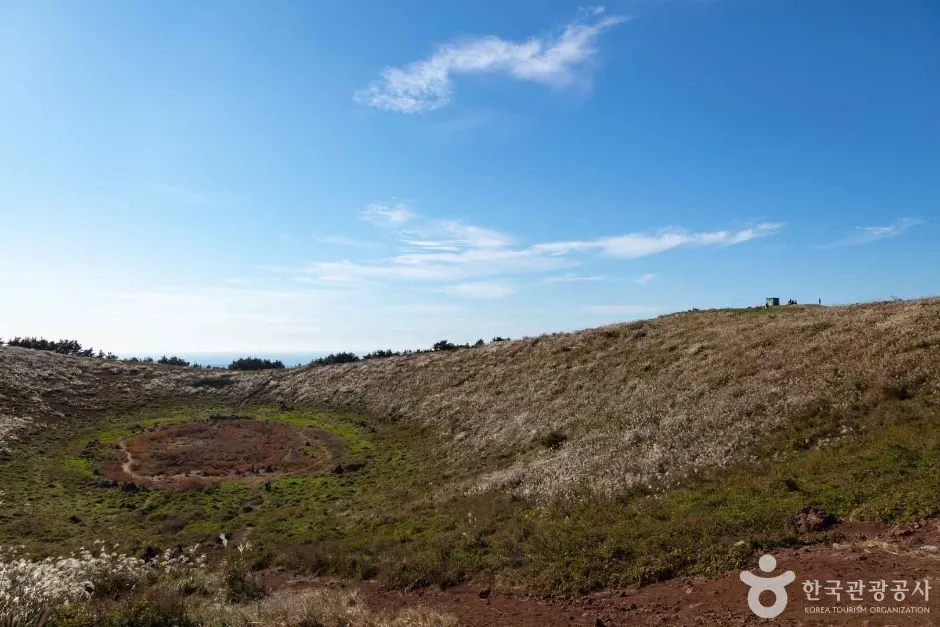
Geum Parasitic Cone is one of the most famous parasitic cones in the western mountainous region of Jeju. It is a satellite volcanic edifice that has a large circular crater (52 meters deep) and a crater at the summit, and the two peaks in the south and the north are connected by a low slope from east to west. The crater at the summit once held an abundant volume of water but it is now empty. The name Geum Parasitic Cone is speculated to have derived from an archaic word "Gom," which means "god." Therefore, it can be interpreted that this parasitic cone has been deified since the ancient times. Pines, cedars, briers, bo trees and Oriental photinia can be found near the circular crater and the lake area.
Why Geum Parasitic Cone matters

The Genesis of Geum Parasitic Cone: A Volcanic Tale
Geum Parasitic Cone, known locally as Geum Oreum, is a prime example of Jeju's volcanic identity. Unlike the island's main stratovolcano, Hallasan, Geum Oreum is classified as a parasitic cone, meaning it erupted from a flank vent on the side of a larger volcanic system.
The landscape surrounding Geum Parasitic Cone is as much a part of its allure as the cone itself. As you ascend the well-maintained trails, the panoramic vistas unfold, showcasing the patchwork of agricultural fields, coastal views, and the distant silhouette of other volcanic cones that dot the Jeju horizon.
While it's a volcanic cone, the slopes are not excessively steep, and the paths are generally well-trodden and clear. The most popular route involves a loop around the crater rim, offering continuous scenic overlooks.
Official visitor information
Official address: Geumakbuk-ro, Hallim-eup, Jeju-si, Jeju-do.
Official visiting hours: Open 24 hr.
Official closure information: N/A (Open all year round).
Parking: Available.
Official information contact: +82-64-740-6000.
How to use this guide
Use the official information above as the planning baseline. Opening arrangements, programs, admission conditions, and access rules can change after this review. Follow the official source links before traveling, especially when your visit depends on a particular exhibition, performance, seasonal activity, or facility.
The remaining recommendations on this page are editorial guidance for understanding the setting and organizing a visit. They are not a substitute for instructions issued by the venue, local government, cultural-property authority, or transport operator.
Responsible visit checklist
Before leaving
- Open the official venue page and confirm the latest operating notice.
- Check weather and transport conditions on the day of travel.
- Respect residential, religious, ecological, and cultural-property rules where applicable.
- Allow flexibility rather than relying on an exact minute-by-minute schedule.
- Use the official information contact when accessibility or reservation details are essential.
Where is Geum Parasitic Cone?
Geumakbuk-ro, Hallim-eup, Jeju-si, Jeju-do
Where should I confirm current hours and closures?
Use the official source links in the reviewed-for-accuracy panel on this page.
When was this information checked?
The reviewed-for-accuracy panel shows the latest human review date and source record.