Itinerary
Gwanghwamun Gate: Restored Joseon Entrance
Understand Gwanghwamun as a 2010 archaeological restoration of Gyeongbokgung's main gate, then plan your visit around its ceremony schedule.
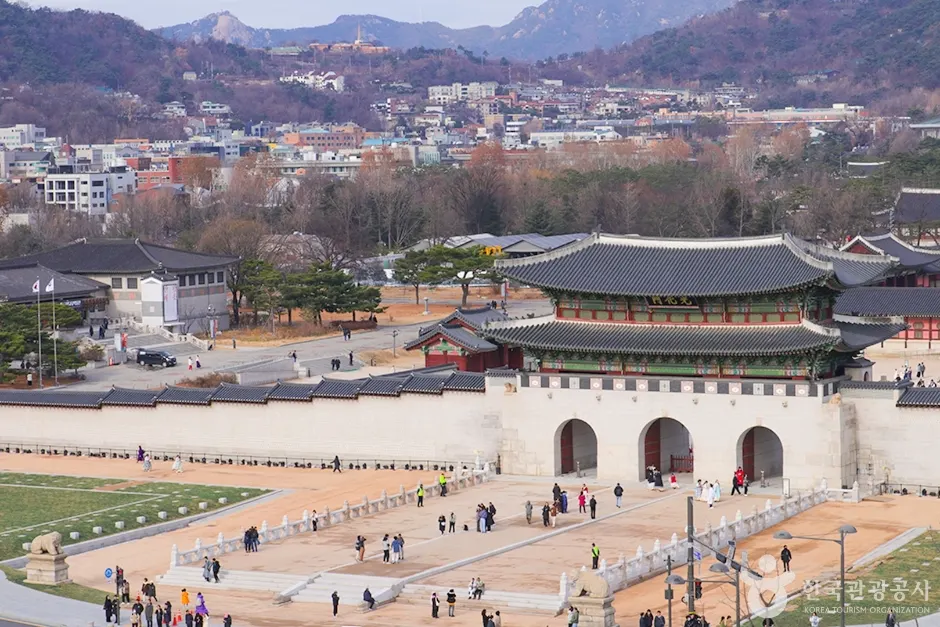
Every visitor who reads that Gwanghwamun was built in 1395 quietly assumes they're walking up to the original gate. They're not. The Gwanghwamun standing in front of Gyeongbokgung today is a 2010 archaeological reconstruction — the fourth structure on that spot in six centuries. The gate was torched in the 1592 Imjin War, rebuilt in the 1860s, dismantled and moved by the Japanese colonial administration in the 1920s, destroyed again during the Korean War, and reconstructed twice more (1968 and 2010) with successively better source records. Understanding that layered history is what turns a two-minute photo stop into a meaningful visit.
Why this is more than a photo stop
Gwanghwamun is not a preserved 15th-century artifact — it's a national statement about what Korea decided to reconstruct, and how carefully. The 2010 restoration moved the gate 14.5 meters north to its documented original position, restored the correct axial alignment with Gyeongbokgung's throne hall, and used traditional dancheong pigments and joinery. It replaced a 1968 rebuild that had used concrete and was set at the wrong angle for symbolic reasons the colonial era imposed. In other words, what you're looking at is Korea's answer to "if you could restore your capital's front door, what would you fix?"
The three arched passageways matter for the same reason. The center arch was historically reserved for the king; commoners used the side arches. Standing under the center arch today, ordinary visitors are literally walking a path that used to be forbidden to them — a small act that only exists because the current reconstruction opens all three.
Time your visit around the guard changing ceremony
The one thing that turns Gwanghwamun from a photo backdrop into a scheduled event is the royal guard changing ceremony (수문장 교대의식), held twice daily at 10:00 and 14:00, roughly 20 minutes each. Costumed performers in full Joseon guard uniforms perform the historically documented change of watch. It runs year-round except on Tuesdays (when Gyeongbokgung and the ceremony are both closed) and on days of severe weather or air quality warnings.
Practical: the ceremony draws a semicircle of viewers 3-4 deep. Arrive 10-15 minutes early to get a spot along the front barrier. The best photo angle is from the west side of the plaza, facing the gate's center arch. Standing directly in front of the gate itself, you're too close to fit both the ceremony and the gate in frame.
The photo problem — and where the actual best angle is
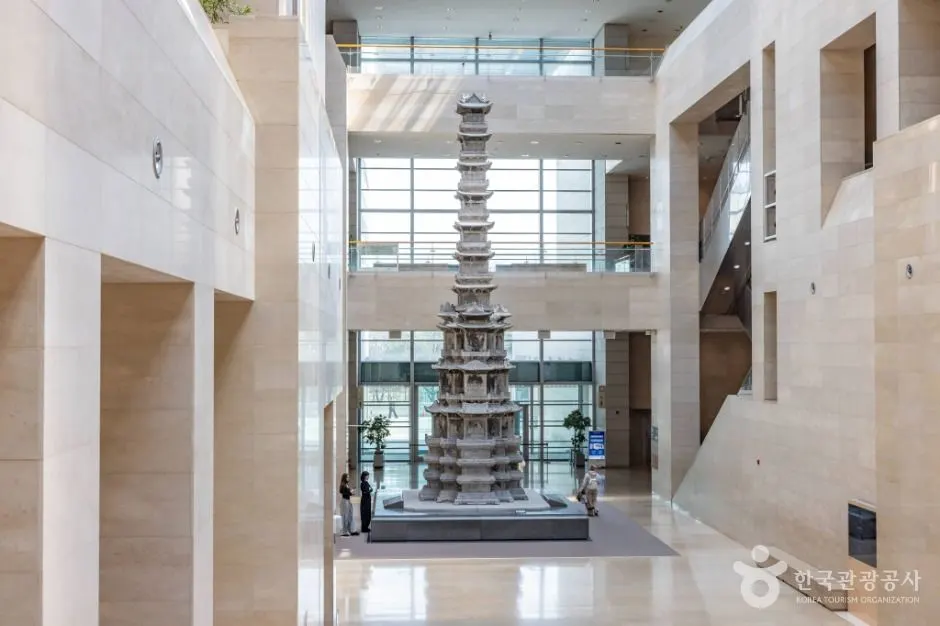
Almost every visitor tries to take a wide shot standing right at the gate. It never works — you can't get the full three-arch gate plus the roofline in frame without stepping back 60-80 meters. The two positions that actually give you the full gate are (1) from the north end of Gwanghwamun Plaza looking north, and (2) from the entrance stairs of the National Palace Museum of Korea, on the west side. The Museum stairs also give you the Bugaksan mountain backdrop that makes the composition look intentional rather than tourist-snapshot.
For the guard ceremony itself, the west-side viewing position gives you the guards moving toward the camera rather than laterally across it — a stronger composition than the head-on front angle everyone else defaults to.
How to pair Gwanghwamun into a Seoul day
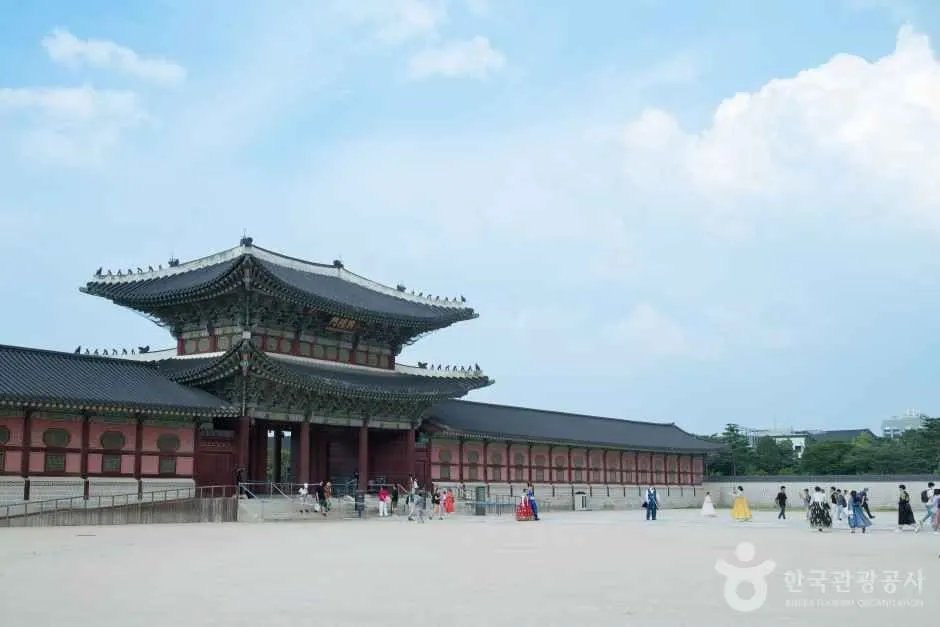
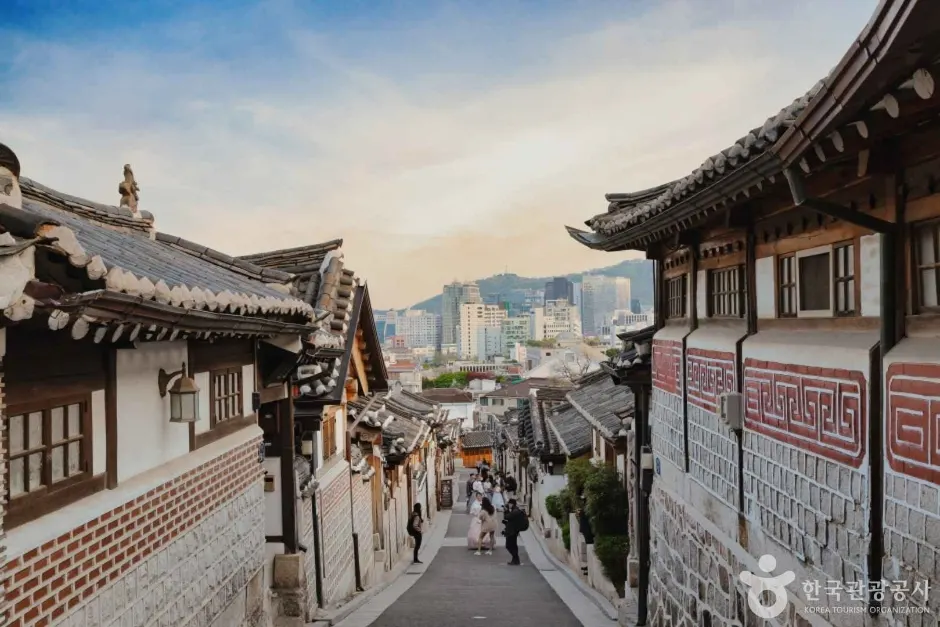
Gwanghwamun on its own is a 20-30 minute visit. The natural pairing is Gyeongbokgung interior directly behind it (allow 2 hours for the palace proper) and Bukchon Hanok Village on the ridge to the north-east (another 90 minutes). A common half-day sequence: 09:30 arrive at Gwanghwamun, 10:00 guard ceremony, 10:30 enter Gyeongbokgung, 12:30 lunch in Bukchon, afternoon walk through Bukchon lanes.
If you're specifically interested in Korean political and civic space, Gwanghwamun Plaza itself is worth 20 minutes. The plaza was redesigned in 2022 with a pedestrianized central strip and connects to Sejongno, the ceremonial axis where major national events (presidential inaugurations, memorial ceremonies) still happen. The statue of King Sejong (mid-plaza) and the underground Sejong Story exhibit (free admission) contextualize why this stretch of road matters.
Official visitor information
Address: 161 Sajik-ro, Jongno-gu, Seoul (서울특별시 종로구 사직로 161).
Opening hours (aligned to Gyeongbokgung): Jan-Feb and Nov-Dec 09:00-17:00 · Mar-May and Sep-Oct 09:00-18:00 · Jun-Aug 09:00-18:30. Last admission one hour before closing.
Guard changing ceremony: 10:00 and 14:00 daily (except Tuesdays and weather cancellations).
Closed: Every Tuesday (Gwanghwamun and Gyeongbokgung close together).
Admission: The gate and plaza are free. Gyeongbokgung interior admission is separate (KRW 3,000, free if you visit in hanbok).
Contact: +82-2-3700-3900. Official calendar and ceremony cancellation notices: gwanghwamun.seoul.go.kr.
- Arrive 10-15 minutes before the 10:00 or 14:00 ceremony to get a barrier spot.
- Best photo angles: north end of the plaza, or stairs of the National Palace Museum.
- The Sejong Story underground exhibit at the plaza is free and worth 20 minutes.
- Book Gyeongbokgung entry same-day at the ticket office; hanbok wearers enter free.
- Confirm the ceremony schedule before travel — cancelled on Tuesdays and bad-air days.
Is the current Gwanghwamun the original 1395 gate?
No. The current structure is a 2010 reconstruction, the fourth build on the same axis. It replaced a 1968 rebuild that was misaligned; the 2010 version restored the historically documented position and traditional materials.
When is the guard changing ceremony?
10:00 and 14:00 daily, except Tuesdays. It runs about 20 minutes. Cancelled on days with severe weather or air quality warnings.
Do I need a ticket for Gwanghwamun?
The gate and Gwanghwamun Plaza are free and always accessible. Entry into Gyeongbokgung Palace behind the gate is a separate ticket (KRW 3,000, or free if you arrive in hanbok).
What's the best time to photograph the gate?
Late afternoon light (around 16:00-17:00 in summer, earlier in winter) hits the gate face directly. Position from the north end of the plaza or the National Palace Museum stairs for the full three-arch composition with Bugaksan behind.