Itinerary
"A glimpse into Joseon's scholarly heart?"... Munheon Seowon, Seocheon's Confucian legacy
Step back into Joseon's intellectual past at Munheon Seowon. Explore its preserved architecture and understand the dual role of Confucian academies in Korean history.
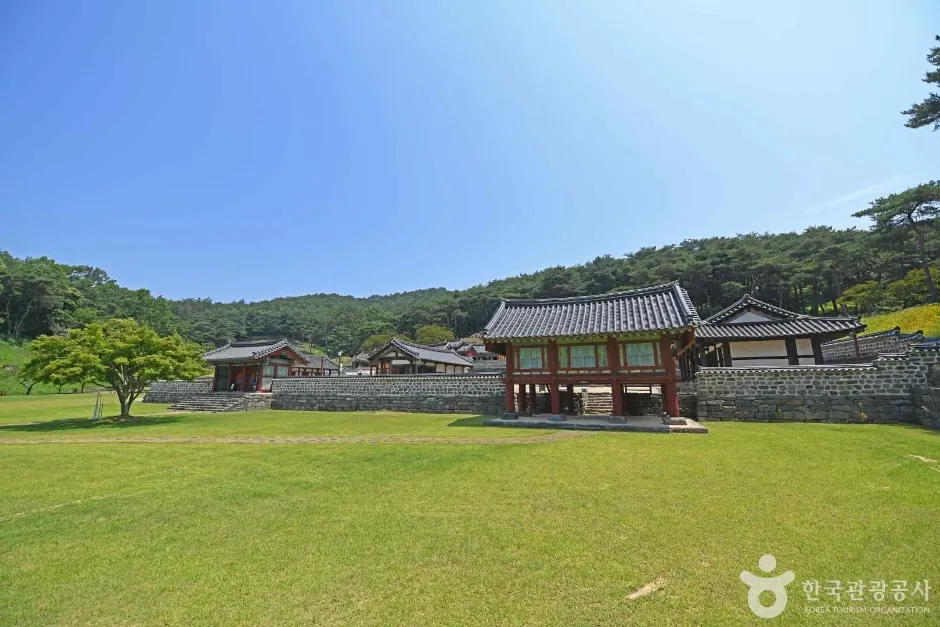
Munheon Seowon in Seocheon, Chungcheongnam-do, offers a tangible connection to the Joseon Dynasty's scholarly traditions. As one of the numerous private Confucian academies that dotted the landscape, it represents a vital part of Korea's educational and cultural heritage. These institutions served a dual purpose, functioning as both centers for learning and places of veneration for esteemed scholars.
The Enduring Spirit of Joseon Scholarship

Munheon Seowon stands as a well-preserved example of the seowon, a unique institution central to Joseon Dynasty intellectual life. These academies were not merely schools; they were sophisticated centers that blended rigorous Confucian scholarship with ancestral rites.
The typical layout, evident at Munheon Seowon, reflects this duality. A dedicated study hall, known as the *dongjae* (east chamber) and *seojae* (west chamber), provided spaces for lectures and private study.
Adjacent to the learning spaces were the living quarters for resident scholars, the *yeojekwon*. These facilities underscored the commitment to fostering a dedicated community of learners.
The heart of the seowon's commemorative function was the ancestral shrine, the *daeseong*, where memorial services were held seasonally to honor the Confucian sages and scholars associated with the institution. This ritualistic aspect reinforced the moral and ethical teachings central to Confucianism.
Architectural Harmony and Purpose

The architectural design of Munheon Seowon is a testament to the harmonious integration of educational and spiritual functions. The compound typically features a well-defined courtyard, often enclosed by a protective wall, creating a serene and focused environment. This spatial arrangement facilitated both academic pursuits and contemplative practices. The layout emphasizes order and symmetry, reflecting the Confucian ideals of balance and propriety.
Key structures like the *Myeongryundang*, the main lecture hall, served as the academic core. Its design would have accommodated lectures, discussions, and examinations.
The *Jinsacheong* often housed the administrative functions and living quarters for students and teachers, promoting a communal atmosphere conducive to learning. The *Daesungmyo*, the shrine, held a place of profound respect, symbolizing the continuity of scholarly lineage and the importance of venerating past masters.
A Living Link to Confucian Tradition

Visiting Munheon Seowon offers a unique opportunity to engage with the intellectual and spiritual landscape of the Joseon era. While some Korean seowon were collectively designated as UNESCO World Heritage sites in 2019, it is important to verify if Munheon Seowon is part of that specific designation.
Regardless, its preserved structures provide invaluable insights into the educational philosophy and social structure of the period. Travelers interested in Korean history, Confucianism, or traditional Korean architecture will find this site particularly rewarding.
The seowon system played a crucial role in the development of Korean thought and education, acting as a counterpoint to state-sponsored institutions and fostering local scholarship. Munheon Seowon embodies this legacy, offering a quiet space for reflection on the enduring influence of Confucian principles on Korean society and culture. The experience encourages a deeper appreciation for the historical pursuit of knowledge and moral cultivation.
Planning Your Visit to Munheon Seowon

When planning a visit, consider the seasonal aspects of the seowon. While the architecture is a constant draw, understanding the historical context of seasonal rites held at the ancestral shrine adds another layer of appreciation.
The site's tranquility makes it ideal for contemplative exploration, allowing visitors to immerse themselves in the historical atmosphere. Check local information for any specific events or guided tours that might enhance your understanding.
Seocheon offers other points of interest that can be combined with a visit to Munheon Seowon, creating a richer travel itinerary. Exploring the surrounding areas can provide further context for the historical significance of such institutions within their regional setting. Proper planning ensures a meaningful and insightful experience, connecting you directly with Korea's rich Confucian heritage.
Where is Munheon Seowon located?
Munheon Seowon is located in Seocheon, Chungcheongnam-do, South Korea.
What are the main features of Munheon Seowon?
It features a study hall, scholar's living quarters, an ancestral shrine, and a walled courtyard, typical of Joseon-era Confucian academies.
Is there an admission fee?
Admission fees are typically minimal or free; please check locally for current information.
What are good nearby attractions?
Nearby attractions can include other historical sites in Seocheon or natural landscapes in Chungcheongnam-do.
How can I get there and what is the best way to experience it?
Public transport to Seocheon is available; best experienced by exploring the grounds and reflecting on its historical significance.