Seasonal
Myeongokheon Garden Visitor Guide — Joseon Scholar's Summer Retreat
Discover Myeongokheon Garden, a Joseon-era scholar's haven in Damyang, famed for its summer crape myrtle blooms framing a tranquil pond.
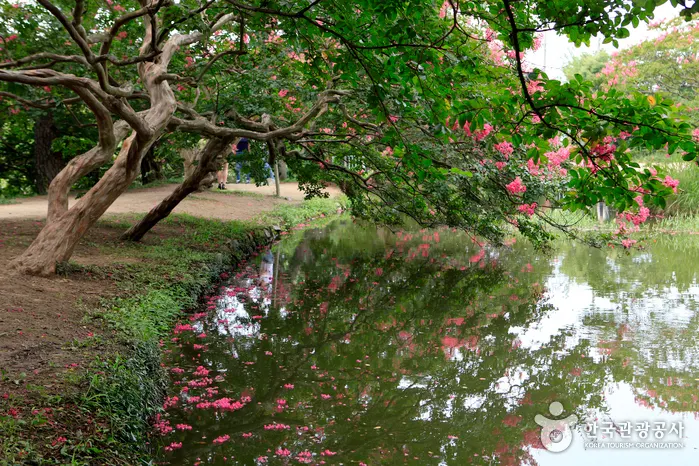
Located in the eco-village of Husan-ri, Myeongokheon Garden was the garden of Oh Hui-do (1583-1623) of the Joseon dynasty and served as a simple, countryside sanctuary where the scholar read and wrote many books. Main features of the garden are the Myeongokheon Pavilion, where the scholar held lectures, and the square-shaped pond in front of the pavilion that is surrounded with graceful flowering trees. The flowering trees around the pond include red pines and crape myrtles. On the right side of Myeongokheon Garden you’ll see a 300 year-old ginkgo tree, which is where King Injo (1623-1649) of the Joseon dynasty tied his horse when he went to visit Oh Hui-do. ◎ Travel information to experience the charm of Hallyu - Drama A private garden created in the mid-Joseon Dynasty, harmoniously featuring a small pavilion, square pond, flowering trees, and pine trees. Every summer, photographers from across the country gather to capture the 300-year-old crape myrtle trees blooming in soft pink around the pond. It is also the place where Lee Yeong and Ra-on first met in .
Why Myeongokheon Garden matters
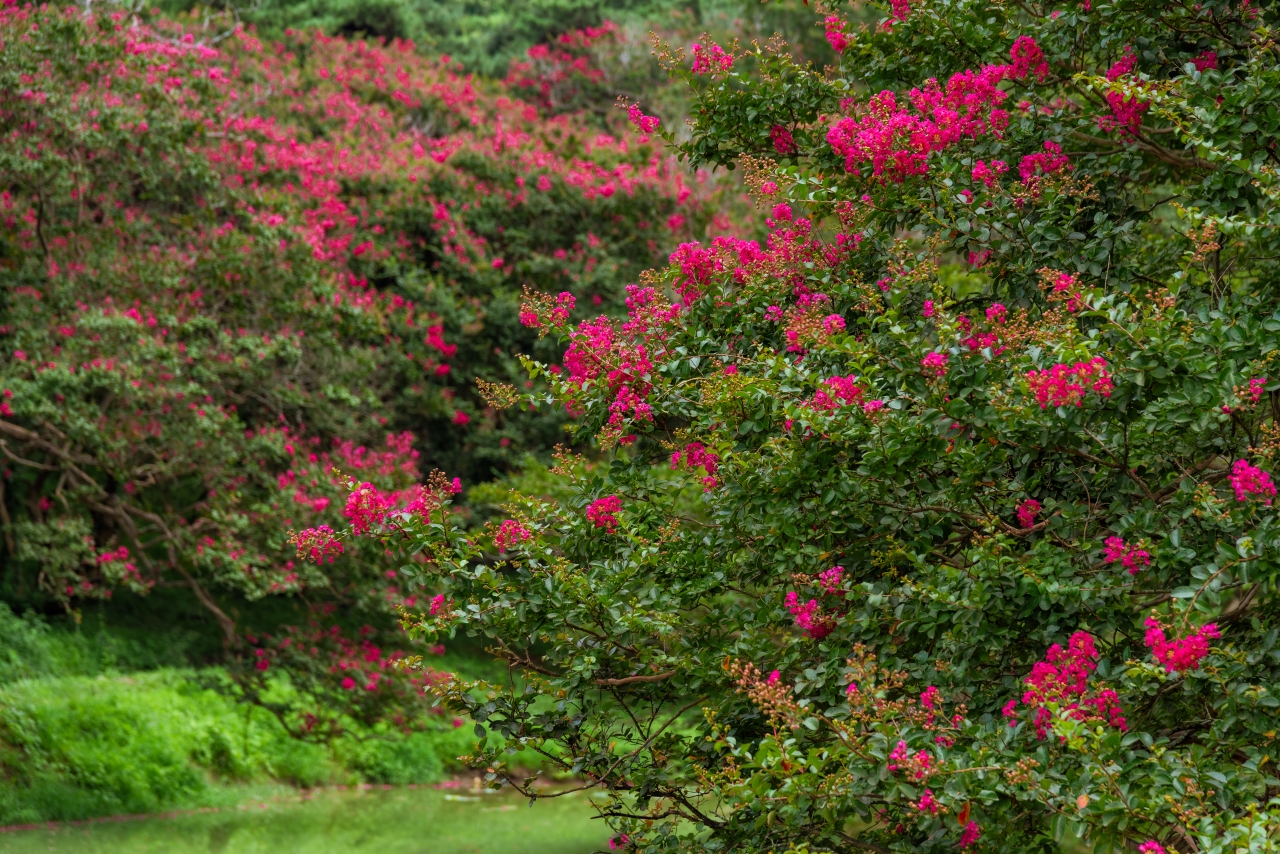
The garden's layout is deceptively simple yet profoundly effective. A rectangular pond, fed by a gentle stream cascading from the hillside, forms the heart of the garden.
While Myeongokheon Garden possesses a quiet beauty throughout the year, its fame is inextricably linked to the breathtaking display of crape myrtle (baengnoknamu) in mid-to-late summer. These trees, with their smooth, peeling bark and abundant, ruffled flowers, are a beloved feature of Korean gardens.
At Myeongokheon, the trees are strategically planted along the pond's edge, creating a dense canopy that, when in full bloom, transforms the garden into a riot of vibrant color.
The visual impact of the blooming crape myrtle is profound. The vivid pinks and reds of the flowers stand in striking contrast to the deep green foliage and the dark, still water of the pond.
The pavilion's name, Myeongokheon, roughly translates to 'House of Bright Jade.' This evocative name hints at the preciousness and purity the garden's creators sought to capture.
Visitors are encouraged to take time to simply sit and observe. The reflections in the pond, especially during the crape myrtle bloom, offer a dynamic visual experience.
Official visitor information
Official address: 103 Husan-gil, Goseo-myeon, Damyang-gun, Jeonnam-Gwangju Special Metropolitan City.
Official visiting hours: 09:00-18:00.
Official closure information: N/A (Open all year round).
Parking: Available.
Official information contact: +82-61-380-2816.
How to use this guide
Use the official information above as the planning baseline. Opening arrangements, programs, admission conditions, and access rules can change after this review. Follow the official source links before traveling, especially when your visit depends on a particular exhibition, performance, seasonal activity, or facility.
The remaining recommendations on this page are editorial guidance for understanding the setting and organizing a visit. They are not a substitute for instructions issued by the venue, local government, cultural-property authority, or transport operator.
Responsible visit checklist
Before leaving
- Open the official venue page and confirm the latest operating notice.
- Check weather and transport conditions on the day of travel.
- Respect residential, religious, ecological, and cultural-property rules where applicable.
- Allow flexibility rather than relying on an exact minute-by-minute schedule.
- Use the official information contact when accessibility or reservation details are essential.
Where is Myeongokheon Garden?
103 Husan-gil, Goseo-myeon, Damyang-gun, Jeonnam-Gwangju Special Metropolitan City
Where should I confirm current hours and closures?
Use the official source links in the reviewed-for-accuracy panel on this page.
When was this information checked?
The reviewed-for-accuracy panel shows the latest human review date and source record.