Photo gallery
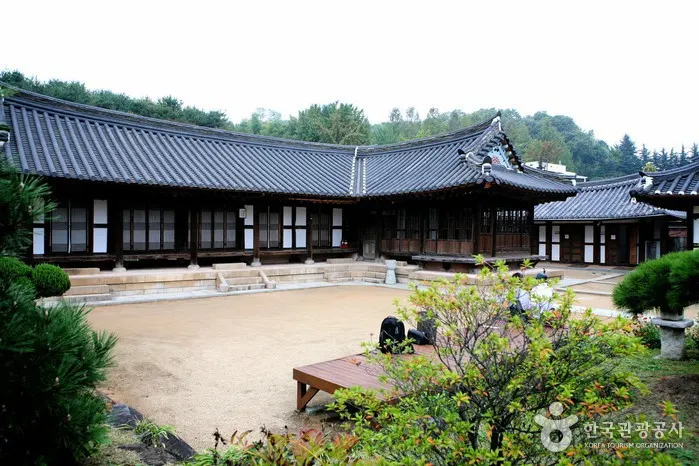
Lee Jang-woo's House (이장우 가옥) · © KTO · KOGL Type 3
Korea
Lee Jang-woo's House
Lee Jang-woo's House in Gyeongju, Gyeongsangbuk-do, is a preserved late-Joseon-era hanok residence in the Yangdong Folk Village district — Yangdong is a UNESCO World Heritage traditional Korean village (jointly inscribed in 2010 with Hahoe Folk Vi...
Why go
Lee Jang-woo's House in Gyeongju, Gyeongsangbuk-do, is a preserved late-Joseon-era hanok residence in the Yangdong Folk Village district — Yangdong is a UNESCO World Heritage traditional Korean village (jointly inscribed in 2010 with Hahoe Folk Village as "Historic Villages of Korea"). Lee Jang-woo (1846-1913) was a prominent local yangban scholar and civic figure whose house preserves the specific mid-19th century regional hanok architectural tradition of Yangdong. The house follows the standard Yangdong yangban hanok layout — L-shaped main house with a raised wooden-floor central hall (daecheong), separate men's and women's quarters, ancestral shrine, and traditional garden — and its restoration preserves original architectural detail (bracketed roof timbers, tile-covered walls, original wooden floor surfaces). The Yangdong Village setting places the house inside a working residential UNESCO village where dozens of original hanok structures are preserved in continuous residential use. Free entry (Yangdong Village admission separate, typically KRW 3,000-4,000). Allow 30 minutes for the specific house + 2-3 hours for the broader Yangdong Village walking circuit. Access: about 45 minutes from Gyeongju city by local bus. Pair with the broader Yangdong Village circuit and Gyeongju's Silla UNESCO Historic Areas including Donggung Palace + Wolji Pond (verified guide-donggung-palace-and-wolji-pond-264367).
Quick highlights
- Well-preserved late Joseon-era upper-class hanok in Gwangju
- Traditional layout divides sarangchae, anchae, and utility quarters
- Clay-tiled roofs and wooden verandas showcase period craftsmanship
- Located in the historically rich Yangnim-dong neighborhood
- Registered cultural heritage site freely explorable by visitors