Itinerary
Baekje Cultural Land Visitor Guide — Ancient Capital Replica
Step back in time at Baekje Cultural Land, a vast historical theme park meticulously recreating the Baekje Kingdom's architecture and lifestyle.
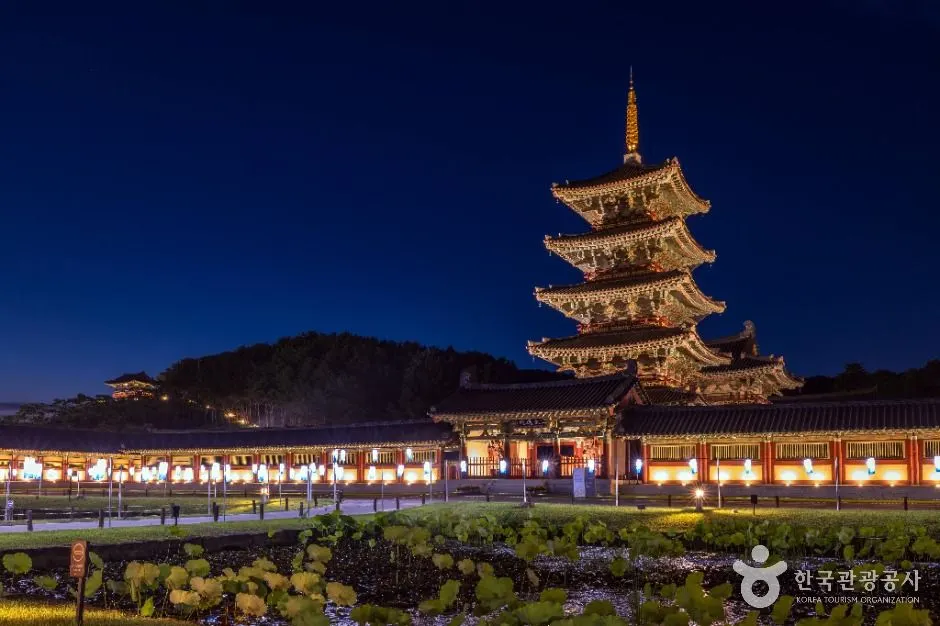
Baekje Cultural Land is the largest history-themed park in Korea, built to share the beautiful culture of the Baekje Kingdom with the world. The large site is filled with traces of Baekje culture. Sabigung Palace is a reconstruction of a real royal palace from the Three Kingdoms period. Neungsa Temple, a royal temple representing the Baekje period, has been recreated according to the real size based on excavation research done at the historic site in Neungsan-ri, Buyeo-eup. Just inside Daetongmun Gate is the Five-story Stone Pagoda, the most prominent structure in the complex. Wiryeseong Fortress, built during the Hanseong Baekje Era, gives a different aspect of Baekje in comparison with Sabigung Palace from the late Baekje Era. A panorama of the complex can be seen from Jehyangnu Pavilion.◎ Discover Hallyu Charm: K-Drama "Moon Lovers: Scarlet Heart Ryeo (2016)"The memorable scene in Episode 11 of "Moon Lovers: Scarlet Heart Ryeo," where Hae Soo (IU) kneels in the rain to save Court Lady Oh and Prince Wang So (Lee Joon-gi) shields her from rain, was filmed in front of Cheonjeongjeon Hall in Baekje Cultural Land.
Why Baekje Cultural Land (백제문화단지) matters


The heart of Baekje Cultural Land is its faithful recreation of the Sabi (present-day Buyeo) palace complex, the capital of Baekje during its golden age. Walking through the gates of these reconstructed halls, you are transported to a time of kings and courtiers.
The architectural details, from the sweeping roofs to the intricate joinery, are based on archaeological findings and historical records, offering a tangible connection to the kingdom's sophisticated artistry and engineering prowess. The sheer scale of the Sabi Palace replica allows visitors to appreciate the power and influence Baekje wielded during its zenith.
Complementing the architectural recreations is the Baekje History Museum, located within the park grounds. This museum houses a collection of significant Baekje artifacts, unearthed through extensive archaeological excavations.
With its expansive layout, Baekje Cultural Land is best explored with a plan, especially if you aim to cover significant ground within a day. The Sabi Palace complex, with its multiple courtyards and halls, requires ample time to fully appreciate its scale and architectural nuances.
Beyond the main palace and temple areas, take time to wander through the traditional village. Here, you can observe the different styles of housing and imagine the bustling marketplace or quiet residential streets of ancient Baekje.
Baekje Cultural Land is a large outdoor site, so comfortable walking shoes are essential. Depending on the season, you'll want to prepare for varying weather conditions; sun protection like hats and sunscreen is advisable during warmer months, while layers might be necessary for cooler days.
While the park offers a deep dive into Baekje history, combining it with nearby historical sites can create a richer itinerary. The nearby city of Buyeo, the actual ancient capital, offers additional Baekje-era relics and historical narratives.
Public transportation to the park can be infrequent, so checking schedules in advance or considering a taxi or private vehicle might be more convenient for reaching the site efficiently. Allocate at least half a day, and ideally a full day, to fully experience the breadth of what Baekje Cultural Land has to offer.
Official visitor information
Official address: 455 Baekjemun-ro, Buyeo-gun, Chungcheongnam-do.
Official visiting hours: March-October 09:00-18:00November-February 09:00-17:00 * Night admission: March-October 18:00-22:00 / November-February 17:00-22:00 (Refer to the website for night admssion period).
Official closure information: Mondays (closed next business day insterad if Monday is a public holiday)* Refer to the website for more details.
Parking: Baekje History and Culture Museum / Sabigung Palace / Living Culture Village / Neungsa Temple / Wiryeseong Fortress / Ancient Tomb Park, etc..
Official information contact: +82-41-408-7290.
How to use this guide
Use the official information above as the planning baseline. Opening arrangements, programs, admission conditions, and access rules can change after this review. Follow the official source links before traveling, especially when your visit depends on a particular exhibition, performance, seasonal activity, or facility.
The remaining recommendations on this page are editorial guidance for understanding the setting and organizing a visit. They are not a substitute for instructions issued by the venue, local government, cultural-property authority, or transport operator.
Responsible visit checklist
Before leaving
- Open the official venue page and confirm the latest operating notice.
- Check weather and transport conditions on the day of travel.
- Respect residential, religious, ecological, and cultural-property rules where applicable.
- Allow flexibility rather than relying on an exact minute-by-minute schedule.
- Use the official information contact when accessibility or reservation details are essential.
Where is Baekje Cultural Land (백제문화단지)?
455 Baekjemun-ro, Buyeo-gun, Chungcheongnam-do
Where should I confirm current hours and closures?
Use the official source links in the reviewed-for-accuracy panel on this page.
When was this information checked?
The reviewed-for-accuracy panel shows the latest human review date and source record.