Itinerary
Gwangan Bridge: Get the Photo From Gwangalli
Gwangan Bridge is a highway where stopping is impossible. Photograph its skyline from Gwangalli Beach during the short blue-hour window instead.
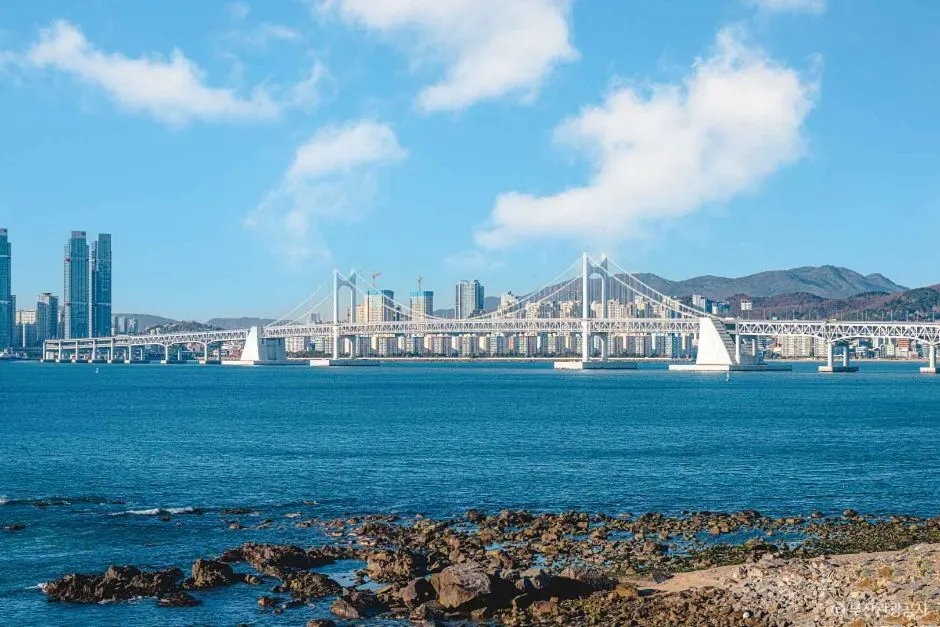
Every year a thousand foreign visitors search 'how to visit Gwangan Bridge' and end up disappointed because there's no way to visit it. Gwangan Bridge (광안대교 / Gwangandaegyo, also called Diamond Bridge) is a 7.4-kilometer two-tier suspension highway that opened in 2003. It carries expressway traffic across Suyeong Bay. You cannot walk on it, drive slowly on it, or stop on it. What visitors actually experience — and what makes the bridge Busan's night-skyline signature — is looking at it from Gwangalli Beach across the bay.
The photo is the reason to come
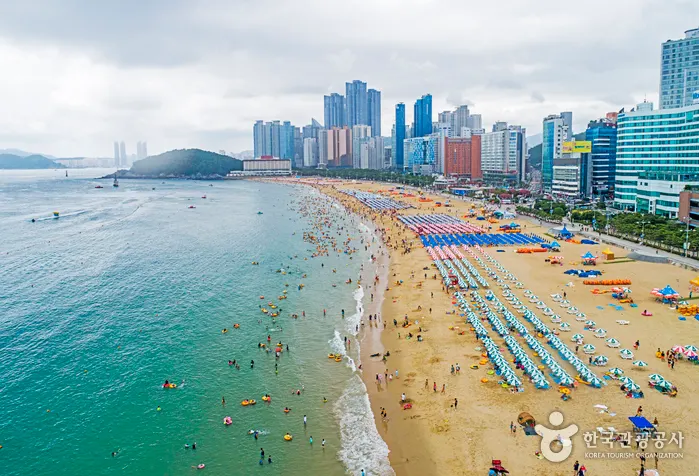
The reason Gwangan Bridge appears on every Busan tourism poster is a very specific composition: the 7.4 km LED-lit span curving across the frame with the Marine City skyscrapers to the right and open sea to the left. That composition is only possible from the north shore of Suyeong Bay — which is Gwangalli Beach (광안리해수욕장). From directly under the bridge (Namcheon-dong side), you get the underside; from across the water (Millak / Marine City), the bridge points away from you. Only from Gwangalli does it curve across your frame like the postcards show.
The best position on the 1.4 km Gwangalli strand is the western half — start from Suyeong-gu Office Station area and walk east until the curve of the bridge fills your frame the way you want it. There's no single 'the' spot; walk a hundred meters either direction and the composition shifts.
The 30-minute blue hour is when it works
Gwangan Bridge's LED system runs seasonal color programs after sunset — this is what turns a highway into a photo subject. But there's a specific 30-minute window when both the sky is still holding blue and the bridge lights are on: from about 20 minutes after local sunset to about 50 minutes after. Earlier and the sky is too bright to let the bridge lights read; later and the sky goes black and you lose the color contrast that makes the shot.
This is called the blue hour by photographers. For Busan, that means: check local sunset time (any weather app), arrive at Gwangalli 30 minutes before, and start shooting 20 minutes after sundown. Winter sunsets around 17:30, summer sunsets around 19:45; adjust for the season.
Weekend fireworks and how to plan around them
The Busan International Fireworks Festival (부산불꽃축제) is held every year in October or November, staged directly on Gwangan Bridge, and Gwangalli Beach is the main viewing area. On festival nights the beach is packed shoulder-to-shoulder from mid-afternoon; arrive by 15:00 for a beach-level view, or book a reservation at one of the Gwangalli Beach cafes / rooftop bars weeks in advance.
Outside the festival, smaller drone / laser shows sometimes run on summer weekend evenings — schedules are posted on the Busan tourism site. Don't count on them being scheduled on the night you're visiting; if the show happens, it's a bonus, not a plan.
Pair with dinner on The Bay 101 or Millak seafood row
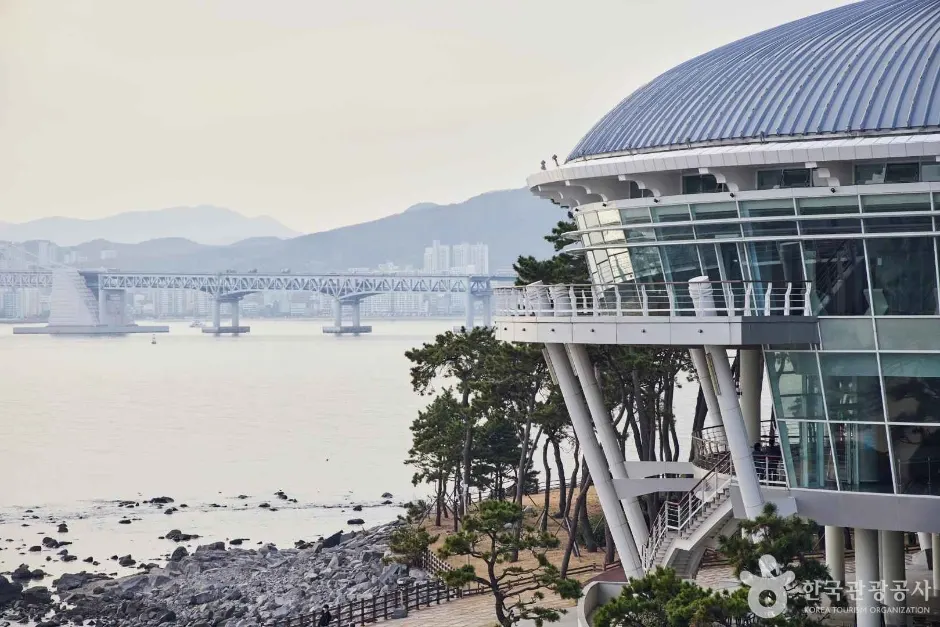
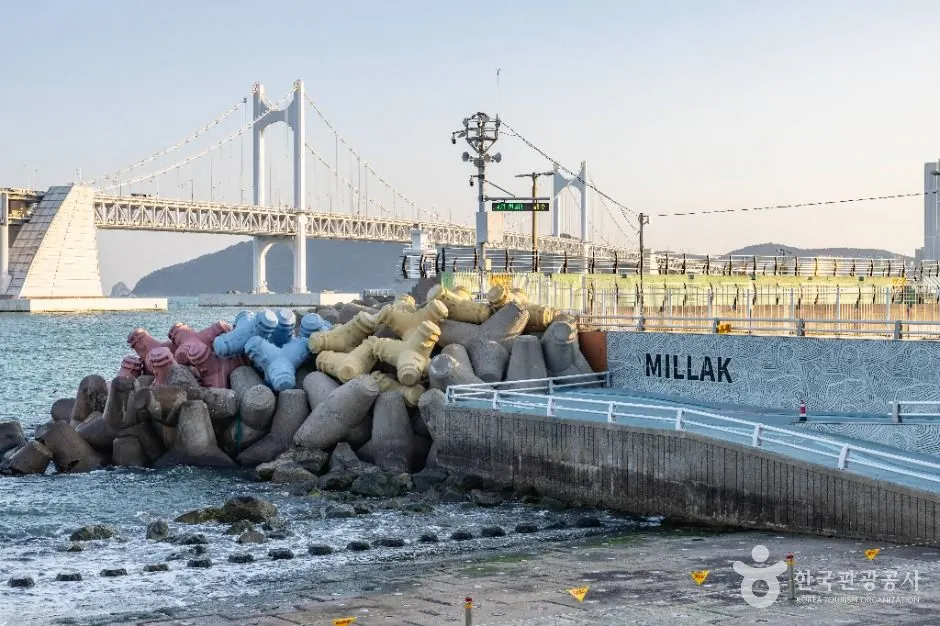
Gwangalli Beach itself has a strip of cafes and restaurants on Gwangalli Beach Road (광안리해변로). For the elevated angle looking down on the bridge and the beach together, walk 25 minutes east to The Bay 101 in Marine City — a marina with rooftop restaurants and the second-most-photographed view of the bridge after Gwangalli itself. If you'd rather stay local and skip the walk, Millak Raw Fish Center (민락회타운) — a large multi-story building 15 minutes east — sells fresh sashimi by the plate to eat at the tables on the seaside promenade with the bridge in view.
The natural sequence for a Busan evening: sunset at Gwangalli, blue-hour photos of the bridge, dinner along Gwangalli or at The Bay 101, late walk back. If you're staying in Haeundae (25 minutes east by subway), reverse the direction — dinner in Haeundae, subway to Gwangalli for the blue-hour window, subway back.
Official visitor information
The bridge itself: 7.4 km two-tier suspension highway across Suyeong Bay, opened 2003, no pedestrian access, toll expressway for vehicles.
Photo/viewing location: Gwangalli Beach (광안리해수욕장), Namcheon-dong, Suyeong-gu, Busan. Free 24-hour public beach access.
Nearest subway: Gwangan Station (Busan Metro Line 2), exit 3 or 5. About 5-10 minutes walk to the beach.
Bridge lighting hours: Sunset until 24:00 daily. Color programs change seasonally; check Busan tourism updates for special programs.
Busan International Fireworks Festival: Typically held one Saturday in October/November. Free viewing from Gwangalli Beach; premium seating requires ticket purchase months in advance via the festival's official site.
- Photograph from Gwangalli Beach, not from the bridge itself — the bridge is a highway.
- The 30-minute blue-hour window (20-50 minutes after sunset) is when the shot works.
- For an elevated angle, walk 25 minutes to The Bay 101 in Marine City.
- Fireworks Festival crowds require arriving 3+ hours early; check the festival's exact date every year.
- Millak Raw Fish Center is the local sashimi option with a bridge view.
Can I walk across Gwangan Bridge?
No. It's a highway with no pedestrian or bicycle access. You view and photograph it from Gwangalli Beach across the bay.
When does the bridge light up?
From sunset until midnight every day, with seasonal LED color programs. Special programming schedules are posted on Busan's tourism site.
What's the best time for the photo?
The 30-minute blue-hour window starting about 20 minutes after local sunset. Both sky glow and bridge lights are visible together only in that window.
When is the fireworks festival?
One Saturday in October or November — the exact date is announced by the Busan Metropolitan City tourism office in early summer. Free general viewing; premium seats sell out early.