Itinerary
Donggung and Wolji Pond: Visit at Blue Hour
Visit this Gyeongju palace site near blue hour, when the reconstructed buildings and pond reflections turn an archaeological stop into a night view.
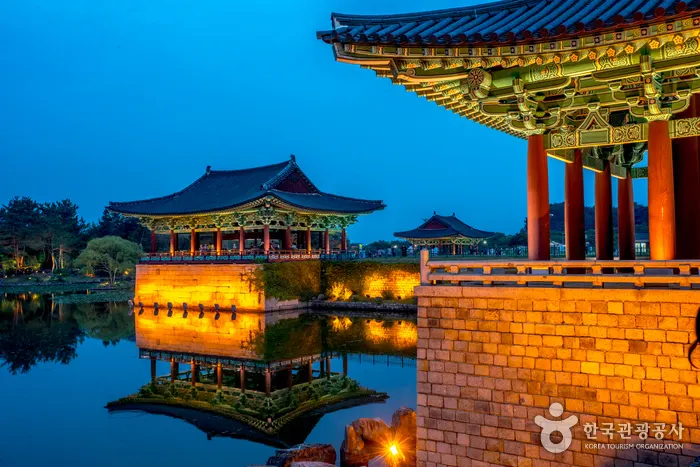
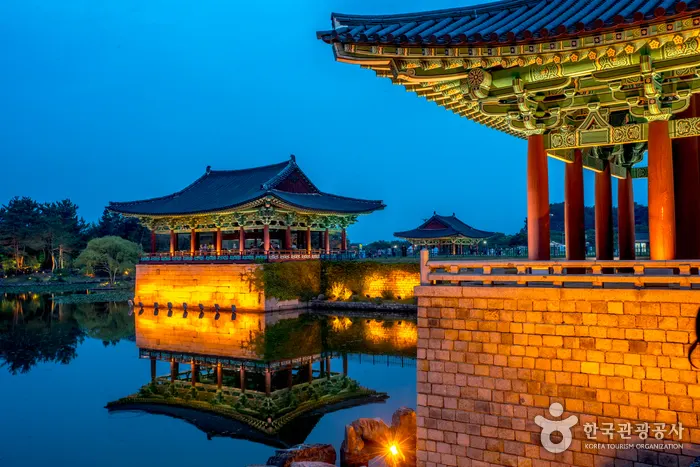
If you visit Donggung Palace and Wolji Pond during the day, you'll wonder why it's on every Gyeongju itinerary. Three modest reconstructed buildings, a small pond, a few interpretive signs — a 30-minute walk and you're done. That's the daytime version. What foreign visitors actually travel here for is the night visit, when the pond and the three restored buildings are lit and reflect on the still water in a composition that's been on Korean tourism posters for four decades. The daytime and night versions are essentially two different sites; the night one is the one to plan around.
Why the site matters (and what you're actually looking at)
The pond and its palace complex were built in 674 CE, during the Unified Silla period, as an eastern annex to the main royal palace of Wolseong. It served as a royal pleasure garden and diplomatic reception area for roughly 250 years. The complex was destroyed after Silla fell, and the pond — silted over and covered in weeds — was misidentified as a natural feature for over a millennium. It was called 'Anapji' (기러기와 오리의 연못, 'goose and duck pond') until a full-scale excavation between 1974 and 1979 recovered over 30,000 artifacts and identified it as the Silla royal garden. In 2011 the historically documented original name 'Wolji' (월지, 'moon pond') was restored, and three of the buildings were reconstructed on their original foundations.
Point being: the three buildings you're photographing today are 2010s reconstructions on 7th-century foundations. That's disclosed on the site's own interpretive signage. Understanding it changes the visit from 'ancient palace' to 'archaeological reconstruction of a lost royal garden' — a different but arguably more interesting story.
Timing the blue-hour reflection
The photograph everyone comes for — three illuminated buildings mirrored on still black water — depends on two things being true simultaneously: the buildings' lights on, and the ambient sky dark enough to let the lights read but light enough to still hold color. That's the blue hour, and it's a 30-45 minute window that starts about 20 minutes after local sunset. Earlier and the sky washes the reflection out; later and you lose the sky's color entirely and get pure black.
Practical: the site is open until 22:00 (last admission 21:30). In summer, sunset is around 19:45, blue hour peaks around 20:05-20:30, and you have generous time. In winter, sunset is around 17:20, blue hour is 17:40-18:15 — you need to be at the pond by 17:30 or you miss it entirely. The best position for the classic composition is the western viewing platform, roughly 40 meters from where the walkway first meets the pond.
The pond needs to be still for the reflection to work. Windy evenings ripple the water and break the mirror; there's nothing you can do about that except check the forecast for wind under 3 m/s before you go.
Arrive earlier than you think
The parking lot fills up 60-90 minutes before sunset from April through October. Tour buses from Bulguksa Temple and Gyeongju city tours converge here for the same reason you're going: the blue hour is the whole reason. If you arrive within an hour of sunset in peak season, you'll park 500+ meters away. Aim to be at the ticket booth 90 minutes before sunset — walk the daytime site first, then position on the platform when the light drops.
Weekday visits (Tuesday-Thursday) are noticeably less crowded than weekends. Off-season (November-March) has fewer crowds but a much shorter blue-hour window and the cold makes the wait unpleasant. The sweet spot is April-May and September-October weekdays.
Pair it with Bulguksa Temple for a full Gyeongju day
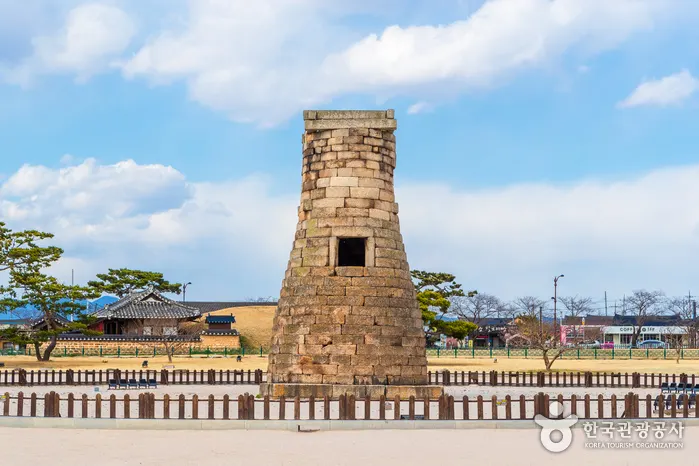
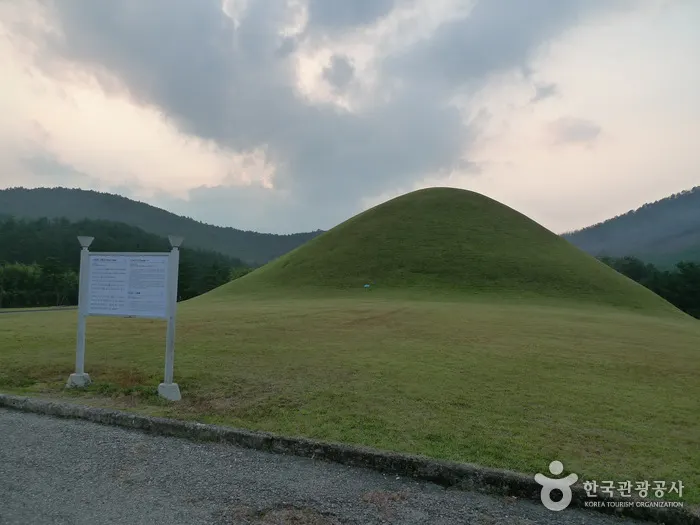
A standard Gyeongju day pairs a UNESCO daytime site with the Donggung night visit. Bulguksa Temple (불국사, UNESCO World Heritage, about 40 minutes east) is the classic morning stop — allow 2-3 hours for the temple grounds and Seokguram Grotto. Back to Gyeongju city for lunch, an afternoon at Cheomseongdae Observatory (첨성대) and the tumuli park nearby, then Donggung for the blue hour. That sequence hits Silla-era architecture (Bulguksa), Silla-era astronomy (Cheomseongdae), and Silla-era royal culture (Donggung/Wolji) without doubling back.
If you have a second day, add the Gyeongju National Museum (무료 admission) and the National Museum's outdoor bell display — both are 5 minutes from Donggung by car.
Official visitor information
Address: 102 Wonhwa-ro, Gyeongju-si, Gyeongsangbuk-do (경상북도 경주시 원화로 102).
Opening hours: 09:00-22:00 daily, year-round. Last ticketing and admission 21:30.
Closed: None (open 365 days a year including holidays).
Admission: KRW 3,000 adults, KRW 2,000 youths, KRW 1,000 children. Free re-entry with same-day ticket.
Parking: On-site parking available; fills 60-90 min before sunset in peak season.
Contact: +82-54-750-8655.
- Blue hour is 20-50 minutes after local sunset — that's the entire reason to visit.
- In peak season (April-October) arrive 90 minutes before sunset for parking.
- Weekday evenings (Tue-Thu) have half the crowds of weekend evenings.
- Wind under 3 m/s = mirror-still pond; check forecast before you commit.
- Pair with Bulguksa in the morning + Cheomseongdae in the afternoon.
Is the site worth visiting during the day?
It's a 30-45 minute daytime walk — pleasant but not remarkable. If you can only visit once, go at night. If you have time, arrive 90 minutes before sunset, walk the daytime version, then wait for blue hour on the western platform.
When does the site light up?
The reconstructed buildings and pond-side lanterns come on at sunset. The illuminated reflection composition works during the ~30 min blue-hour window starting about 20 minutes after sundown.
Why is it called both Anapji and Wolji?
The site's original Silla name was Wolji ('moon pond'). After Silla fell it was renamed Anapji ('goose and duck pond'), which stuck for a millennium. In 2011 the historically documented Wolji name was officially restored — you'll see both names in older guidebooks and signage.
Is it accessible without a car?
Yes — most Gyeongju city buses stop nearby (Bus 10, 11, 100, 150 among others). From Gyeongju Station or the Express Bus Terminal it's a 10-15 minute ride.