Seasonal
Hyoseok Festival: Time the Buckwheat Bloom
Time Pyeongchang's Hyoseok Cultural Festival for the short buckwheat-bloom window and follow the route tied to Lee Hyo-seok's famous story.
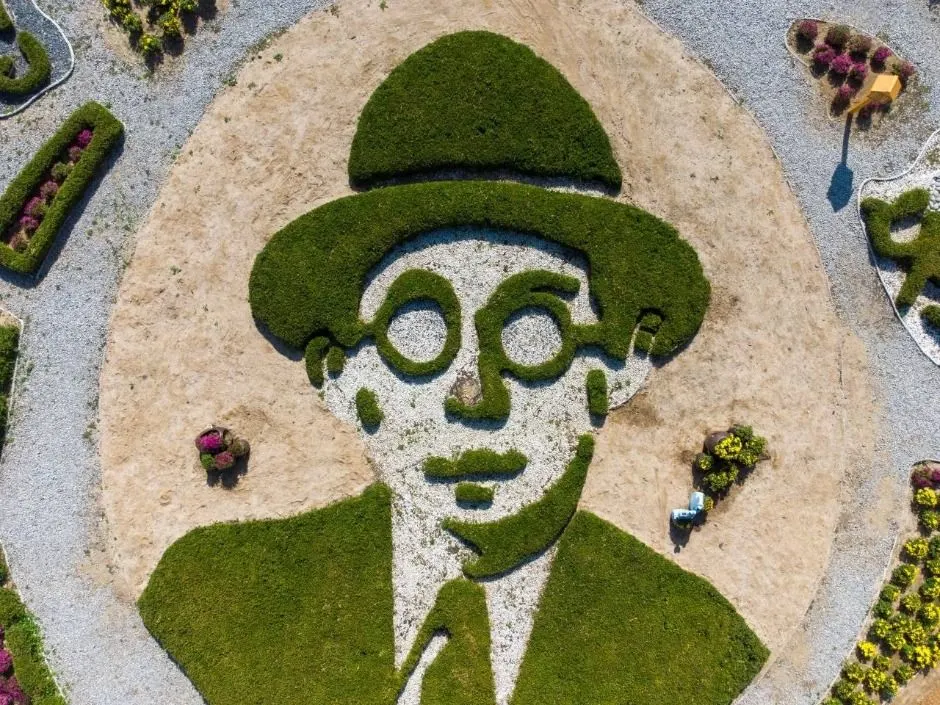
The Hyoseok Cultural Festival is a two-week window disguised as a year-round tourist site. The festival celebrates Lee Hyo-seok (이효석, 1907-1942), whose 1936 short story 'When the Buckwheat Flowers Bloom' (메밀꽃 필 무렵) is one of the most-read pieces of Korean modernist literature. The story is set in Bongpyeong (봉평), a village in the mountains of Pyeongchang County. The festival is held there, in and around the fields the story describes, and it only works because Bongpyeong actually turns into the setting of the story for about two weeks a year — when the buckwheat blooms.
Why the bloom window is the whole calendar
Korean buckwheat (메밀 / memil) blooms in a narrow window from roughly late August through mid-September, depending on the year's summer temperatures. The fields turn from green to a white-cream carpet that looks, in Lee Hyo-seok's phrasing, 'like moonlight fallen to the ground.' The festival is scheduled to peak during that window — usually the first or second weekend of September — because outside those two weeks the Bongpyeong fields are just farmland, and the festival's central visual anchor doesn't exist.
Confirm bloom status before you commit. The Pyeongchang tourism office posts weekly bloom-percentage updates on their tourism site from mid-August. If you're arriving from overseas and building a Korea itinerary around this, aim for the first weekend after Labor Day (early September) — that's historically the safest bet, though the actual bloom peak has drifted 3-5 days later in the last decade with warmer summers.
Walk the novel's route, not just the flower fields
The literary anchor of the festival is a 1.5-2 hour walking course through the Hyoseok Literary Village (이효석문학촌), which retraces the geography of the short story. Key stops: the reconstructed Bongpyeong 5-day market (where the story's opening scene of itinerant peddler Heo Saeng-won takes place), the water mill on the Heungjeong Stream (a key scene setting), the birthplace of Lee Hyo-seok himself (restored 2002), and the flower field at Hyoseok Literature Forest where the moonlit-walk climax of the novella is set. Walking the route with the story in mind is a very different experience from photographing the flowers as scenery — and it's the reason the festival is culturally significant rather than just visually pretty.
If you can only read one thing in preparation, the short story itself is under 5,000 words in English translation (search 'When the Buckwheat Flowers Bloom Lee Hyo-seok' — several translations are freely available). Read it on the KTX up. It'll change the walk from 'nice countryside' to 'that's the specific stream Heo Saeng-won crossed.'
Timing within the festival day
The buckwheat fields photograph best in early morning light (7:00-9:00), when the low sun angles across the white blossoms and the mountain fog is still lifting. That same window has the fewest visitors — most festival-goers arrive by tour bus from Seoul or Wonju between 10:30 and 12:00 and the fields fill fast. If you're serious about the photography, stay overnight in Bongpyeong or in Pyeongchang town the night before and walk in at first light.
Cultural programming (literary readings, folk performances, food stalls) concentrates on weekend afternoons. Weekday visits during the festival week are quieter and let the walking course actually feel contemplative. The trade-off is fewer live events.
Pair with Nami Island for a Gangwon literary-nature day
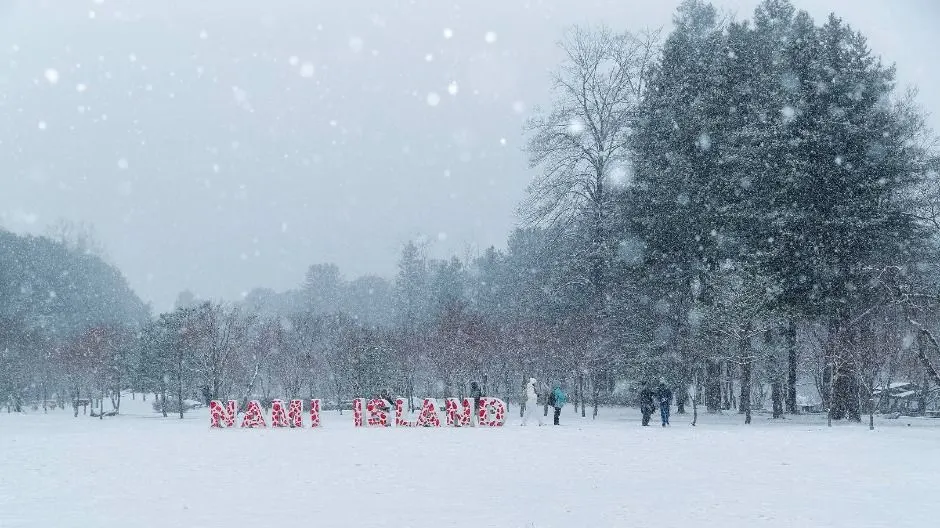
Bongpyeong is 2 hours from Seoul by car via the Gyeongchun Expressway, or 2 hours by KTX + local bus (KTX to Pyeongchang Station, then a 30-min bus to Bongpyeong). A natural pairing for foreign visitors is Nami Island (남이섬), the small forested island 90 minutes east that most travelers already know from Korean drama filming locations. The two together (Nami morning, Bongpyeong afternoon) works as a day trip if you're driving; by public transit it's better as a 2-day loop with an overnight in Chuncheon or Pyeongchang.
For a longer Gangwon week: add Sokcho / Seoraksan for hiking on day 3-4, then swing back through Chuncheon for dakgalbi. Bongpyeong itself doesn't have significant accommodation options outside the festival dates — motels and pension stays fill 3-4 weeks before the festival opening.
Official visitor information
Address: Hyoseok Literary Village, Bongpyeong-myeon, Pyeongchang-gun, Gangwon-do (강원도 평창군 봉평면 이효석문학촌).
Festival dates: Typically first or second weekend of September, running 9-10 days. Confirm the current year's dates on hyoseok.com — dates shift with the bloom forecast.
Admission: Festival grounds free. Hyoseok Literary Village entry KRW 2,000 adults (year-round). Some paid programs (workshops, guided tours) require separate booking.
Hyoseok Literary Village hours (year-round, not festival-only): 09:00-18:30 April-October, 09:00-17:30 November-March. Closed Mondays (open Tuesday if Monday is a national holiday).
Contact / official schedule: hyoseok.com. Pyeongchang County tourism: pc.go.kr/tour/eng.
- The bloom window is late August to mid-September only — outside that, no flowers.
- Read the short story before you go — it's under 5,000 words and unlocks the walking course.
- Photograph the fields 7:00-9:00 before the tour buses arrive.
- Book accommodation 3-4 weeks before the festival opens; local supply is limited.
- Weekday visits during festival week are quieter than weekend visits.
When exactly does the festival run?
First or second weekend of September, 9-10 days long. Exact dates are announced in early summer on hyoseok.com and shift year-to-year based on the buckwheat bloom forecast.
Can I visit outside festival dates?
The Hyoseok Literary Village is open year-round (09:00-18:30 April-Oct, 09:00-17:30 Nov-Mar, closed Mondays). But the buckwheat fields only bloom for ~2 weeks in late August-mid September. Outside that window you'll see the museum and the village but the fields are empty.
How do I get there from Seoul?
By car: 2 hours via the Gyeongchun/Yeongdong Expressway. By public transit: KTX to Pyeongchang Station (about 90 min), then local bus 26/50 to Bongpyeong (~30 min). Bus timetables are limited on weekends during festival weeks — check before committing.
Who is Lee Hyo-seok?
Lee Hyo-seok (이효석, 1907-1942) was a Korean modernist writer whose 1936 short story 'When the Buckwheat Flowers Bloom' (메밀꽃 필 무렵) is a canonical Korean literature classic. He was born in Bongpyeong — the festival is held in his birthplace village.