POPULAR
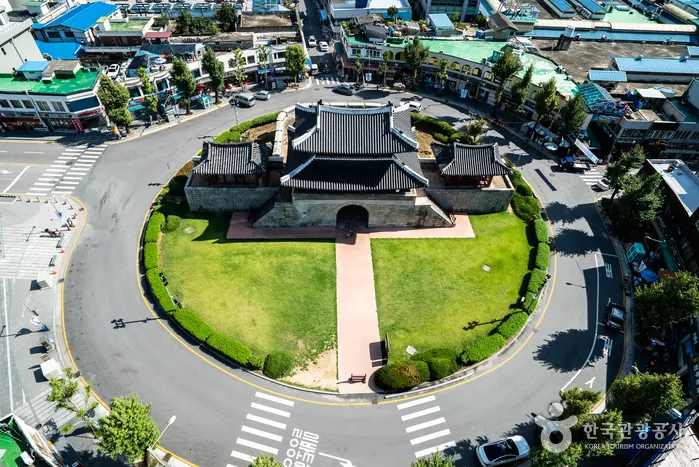
Jeonju Pungnammun Gate (전주 풍남문) · © KTO · KOGL Type 3
Jeonju
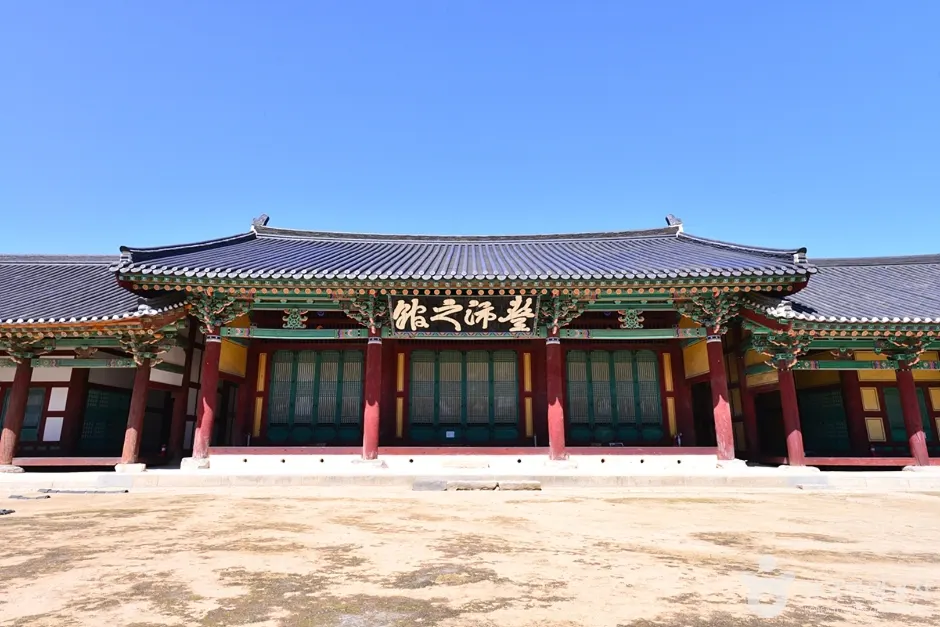
Jeonju Pungnammun Gate is the southern gate of the Joseon-era Jeonju Eupseong (Jeonju city wall), the only one of the city wall's four main gates that has survived to the present day.
Jeonju Pungnammun Gate is the southern gate of the Joseon-era Jeonju Eupseong (Jeonju city wall), the only one of the city wall's four main gates that has survived to the present day. The gate was originally built in the early Joseon period and rebuilt in its current form in 1734 under King Yeongjo, with subsequent restorations during the colonial period and after the Korean War. The two-story wooden gate sits on a stone-base structure that originally formed part of the city wall, with the gate's signature wooden upper structure showing distinctive late-Joseon architectural detail — a smaller-scale relative of Seoul's Sungnyemun (Namdaemun) but the only regional-city gate of its kind to survive intact in Korea. The gate stands in central Jeonju directly adjacent to the Jeonju Hanok Village area, making it an unavoidable orientation point for any walking visit to central Jeonju: from Pungnammun the hanok village lies to the north, the Nambu Market to the east, and Jeondong Cathedral to the northwest. Best paired with the broader Jeonju Hanok Village circuit, typically as the first stop after arrival — the gate's plaza works as a natural meeting point and orientation moment before entering the hanok streets. The gate is illuminated at night, when the plaza is quieter and the architectural detail reads more clearly.
Other places in Jeonju that pair well with this visit.
Jeonju
Why go: Hanok and food capital — slow southern Korea
Jeonju
Why go: Hanok and food capital — slow southern Korea